A Tribute to ‘The Halinator’

“And as for you, brothers and sisters, never tire of doing what is good.” – 2 Thessalonians 3:13

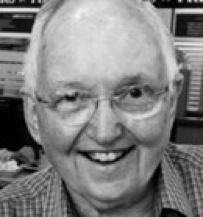
HalMunsonI want to take this time to honor a dear friend and Brother-In-Christ – Hal Munson, who at age 85, passed peacefully from this life into the loving arms of our Lord Jesus Christ on Tuesday, April 9, 2019.

I knew of Hal as we both served within the community at Black Rock Church for a couple of decades. My connection to Hal over that time was mostly with both of us attending the Saturday Morning Men’s Prayer meeting – particularly, as we would pray for each other’s families. Over the years my attendance at the men’s prayer meeting became spotty, but Hal was a mainstay along with a few others keeping this wonderful ministry going for decades.

In fact, my very first blog post was about an amazing healing one Saturday morning that had Hal being used by God in a powerful way. More on that a little later.

It wasn’t until the year 2001 when we served together on a short term missions team to Panama that we developed our friendship. On that trip I was awed by the quiet strength and persistence and perseverance of the man I affectionately came to call “The Halinator” (Imagine a bad impression of Arnold Schwarzenegger when you say it)

Why The Halonator? Well, the first half of our trip was working to build facilities at the YWAM compound. The temperature and the humidity were high and once the cool of the morning had burned off the work became really hard. I’ll admit that I felt like my whole body was moving through the cement mud we were constantly mixing. But, as I slogged through it, there was someone who was working at a steady, methodical, almost mechanical pace – driven to persevere to finish the work that God had for him.

Terminator1984movieposter

It was Hal. If I didn’t know it was God’s strength driving him, I’d be thinking I was working along side an honest to goodness Cyborg – part man, part machine. The Terminator!

Thus Hal became “The Halinator”

But, Hal knew exactly where his strength came from. Isaiah 40:29-31He gives strength to the weary and increases the power of the weak. Even youths grow tired and weary, and young men stumble and fall; but those who hope in the Lord will renew their strength. They will soar on wings like eagles; they will run and not grow weary, they will walk and not be faint.”

In Panama while I, being over 20 years younger, felt like I was moving about, stumbling and wearily feeling faint – The Halinator was walking, running and soaring on renewable strength.

Our time in Panama was an awesome time to draw together in unity with Jesus at the center. It was a time that continued to keep us connected over the years.

Hal was always quiet and soft spoken. What I really appreciate about the “quiet ones” is that when they do share, they are saving their lungs for saying something meaningful and powerful. This was the case for Hal whenever we met at Men’s Prayer or when meeting for breakfast. We always had great discussions about ‘God’ matters along with great laughs.

Back to the episode at the Saturday Morning Men’s Prayer time.

One Saturday morning I arrived late to the Men’s prayer meeting. When I came in I was dismayed (more like irritated) to see 2 of the guys slumped over and sleeping. What has happened to this group? I wondered.

It turned out that one of the guys, Dennis, had come into the prayer meeting suffering from damage to his neck which was going to require surgery. His body was so twisted from pain that he could not sit in the hard chairs. He had not slept in days. The guys brought in a more comfortable lounge chair for him to sit in. They then began praying for Dennis while Hal (who I had judged as sleeping) was actually leaning over comforting Dennis and soothing him, massaging his head and neck while praying for him. Hal was exercising what is the very definition of “Fervent Prayer”.

His fervent prayer proved to also be effective. A peace came over Dennis and he fell asleep while Hal continued laying hands and praying for Dennis. It was about an hour later that I walked in thinking that both men were sleeping.

Shortly after I arrived Dennis woke up. He sat there for a few minutes then began walking around to realize the pain was completely gone! He announced, “I’m healed!” and the guys broke into cheers.

While I know God heard the entire fraternity of men praying, I have no doubt that Hal’s laying on of hands and fervency struck a chord with God for Him to respond in a miraculous way.


The final salutation we use to send off those we love is “Rest In Peace”. The Bible says, “They will rest from their labor” (Revelation 14:13).

But this doesn’t seem to fit for my friend. Right now, as he has reconnected with my good buddies that have gone before, he is at ultimate peace. But Rest? If ‘rest’ is sacking out on the eternal couch – I don’t think so.

His loving God brought home “The Halinator” because there is much work to do. (Revelation 22:3) With eternal/renewable strength Hal continues serving God in the heavenly realm with no need for reclining. His labors for the Lord are his rest.

As I pray for peace and comfort for Judy and the family, I call out to ‘The Halinator’ in some of the little Spanish I learned while in Panama (maybe more so from movies) . . .

“Vaya con Dios, amigo. Hasta la vista.” (Go with God my Friend. Goodbye but I will soon see you again.)


A Black Rock Resurrection Story (Part II) – Glorious Sunday

Believing in “THIS” – to see someone raised from the dead? Whoa! Isn’t that a little too much to hope for?

that I may know Him and the power of His resurrection, and the fellowship of His sufferings, being conformed to His death, if, by any means, I may attain to the resurrection from the dead.” Philippians 3:10-11 

lazarus3

(Continued from 4/19 Post) . . . The realization that Carl Benson was dead was sinking in. The dark sadness began to take hold.


But, we resisted the feelings of hopelessness and pushed on praying for God to come to Carl’s rescue.

A wave of feeling totally inadequate to the level of faith required to see Carl healed came over me. Again, I resisted now accepting the notion that Carl might be gone changing my prayers to allow that if he is gone, you God can resurrect him. I whispered, “God, resurrect Carl!” The others joined in with similar supplications – begging God to do THIS.

Suddenly, a calm reassurance swept over me. God would indeed do THIS! In my experiencing THIS was a rare feeling of certainty that God was actually doing what we were asking. Then I heard a loud cough followed by more coughing and deep gasping for air.

Sounds of surprise and great relief and calling out thanks to God filled the room from those working on Carl. I could hear the comments from the medical team saying that they thought Carl was gone and had given up on reviving him when the spark of life caused Carl to convulse back into this realm.

One of the doctors, who was a professor of emergency medicine, later shared that he was “astounded” that Carl was alive. Word is that the Doctor continues to share the story of this miracle in the halls of Yale Medicine.

Before we knew it the EMTs arrived and swept Carl away. The room emptied leaving the prayer group standing in stunned silence, shaking our heads while wiping away tears.

We all sat down feeling shocked and exhausted. Did that really just happen? A level of disbelief still hovered over us. We tried to debrief and then fell into praising God for his goodness, grace and power continuing to pray for Carl’s full recovery. Would Carl survive this?

Soon our time was up and we left the room rejoicing at seeing another great thing God had done, all being fully convinced we had not only seen but were privileged to be part of a true miracle of biblical proportion.

One day, I have this longing . . .

The next day I tried to recount the event in my mind and I think it was only then that I remembered Wayne Detzler’s words shared moments before Carl’s lifeless body was carried into the Lounge, “One day, I have this longing to see someone actually raised from the dead!” Did God decide right then to honor Wayne’s lifelong desire?

Unfortunately, I’m not sure we as a church fully appreciated this as the miraculous healing that it was. From my vantage point, this was an event that should have been shouted from the mountaintops and written on the walls – God did an absolute miracle here!

  • Habakkuk 2:2 “Then the Lord replied: “Write down the revelation and make it plain on tablets so that a herald may run with it.”
  • Isaiah 49:13 “Shout for joy, you heavens; rejoice, you earth; burst into song, you mountains! For the Lord comforts his people and will have compassion on his afflicted ones.”

As it turned out Carl Benson lived for only a few weeks before his weakened heart gave out and he passed on to be in glory with his Savior. So, really, how much of a miracle could this have been and what was God’s purpose for it?

Why did God raise Carl back to life?

Carl, as far as I knew him, was a good and faithful servant of God – a saint just like all Christ-Followers. But why Carl and why then?

  1. Did God decide to honor Wayne’s lifelong desire to see someone raised from the dead at poor Carl’s expense?
  2. Did Carl endure this agony just so a handful of us praying could be encouraged in our prayer walk?
  3. Was this a show of God’s generosity to allow Carl another chance to spend real meaningful time with those he loved?

Well, I believe the answer is YES to all of these and probably numerous other reasons. I’d say our God is an amazing multi-tasker who raised Carl from death to life for a whole host of reasons.

Personally, I’d say that most importantly, just like Lazarus’ death was used to awaken the disciples to the Father’s power in Jesus, not only over death but over the grave. Carl’s resurrection was another show by God to awaken us to this great power at a time when our church was a bit anxious about it’s future. To remind us in a very tangible way that He not only has conquered death but is alive and still conquering death!

I’m afraid that all too often, in our comfortable, intellectual; “there must be a rational explanation to everything” Christianity we fail to fully celebrate what God can do that is beyond our understanding. We are uncomfortable with answers that require faith alone and we feel compelled to rationalize God as only working through ways and things our pea-brains can fully understand.

It seems to me that when God shows up in an unbelievable way we are given the choice to 1. Accept it as a flat out miracle giving God all the credit. Or, 2. Rely on other explanations (Say a defibrillator). Even today there are plenty of Christians still trying to explain away the miracle of Lazarus’ resurrection.

But, here is the deal, as I see it. If we choose to give God all the credit and all the praise he deserves – if we choose to press in even more, I believe it is then that we see God do even greater things. Is it possible that what caused Jesus to groan and to weep causes God to groan and to weep today? – that we fail to believe all that He is and are disappointed when He doesn’t show up in the ways we want?

Hebrews 11:6 says – But without faith it is impossible to please Him, for he who comes to God must believe that He is (shows up) to reward those who diligently seek Him.

Is it “we” who shortchange ourselves by putting limits on what God can do?

Matthew 9:28-29And when He had come into the house, the blind men came to Him. And Jesus said to them, “Do you believe that I am able to do THIS?” They said to Him, “Yes, Lord.” Then He touched their eyes, saying, “According to your faith let it be to you.” 

Now, don’t get me wrong, this is not about God’s love for us. That does not waver. He loves us at whatever level of faith we have, but if we put limits to our faith, He honors us up to that limit. He doesn’t intrude but He always encourages us further. He loves us just as a parent loves a child who may not fully appreciate how much the parent loves or cares are wants the best for them.

resurrection

On Resurrection Sunday, do we BELIEVE God will show up to reward us when we diligently seek Him? In the Gospel of John, Jesus declares that He is the resurrection and the life. He then asks Martha, Sure, you believe in God, “Do you believe THIS?”

The “THIS” Jesus was talking about was not just about raising someone from the dead. They knew Jesus could do that. It was about believing God could do something that was absurdly impossible. In this case, it was raising to life a cadaver already prepared by the “embalming” of the day (cleaned and rubbed with pounds of spices and oil), completely wrapped in cloths and left decaying 4 days in a sealed grave – i.e. exhuming a corpse and having it come back to life. (The precursor for Jesus’ own wonderful resurrection)

Do you believe God even for THIS?

I thank God for the resurrection miracle of Carl Benson amongst us. For God showing us that He still does the impossible.

This Easter Sunday, even as we believe in God, let’s start believing in more of THIS about God.

Happy Easter – Our Savior is ALIVE!

A Black Rock Resurrection Story – Dark Friday

Part I – The Death

“Then Jesus said to them plainly, “Lazarus is dead. And I am glad for your sakes that I was not there, that you may believe. Nevertheless let us go to him.” John 11:12-13

cpr2It was an early Sunday morning in August of 2009 at the “Old” Church building. A small group of men gathered together once more to pray. Our hearts were united – set on pursuing and seeking a deeper, more relational and powerful prayer experience. Each time we gathered we would testify that God shows up and it is always “good”. On some occasions, though, God’s Spirit shows up with something unique and fresh – giving us a taste what God has in store slightly beyond the level our meager faith will allow.

The group met in the church’s makeshift “prayer room” – one third of a meeting room known as “The Lounge” that could be split into 3 smaller meeting areas. This day the full room was opened up. No one else was there but our small group of about 8 gathered in the dedicated prayer space.

We quietly settled in with the worship prelude from the early service drifting in adding to the peaceful atmosphere. No rush to engage as we set our minds on God and let the cares we carried in slip away.

One of us eventually began our worshipful invitation to the Holy Spirit and we all attested to His growing presence amongst us. At some point we began to share what God was putting on our hearts and minds concerning the desires we share for His kingdom – God’s designs for our vision for the new church – awakenings, revival and do we dare say, “miracles?” – sharing our spiritual hopes and dreams until at one point the spiritual sage of the group, Dr. Wayne Detzler, shared a deep desire he has held for all of his 50 years in ministry. His voice quivered with emotion as he said,“One day, I long to see someone actually raised from the dead!”

Wow! I must admit that I literally rolled my eyes thinking that this was way beyond what we could ever expect God to do based on my own faith-limits and based upon this groups experience. We all somberly nodded our heads and continued praying for a few more minutes before our peacefulness was completely shattered.

Boom! A door into the lounge burst open and loud, anxious voices were suddenly calling out directions. We snapped our heads around while opening our eyes to see a group of men all dressed in suits at the other end of the lounge struggling to carry something heavy into the room. We stood up and looked at one another stunned. What is going on?

The men in suites cleared an area in the center of the Lounge and there they laid down another man in a suite on the floor. The face was ashen and still. Amongst the anxious commotion, there was no movement. We looked at one another and one of us whispered, “It’s Carl Benson.”

Others rushed in – a woman who is a nurse and then several men from the congregation who are doctors entered. They began to feverishly work on reviving Carl using CPR.

The prayer group stood there stunned. I looked around and I sensed we were all sharing the same feeling like we should be doing something but we couldn’t move. Amazing as it sounds, it wasn’t until one of our group called out, “Let’s pray!” that we started to pray. We all fell to out knees and began feverishly but quietly intervening for Carl’s life.

While we prayed, a misguided “Martha” concerned more for Carl’s privacy, came over to try to close the wall between the life-and-death struggle and us. We asserted, “No, please, leave it open so we can pray.” The person relented and we continued to pray.

A portable defibrillator, which had only recently been purchased and installed was found and brought into the room. The doctor began to shock Carl’s heart to revive him. With my eyes closed I heard a buzzing – then a beeping – then the call, “Clear” – and then that sound ‘Pumf’. Carl didn’t respond. They repeated the process again; buzzing – beeping – “Clear” – Pumf. Nothing. They repeated it several more times with a growing level of concern – even panic. Things were not going well.

The urgency of our prayers ramped up as some of us began to pray more vocally. I cannot speak for the others but my prayers while this struggle continued went something like this; I prayed for God to come and intervene, to come and revive Carl, to keep him alive.

Then as the anxious words of the medical team sounded more like surrender I thought, “He’s gone!” I cringed with resignation. It’s over.

The realization that Carl Benson was dead was sinking in. The dark sadness began to take hold.


Jesus’ death on the cross was not the end. The Disciples were certain it was all over but there was the “rest of the story” to come on Easter Sunday.

Was this the end for Carl Benson? Find out the “rest of the story” on my blog post this Easter Sunday.


He Also Brought Glenn Up Out of a Horrible Pit

This is a testimony provided by my Friend and Brother-in-Christ, Glenn Leonard – Another First Hand Believer in a God of Miracles

“He also brought me up out of a horrible pit, Out of the miry clay, And set my feet upon a rock, And established my steps.” Psalm 40:2 

manhole cartoonJuly 13, 2018 @ 9:30pm Glenn Leonard was walking with his dad in the park. It was a pitch-black night. As they walked he switched sides so his Dad could be steadier on the pavement. Five steps later the ground opened and swallowed up Glenn.

He had fallen into an open manhole. Glenn found himself stuck with his legs folded and pinned underneath him, groggy from his head slamming against the concrete wall of the manhole. The fall created severe damage to his neck, ankles and back. Glenn was taken to the hospital where he refused painkillers not wanting to risk addiction and trusting that God was going to heal him. He hobbled out of the hospital bent over in pain, walking on twisted and swollen ankles.

Glenn is not unfamiliar with trusting in God’s healing power. Several years earlier he had a hernia that he was being told should be dealt with by surgery. He declined surgery trusting that God would heal him. His daughter prayed for him and the hernia disappeared.

About fifteen years earlier, Glenn found himself doubled over with severe pain from a bout of diverticulitis. He was hospitalized and before surgery faithful buddies from church (Dan, Norm and Carl) gathered around him and prayed for God’s healing. The staff then took Glenn to be scanned to determine how much of his intestine would have to be removed. The doctor came back and looked over the results from the scan. While scratching his head, the doctor simply said, “Your fine. Go Home.”

Now, six months after his fall, this past February 12th, still hobbled and hunched over, Glenn flew out to the Bay Area to be with his daughter who was attending a training program at Bethel Church. They do church a little different out there but Glenn went with an open mind. He sat in on some classes and attended programs witnessing God move in amazing ways in people’s lives. Then on Saturday he was totally blessed as a dad to hear his daughter preach on “purity”.

From there he joined a group of people as they prepared to enter a prayer process for healing. The people first gathered in a prayer room with high energy worship. They were then organized into groups. Glenn’s group waited their turn to enter into the “Healing Room”.

When Glenn’s group was called in he was feeling overwhelmed by the anticipation and excitement. Once in the room Glenn felt a bit slighted as the prayer team members seemed to go right around him to pray for others. He quietly prayed by himself. Eventually, a team of 3 came to pray for him asking what his prayer needs were. He explained his injuries and they prayed.

As they prayed, Glenn was distracted by the buzz of the all the other voices praying and the people declaring their healing around him. He sensed his spirit being strangely blocked. The team prayed for about 10 minutes and while it was nice he acknowledged that he didn’t feel any different. Glenn decided that healing was not “meant to be” for him that day. But then, without Glenn sharing anything about how he had been injured, one of the guys spoke up, “Glenn, I see you walking on a sidewalk and down in a hole. I see God lifting you up and out of that hole with angels surrounding you.” Glenn’s world suddenly went quiet.

Now, it was just him and God. As one of the team behind him prayed over his ankles he began to feel heat in his ankles, then radiating up to his legs and into his back. It was God’s healing touch and he cried out, “Thank you, Jesus!” as tears poured down his cheeks. The team asked, “Brother, how do you feel?” Glenn blurted out, “I am healed!”

Glenn3Glenn freely strode out of the room now straightened up with no pain in his back or his ankles. In fact, the constant swelling in his ankles had completely dissappeared.

Once again, Glenn felt himself falling – but this time into the waiting arms of his daughter. They embraced and rejoiced together. In the outer hall where staff was working he declared God’s gracious healing and the people cried and cheered.

Outside the building, Glenn’s daughter took a video of a stunned Glenn joyfully doing a jig unto the Lord. Here’s a picture from the video.

Can you believe that this stuff actually happens? That the power of God can instantaneously heal? If you don’t, just ask one who has been brought up out of a horrible pit, who has been washed clean of miry clay, and who has had his feet (Hebrew for feet: Regel can include ankles) set upon a solid rock, knowing who it is that guides his nimble steps.

Just ask Glenn.


In this season where we celebrate Jesus’ resurrection from the horrible pit, let’s raise our expectation of God’s resurrection power in our lives.

In Psalm 40:2 NKJ quoted above David uses “also” indicating God has done a great thing but, like Glenn, this was just one of many miracles God has done for him. Now, Glenn goes on to declare as David does in the next verse 40:3, He has put a new song in my mouth—Praise to our God; Many will see it and fear, And will trust in the Lord.”

God does everything for a purpose. Glenn is now determined to discover and act on His purpose. How and why and when God heals? I know that faith is a critical component but other than that – I don’t know. What Glenn knows and what I’m pretty certain of is that God desires to do it more often than many of us expect Him to. Why does he desire to do it? Because – “Many will see it and fear (stand in awe)And will trust in the Lord.

Let’s do as Glenn does to raise our expectation level up a notch and see God respond.

A Problem with A God Problem

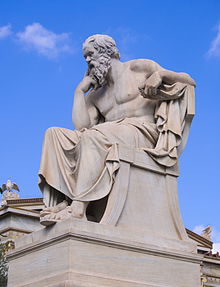
SocratesOn March 25th, 2019 the New York Times published the following Op-Ed column by Peter Atterton, a professor of philosophy at San Diego State University.

A God Problem

If you look up “God” in a dictionary, the first entry you will find will be something along the lines of “a being believed to be the infinitely perfect, wise and powerful creator and ruler of the universe.” Certainly, if applied to non-Western contexts, the definition would be puzzling, but in a Western context this is how philosophers have traditionally understood “God.” In fact, this conception of God is sometimes known as the “God of the Philosophers.”

As a philosopher myself, I’d like to focus on a specific question: Does the idea of a morally perfect, all-powerful, all-knowing God make sense? Does it hold together when we examine it logically?

Let’s first consider the attribute of omnipotence.

You’ve probably heard the paradox of the stone before: Can God create a stone that cannot be lifted? If God can create such a stone, then He is not all powerful, since He Himself cannot lift it. On the other hand, if He cannot create a stone that cannot be lifted, then He is not all powerful, since He cannot create the unliftable stone. Either way, God is not all powerful.

The way out of this dilemma is usually to argue, as Saint Thomas Aquinas did, that God cannot do self-contradictory things. Thus, God cannot lift what is by definition “unliftable,” just as He cannot “create a square circle” or get divorced (since He is not married). God can only do that which is logically possible.

Not all philosophers agree with Aquinas. René Descartes, for example, believed that God could do absolutely anything, even the logically impossible, such as draw a round square. But even if we accept, for the sake of argument, Aquinas’ explanation, there are other problems to contend with. For example, can God create a world in which evil does not exist? This does appear to be logically possible. Presumably God could have created such a world without contradiction. It evidently would be a world very different from the one we currently inhabit, but a possible world all the same. Indeed, if God is morally perfect, it is difficult to see why he wouldn’t have created such a world. So why didn’t He?

The standard defense is that evil is necessary for free will. According to the well-known Christian philosopher Alvin Plantinga, “To create creatures capable of moral good, [God] must create creatures capable of moral evil; and He can’t give these creatures the freedom to perform evil and at the same time prevent them from doing so.” However, this does not explain so-called physical evil (suffering) caused by nonhuman causes (famines, earthquakes, etc.). Nor does it explain, as Charles Darwin noticed, why there should be so much pain and suffering among the animal kingdom: “A being so powerful and so full of knowledge as a God who could create the universe, is to our finite minds omnipotent and omniscient, and it revolts our understanding to suppose that his benevolence is not unbounded, for what advantage can there be in the sufferings of millions of the lower animals throughout almost endless time?”

What about God’s infinite knowledge — His omniscience? Philosophically, this presents us with no less of a conundrum. Leaving aside the highly implausible idea that God knows all the facts in the universe, no matter how trivial or useless (Saint Jerome thought it was beneath the dignity of God to concern Himself with such base questions as how many fleas are born or die every moment), if God knows all there is to know, then He knows at least as much as we know. But if He knows what we know, then this would appear to detract from His perfection. Why?

There are some things that we know that, if they were also known to God, would automatically make Him a sinner, which of course is in contradiction with the concept of God. As the late American philosopher Michael Martin has already pointed out, if God knows all that is knowable, then God must know things that we do, like lust and envy. But one cannot know lust and envy unless one has experienced them. But to have had feelings of lust and envy is to have sinned, in which case God cannot be morally perfect.

What about malice? Could God know what malice is like and still retain His divine goodness? The 19-century German pessimist Arthur Schopenhauer was perhaps the first philosopher to draw attention to what he called the “diabolical” in his work “On Human Nature”:

For man is the only animal which causes pain to others without any further purpose than just to cause it. Other animals never do it except to satisfy their hunger, or in the rage of combat …. No animal ever torments another for the mere purpose of tormenting, but man does it, and it is this that constitutes the diabolical feature in his character which is so much worse than the merely animal.

It might be argued, of course, that this is precisely what distinguishes humans from God. Human beings are inherently sinful whereas God is morally perfect. But if God knows everything, then God must know at least as much as human beings do. And if human beings know what it is like to want to inflict pain on others for pleasure’s sake, without any other benefit, then so does God. But to say that God knows what it is like to want to inflict pain on others is to say that God is capable of malicious enjoyment.

However, this cannot be true if it really is the case that God is morally perfect. A morally perfect being would never get enjoyment from causing pain to others. Therefore, God doesn’t know what it is like to be human. In that case He doesn’t know what we know. But if God doesn’t know what we know, God is not all knowing, and the concept of God is contradictory. God cannot be both omniscient and morally perfect. Hence, God could not exist.

(I shall here ignore the argument that God knows what it is like to be human through Christ, because the doctrine of the Incarnation presents us with its own formidable difficulties: Was Christ really and fully human? Did he have sinful desires that he was required to overcome when tempted by the devil? Can God die?)

It is logical inconsistencies like these that led the 17th-century French theologian Blaise Pascal to reject reason as a basis for faith and return to the Bible and revelation. It is said that when Pascal died his servant found sewn into his jacket the words: “God of Abraham, God of Isaac, God of Jacob — not of the philosophers and scholars.” Evidently, Pascal considered there was more “wisdom” in biblical revelation than in any philosophical demonstration of God’s existence and nature — or plain lack thereof.


open arms JesusThe following is an Op-Ed response I will be sending to the New York Times (I’m guessing it will not be published)

A Problem with A God Problem

I would like to humbly respond to Professor Atterton’s Op-Ed published on March 25, 2019.

There are a great number of Christian academics who are vastly more qualified to debate the plausibility of our “Western” God. I am simply an intellectual “commoner” with no formal theological or Bible training. My only training is by personal study of the Bible and striving to follow Jesus. For me, this pursuit goes way beyond satisfying my soul and spirit, as well as my intellect. I wouldn’t bother with it if it didn’t.

Here’s a ‘layman’s’ shot at responding to some of Professor Atterton’s assertions:

Atterton questions, “Does the idea of a morally perfect, all-powerful, all-knowing God make sense?” He first challenges the notion of omnipotence by presenting the age-old conundrum of, “Can God create a stone that cannot be lifted?”

This is a fun little mind-bender but my simple response is that if God wanted to create something that God couldn’t lift or change after God created it, God absolutely could. It would be God’s choice. It would be self-limiting because it would serve God’s purpose.

According to the Bible God is immutable. By God’s choice, who God is will not change. For eternity God’s very nature was set in stone. God will not lift it from its place.

Personally, I can accept that everything God does is for a purpose whether or not it is within my capacity to understand it. God created something we call a square and something we call a circle. If there was a purpose for ‘squircle’, then God would create it.

The professor then asked, “Can God create a world in which evil does not exist? if God is morally perfect, it is difficult to see why he wouldn’t have created such a world. So, why didn’t He?”

According to the Bible, God did. God created a world that was intended to be without pain and evil – full of peace and harmony. Is it so difficult to comprehend the concept of God’s love allowing for free-will with the consequence being that things will get messy as man chooses a path away from God’s intended design? (much like loving parents allowing adult children to go out on their own. Risky Business)

It is clear to me that we live in a world that is not the world God intended – full of selfishness, pain and chaos. Jesus stated, that there is “another” who rules over this world and who’s bent on our destruction. (Even the professor acknowledged the “diabolical” in man’s behavior) Whether you believe that or not, our free will allows us to rule over our own lives. Our bad and nefarious decisions create rippling chaotic consequences – human pain, animal suffering, wars and even ‘natural’ disasters (famines, earthquakes, etc. Hmm? Much of these many people now assert are catastrophic results of “man-made” Climate Change)

I understand that the professor takes issue with certain supernatural aspects of Jesus’s life. Things like “the incarnation” that cannot be reasoned but requires faith. So, let’s consider something a bit more factually concrete. Mathematicians Stoner and Newman wrote a book entitled Science Speaks. It set out the odds of any one man in all of history fulfilling even eight of the 60 major Biblical prophecies (and 270 ramifications) about the Messiah. All of these were fulfilled by the life of Christ. The probability that Jesus could have fulfilled even 8 such prophecies would be 1 in 100, 000, 000, 000, 000, 000. To fulfill all would be literally impossible odds.

I can accept the above fact as a good “reason” to believe in Jesus’ own assertion that he was/is the Son of God and that His life on earth was the human reflection of God’s perfection even though it’s hard to reason with my pea-brain how God came down to be a man.

Mr. Atterton then questions God’s infinite knowledge — His omniscience being challenged to know all things including sinful thoughts thus making God sinful and morally imperfect.

Actually, the Bible does not say that being tempted by a lustful or envious thought is sin. Dwelling on and acting upon those feelings is sin. So, when the Bible says that Jesus was tempted/enticed in every way as a human but never sinned, we can know that God knows something of those thoughts.

Aha! Then God does not know of the painful results of sin having never experienced sinning and its consequences! But, Jesus, as the Son of God, once again defeats that argument. Though he never sinned, he bore the burden of humanity’s sin and experienced the consequences. He experienced it all.

Personnally, I believe that God has always been perfectly good and righteous even while having perfect knowledge of all things, including sin. I don’t know how that works. God likely knew that someday some philosopher would argue that God doesn’t know of human pain and suffering, and as part of God’s plan, God crushed that argument with the life of Jesus.

The professor argues that Evil is necessary for Free Will to exist. I would simply flip the perspective to say that Free Will is necessary for authentic love to exist. Evil then comes from wanton rebellion and bad choices. The God that I know, let’s us go where we wish but does not give up. God does not impose but pursues to win back God’s creation to God’s goodness.

What about malice? Malice is an extreme form of hate. Does God hate anything? Yes, God hates evil. (in many cases hate is not a sin) But, I’m not sure that God experiences malice when judging man righteously and even lovingly. Justice is good. We all should want justice but even more so forgiveness and grace. If people do not want forgiveness and grace then they will get righteous judgement – with no malice involved. The Bible says that God does not take joy in our suffering but feels/understands our pain.

These challenges the professor raises are good questions but really nothing new. Over the centuries many brilliant Christian scholars have addressed these questions (better than I ever could) using logic to arrive at really good answers. (more recently names like C.S. Lewis, Dallas Willard and Timothy Keller come to mind)

These answers satisfy my intellect and strengthen my faith but likely will not satisfy those who want to argue God‘s existence by human reason alone. The limited intellect of man can take us down the bottomless pit of endless rabbit trails leaving us with no good answers, only doubt and confusion.

As for Pascal, he did not reject “reason” but only as a sole basis for discovering God. The words sewn into his jacket saying, “God of Abraham, God of Isaac, God of Jacob — not of the philosophers and scholars” is evidence Pascal realized that there was more “wisdom” in discovering God through faithful pursuit using the mind, body and spirit as these “Fathers of Faith” did than through any solely philosophical or academic endeavor.

Pascal’s revelation echoes the Apostle Paul’s words written to the believers in Corinth, “Has not God made foolish the wisdom of this world? For since, in the wisdom of God, the world through wisdom did not know God, it pleased God through the foolishness of the message preached to save those who believe. For Jews request a sign, and Greeks (the philosophers) seek after wisdom; but we preach Christ crucified, to the Jews a stumbling block and to the Greeks foolishness, but to those who are called, both Jews and Greeks, Christ the power of God and the wisdom of God. Because the foolishness of God is wiser than men, and the weakness of God is stronger than men.” I Corinthians 1:20-25


I welcome any and all comments and feedback before I send this off to the NY Times