 “that you do not become sluggish, but imitate those who through faith and patience inherit the promises” – Hebrews 6:12
The Wigglesworth Dilemma: The apparent conflict between the behavior and Character of Christ found in the Gospels and what appears to be contrary behavior of those in seemingly powerfully but effective Christian healing ministry.
I continued on this investigation wondering if there is any basis for God working through Smith Wigglesworth’s use of violent acts?
I came up with these 5 questions as I sought wisdom on the matter:
- Has God Used His People through Violent Means Before?
- Does God choose to use imperfect/flawed human beings?
- Can God use violent acts to bring Himself glory and to win people to Christ?
- How/why might God use a man’s violent temper to accomplish His will?
- Jesus was never violent but did He ever act out of anger or inappropriately?
-
Has God Used His People through Violent Means Before?
- God has used his people to fight off evil in the Old Testament. Even today there are physical battles going on between the forces of good and evil involving violent action. (Although the lines between good and evil have become quite blurred in these days)
- Yet, Jesus never advocated or modeled any violent behavior. Nor, did his disciples after Jesus’ death ever model or advocate the use of violence.
-
Does God choose to use Imperfect/flawed human beings? (Unfortunately, that’s all He’s got)
- The Biblical record clearly shows that God uses imperfect people but those who have a heart for Him. God not only uses all he made us to be but even that which the world has twisted out of shape. SW, before coming to Christ was known to have a violent temper. As a Christian, Wigglesworth was reportedly courteous, kind, and gentle. However, he became forceful when dealing with the devil, whom he believed caused all sickness. Did God use what the world made of him and use it for good?
God honors the underlying heart and dedication of the man.
-
- King David – David was a moral failure in some major ways. He committed adultery and in trying to hide his sin, he sent Bathsheba’s husband Uriah to certain death. King David’s power had corrupted him to think he could get away with anything. Yet, in Acts 13:22, it says God found David to be a man after his own heart. David acknowledged his sin and asked for forgiveness. He paid a price for his wrong but God loved his heart and was still able to use him for God’s glory.
- Abraham and Isaac – God spoke to Abraham to take his beloved son and sacrifice him. How was that consistent with God’s loving character? Abraham must have been confused. Why would God promise him a son and then take the son away? It feels like a strange inconsistency or maybe even a dirty trick. But, based on Abraham’s relationship with God, he was certain he knew God’s character. Once, he even asked God in Genesis 18, “Will not the judge of all the earth do right?”
- Abraham obeyed God’s unexpected command because he trusted God’s promise and knew him to be good and trustworthy. Abraham didn’t believe Isaac would die. In fact, God was so certain that Abraham knew God’s heart that He used Abrahams heart as a reflection of His own heart and the story as a prophetic foretelling of how God would be willing to sacrifice his own son to save mankind. James 2:23 “And the Scripture was fulfilled which says, “Abraham believed God, and it was accounted to him for righteousness.”
Do we always hear God correctly?
-
- Is it possible that SW on occasion misunderstood God’s instruction and acted incorrectly? SW was a damaged human as we all are, but even someone as dedicated and gifted at discerning God’s spirit as SW still leaves the possibility he occasionally misheard God.
- I know, for myself, that when I have dedicated myself to seeking God’s will and hearing His voice on a matter that I have to wade through my own self-interests, desires and wounded-ness. I’m not always successful and get it wrong. (Still amazed at how often God still uses it for good.)
- Even if SW actions in these cases were misguided, God still used it. Many Christians then and now denounce Wigglesworth and his actions. Yet, haven’t there been sincere Christians over the decades that have been sinful or misguided or who misunderstood God in certain ways but were still used by God because he honored their core faith and desire?
- Jehu in 2 Kings was a man that did not always behave righteously but God blessed Jehu for his obedience to stand up for the things of God in certain matters, granting him a dynasty that lasted four generations. Eventually, God took His blessing away from him for willfully choosing to continue in sin. God still used the imperfect man Jehu.
-
Can God use violent acts to bring Himself glory and to win people to Christ?
That leads me to the question: Can an act of physicality/violence be an act of love?
 Yes, I believe we see many examples of this:
- Slapping someone who has become incoherent or extremely irrational.
- Providing loving correction to a child by a healthy spanking
- Providing for a person’s safety by shoving them away from oncoming danger
- Using violence to protect a victim from violence
- Performing invasive surgery for healing and to save a life – Going under the knife, as they say, is not intentionally violent but you can’t get much more physical – cutting flesh and breaking bone for a person’s welfare.
Where is the violence directed? – Jesus declared in Matthew 10:34 that he did not come to sprinkle peace but he came with a sword (machara) to do spiritual surgery for deep healing out of love. For SW, he was seeing in these people an evil spirit that had to be removed and God was leading him, on occasion, to get physical in this way.
Were those needing healing willing participants? – SW always prepared the people for what God was instructing him to do and then asked them for permission. Following Proverbs 3:5 – “Trust in the Lord with all your heart, And lean not on your own understanding” and based on their desperate need and desire to stretch their faith, they would then give him permission.
What were the Results? – We have every right to make a judgement as to how a behavior stands up to the measure of Christ but there is no better measure than – was God called upon ‘In Jesus’ name’ and did God answer the call? SW exerted his anger and physicality towards the demons at the source of the damage and not to the person. The claim has been repeated that no one was ever hurt by his actions but only healed.
How do we handle others in Christian ministry who behave differently?
Jesus addressed a similar issue with his followers taking exception to “others” healing in Jesus’ name in Mark 9:38 – “Teacher,” said John, “we saw someone driving out demons in your name and we told him to stop, because he was not one of us.” “Do not stop him,” Jesus said. “For no one who does a miracle in my name can in the next moment say anything bad about me, for whoever is not against us is for us.”
Paul wrote something similar in Philippians 1:18 “What then? Only that in every way, whether in pretense or in truth, Christ is preached; and in this I rejoice, yes, and will rejoice.”
What about Matthew 7:1-3? – “Judge not, that you be not judged. For with what judgment you judge, you will be judged; and with the measure you use, it will be measured back to you. And why do you look at the speck in your brother’s eye, but do not consider the plank in your own eye?”
We have every right and responsibility to size up anyone in Christian ministry based on scripture and to make decisions accordingly for how we are led. But, I believe it is clear that we are not called to “pass judgement” on how God can use what I may gauge as a biblicaly challenging ministry. By God’s leading we may be called upon to bring correction but my primary charge is to keep my focus on how God is leading me in the ministry I have been appointed to.
-
How/why might God use a man’s violent temper to accomplish His will?
- To compel into action– Upon seeing the demons who occupied the health of those seeking healing, did God redirected SW’s temper to forcefully attack those spirits? Perhaps God used Smith’s penchant for anger to motivate Smith into action.
- To connect with a culture – 1 Corinthians 9:22 Paul declares – “. . . I have become all things to all people so that by all possible means I might save some.” In this case God used a strong, working-class, hard-nosed individual to connect with the rugged common folk of the day.
- For the purpose of getting the people to focus their attention. SW said the reason he spoke bluntly and acted forcefully with people was that he knew he needed to get their attention so they could focus on God.
“God led him through anger directed toward the devil and sickness to act in a seemingly rough way. No one was ever recorded as being hurt by this startling treatment. Instead, they were remarkably healed. He believed that Satan should never be treated gently or allowed to get away with anything.” (From The Best of Smith Wigglesworth (pp. 234-235). Whitaker House.)
- For myself, on several occasions when praying for others, the thought has come into my mind/spirit that some people who step forward for prayer do not really believe anything will happen. They stand in a physical, mental and emotional fog. They even fear what a possible change to the unfortunate circumstances they have come to accept and let define them might mean to their lives. They are completely hopeless and faithless. Do they even want to be healed?
- In this regard, SW’s actions strike me as something like when Jesus asked what seems a merely rhetorical question “Do you want to be healed?” to the invalid in John 5:6. Of course he did. Or did he?
- (BTW – This is also the very episode where when challenged by the Pharisees in John 5:19 Jesus declares, “Most assuredly, I say to you, the Son can do nothing of Himself, but what He sees the Father do; for whatever He does, the Son also does in like manner.”)
- On the occasions mentioned above I have felt compelled to ask the same question – “Do you want to be healed?” To be completely transparent there are times I have felt like some people needed a good slap to say, “Hey, wake up! God is really here and He wants to enter into your life to only do good for you.” (I have always resisted this temptation)
- Honestly, there are occasions when I have needed a good slap myself. Not a physical slap but God certainly knows how to lovingly jar me awake. (I’m left figuratively rubbing my jaw but saying, Ouch! I needed that!) It’s the kind of verbal slap (Jarring wake-up call) that Jesus gave the same healed beggar later on in John 5:14. Jesus catches up with the healed man now begging at the temple and says to him, “See, you have been made well. Sin no more, lest a worse thing come upon you.” In other words, “Hey, you have been given new life, don’t waste it by going back to the old life!” (smack!)
-
Did Jesus ever act out of anger or in a seemingly inappropriate way?
Did Jesus ever act out of Anger?
The only time in the Gospels Jesus is described using the word ‘angry’ was in Mark 3:1-6. He became angry/disappointed with the Pharisees lack of compassion for a man seeking to be healed on the Sabbath. What did Jesus do with that anger? – he transferred it to a show of love by healing the deformed hand.
In the case of Jesus cleansing the temple, most people assume Jesus was acting out of righteous anger. I would argue otherwise; that Jesus did not go into a wild rage but simply did a thorough cleansing to put his Father’s house back in order. However, if Jesus was acting out of anger the result was kingdom teaching, healing and joyous celebration of God.
Did Jesus act inappropriate at any time?
I’d argue – quite often. Let’s take Jesus’s healing the blind man in John 9:6-11 as an example. If I was able to fully listen to God’s instruction as an imitator of Christ and came upon a blind man that God showed me to, first spit on the ground, create mud and then smear it over this eyes. Would I do it? Furthermore, would I then tell him to wade through a crowd of people, likely laughing at his muddy face as he struggled to find water to wash it off? Would I really risk humiliating the man If that was the direction God gave me? Would I act on that instruction? Seems like a heartless and cruel joke to play on a blind person.
Yet, what was the result? Gloriously, the blind man’s sight was restored. Those who were laughing were now sobered by the healing reality. But, beyond that the man came to know that God was real, that God loved him and he was no longer defined by the sin others attributed to him – a man now experiencing the fullness of God by physical, emotional and spiritual freedom.
Not a violent bone in Jesus’s body?
Scripture indicates that Jesus was tempted in every way, so this likely means that he was tempted at some point to be violent. He resisted the temptation and remained our perfect example. Yet, there were some episodes where Jesus appears to be acting unkindly and out of Christ-like character.
 Below are just a few examples of Jesus seemingly acting inappropriately:
-
-
- As described above – when he humiliates the blind man by smearing mud on his face
- When he calls the Phoenician woman a dog
- When he casts demons into swine and they charge off a cliff to their death
- When he curses and kills a fig tree for not providing him figs
- When he waits 3 days and lets Lazarus die
- When he tells his disciples, that they can’t follow Him unless they hate their family
-
In these and other episodes there were people who were dismayed and even appalled by Jesus’ behavior. It wasn’t until the work was completed and we take a closer look that we can understand that this behavior was a means to fully realize God’s goodness, righteousness and truth.
If Jesus only did what the Father showed Him to do then these were examples of Jesus merely acting out how He was directed by the Father. Who of us fully knows the purpose of these awkward gyrations? I know I don’t and I’m pretty sure that there is no other person that knows with certainty why these actions were necessary for miracles to take place.
What do I know?
What do any of us really know about the endless capabilities of God? We do know that it was never the strange element Jesus used as part of the healing, but God’s hand in it. Whatever Jesus did, whether it was smearing mud, touching a tongue, giving a wet-willy, it was somehow about triggering faith – which always pleases God.
Finally, I recruited my tech-savvy friend Albert to search for a way to reach Smith Wigglesworth’s great Granddaughter, Lillian De Fin. He easily found her Facebook page. (I don’t know how I missed it). I reached out and asked Lillian about the infamous episode. She was generous to respond and I was not surprised by her message reprinted below:
“Hi David, I have heard my family discuss the healing of the baby on the stage. None of them were present when this healing took place. So, they can only repeat what they have heard. It would seem that many of the stories have been exaggerated over the years. From what I know the story is that the baby had a spinal problem. Most likely a condition known as spina-bifida. He did apparently put the baby on the stage and push it off the stage with his foot. The baby landed on his back fully healed. I am told many times the people would gasp at his actions but he always said “I know my business”. He operated in the gift of discerning of Spirits. My mom told me that at times he would see the demon causing the sickness and at other times he would see two hands touching the sick body. I think it’s unfortunate that people need to keep discussing the controversial healings when there are so many wonderful miracles that took place in grandpa’s ministry.”
Next Week: The Wigglesworth Dilemma – Part IV: Final Conclusions
Because of the continued interest in the ministry of Smith Wigglesworth, I have combined the posts with additional material into a book. Feel free to enjoy the posts or purchase the new book on Amazon.
 The Wigglesworth Dilemma – Definition: The apparent conflict between the behavior and Character of Christ found in the Gospels and what appears to be contrary behavior of some people in Christian healing ministry.
 In fact, while there are several recorded accounts and acknowledgements of SW’s occasional healing practice involving slapping, punching, or kicking, the occurrences recorded seem rare. The indication is also that these were not acts of extreme violence. The slap, punch or kick were startling but not actually ‘heavy handed’ or forceful.
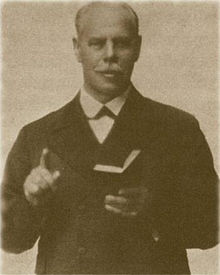 Pursuing Hearing Gods Voice
 Smith raised the child over his head and prayed. The Mother and Father praised God thinking Smith was lifting the child in a symbolic dedication to God. What was Smith led to do? Smith threw the baby against the wall! The baby fell to the ground as Smith then went up to the baby and kicked it like a football (Soccer Ball).
 Tucked In and Lamps Burning