 “that Christ may dwell in your hearts through faith; that you, being rooted and grounded in love, may be able to comprehend with all the saints what is the width and length and depth and height— to know the love of Christ which passes knowledge filled with all the fullness of God.” –Ephesians 3:17-19
Pastor Josh at my home church preached a great message on the above scripture highlighting what God’s love is – Incomprehensible, Unconditional, Infinite, Active, Unfailing, Present, Unending and Transforming. Then experiencing God’s love results in – Gratitude, Confidence, Joy, Trust, Peace, Comfort, Expectancy, and Love. To come to understand the full love of Christ.
His message took me back to a study I had done on Ephesians 3:19 and the distinction between knowing and knowledge or knowing beyond knowledge. Hmmm? What does that mean? I thought I’d revisit the study and post my thoughts/conclusions.
The Greek word for “to know” is the verb gnōnai. It has broad applications with many implications. It is a verb so it means that it is active. While the word for “Knowledge” is gnōseōs. It is a Noun meaning what is known, doctrine, or wisdom.
 The difference is that one is about actively and experientially/relationally knowing something/someone as opposed to having a fixed knowledge about something/someone. Head knowledge versus relational knowledge. I can know a lot about someone by reading their biography but that doesn’t compare to what I know from a close, intimate relationship with that person.
It made me consider the words we use to describe the reality of our spiritual state. As Christians, we often refer to our spirituality in Christ as our FAITH. I’m not sure that is the best way to define and describe our life in Christ. We use nouns such as hope, belief, and trust but most often we refer to it as our FAITH.
How do we Describe Our Spiritual State?
As I see it, there is a Continuum of words/elements that conveys our spiritual state or reality. Certainly, it is not really as linear as what I propose but it represents a maturing from something that is less firm/less tangible to something that is more concrete. My 10-step continuum of a Christian’s spiritual state/reality is as follows:
1. It starts with a DESIRE for something greater – wanting to fill a void that only God can fill
2. That desire then springs into HOPE – considering there is something that can fill this void
3. We are then challenged to step out into FAITH – accepting that what is unseen is real
4. As we step out, our faith grows to BELIEF – treating what is unseen as real
5. From there we extend our belief to TRUST – acting on what is unseen as more real
6. We then grow in our COMPREHENSION/UNDERSTANDING – Satisfying our intellect with what is unseen
7. That matures into growing CONFIDENCE – Stepping out to actively express all the prior elements
8. Which generates OPTIMISM/EXPECTATION – A heightened level of Confidence
9. Which then blossoms into staunch CONVICTION – Being sold out to the Cause of Christ in our life
How much more concrete can our spiritual state be than Total Conviction?
I would humbly make the case that there is one more level.
10. Beyond Conviction is intellectual, experiential, and relational KNOWLEDGE – the highest spiritual state is TO KNOW
Knowledge: The fact or condition of knowing something with familiarity gained through experience or association.
Oooh, Does Spiritual Maturity Mean Attaining all Knowledge? Is it Time to Give Up? Not Yet
Consider A Court of Law
If we are called to testify as a witness to the reality of God and the reality of our relationship with Christ we often talk in terms of our faith or what we believe, or how we trust in God, or we speak of our strong conviction in the reality of God.
BUT, the highest standard of what a witness is to testify to is as to what they KNOW – our KNOWLEDGE of what has been demonstrated to be true.
 If we are called to testify in a courtroom we are called to speak of that which we KNOW. If we begin to speak of that which we believe or think, we will hear lawyers scream OBJECTION! IRRELEVANT! or HEARSAY!
I have often relied on giving testimony to others about God in my life based upon expressing it in terms of faith or belief or trust. And I believe that is true of many Christians.
Now, don’t get me wrong, we cannot be in a relationship with God without all the elements defined above – faith, belief, trust, etc. All of it is critical. In fact, we know we are saved by faith and that it is impossible to please God without faith.
However, author Dallas Willard writes, “The difference between belief and knowledge is huge and affects every area of life. Not having knowledge of the central truths of Christianity is certainly one reason for the great disparity between what Christians profess and how they behave.”
Still, I believe the truth is that there is so much more that we KNOW or can KNOW to be true that is so much more powerful when we share, testify, or express our Life in Christ.
There is a body of knowledge (God’s Word) about God and about Jesus that scripture encourages us to grow in:
•Proverbs 1:7 – The fear of the Lord is the beginning of knowledge, But fools despise wisdom and instruction.
•Proverbs 18:15 – The heart of the prudent acquires knowledge, And the ear of the wise seeks knowledge.
•Hosea 4:6 – My people are destroyed for lack of knowledge.
•1 Corinthians 1:5 – that you were enriched in everything by Him in all utterance and all knowledge,
•Ephesians 4:13 – till we all come to the unity of the faith and of the knowledge of the Son of God, to a perfect man
•Colossians 1:9 – that you may be filled with the knowledge of His will in all wisdom and spiritual understanding;
In Why We Can Trust Spiritual Knowledge by Dallas Willard, he writes that a core branch of learning for the early major teaching institutions (Yale, Harvard, etc.) included Knowledge of such things as the very existence of God, the presence of God in the world, Moral values – who is a good person and how to become a good person, the reality of Christ in the spiritual life. It was understood that there was and is an indispensable role of knowledge in faith and life – that there is a body of uniquely Christian knowledge, one that is available to all who would appropriately seek it and receive it—whether Christians or not.
The body of knowledge that our earliest Institutions of learning were founded to advance is no longer taught there. Harvard and Yale and many other Universities were established to promulgate what is known of God. If it is taught at all, it is no longer taught as knowledge of God but is relegated to one of many belief systems and philosophy or traditions or legends. According to them, true knowledge is only found in the “concrete” sciences.
Willard says that God’s statement, “The truth shall make you free,” primarily a reference to moral truth appears on more university walls than any other statement— though most faculty and students today have no idea of what it means, where it came from, or why it is there.
He goes on to detail the core Knowledge that establishes our faith and belief, identifying that even the sciences growingly, reluctantly are more and more coming to grips with the fact that there is a master designer behind all the science from the beginning and the evidence supports the knowledge that this designer continues to make His presence known in our world today.
So our challenge is, What do each one of us really KNOW about God? What is it I really KNOW? What do we KNOW of our Christianity that we can testify to? It is all well and good when we share our faith and belief and quote scripture but it must be substantiated by what we KNOW to be true – the reality of God showing up in our lives.
You Better Know!
When my wife, Eleni, and I first came to Christ we were at a Christian concert and after the concert, a young longhaired kid (Greg Laurie) came out and shared the message and gave the invitation. I thought, “What does this kid KNOW?”
I was challenged to step out in faith and follow Jesus for the rest of my life. I thought, “Wow, you’re asking me to make a lifetime commitment to someone I don’t even know?”
Fortunately, by the words spoken and the scripture quoted, I had, over my life, come to know that they were true. So I stepped forward, believing that if this God is real, he would make himself known to me. I’ll step out in faith and you demonstrate you are real. (Which God did and continues to do)
Days afterward, with our Bibles fresh in hand, we met with a childhood friend – one of these smart guys who will debate anything and everything. We shared what happened to us and he grilled us about our faith. Once we demonstrated we knew very little he left telling us, “Boy, you guys better know what you’ve gotten yourself into!”
Truer words were never spoken. So, this has been an ongoing challenge for me that whatever I share with others I better know to be true for myself. All of who God is – his love, peace, joy, grace, goodness righteousness, truth, power, and justice and his guidance for my life. Ultimately, we are encouraged to move even beyond our knowledge and by His Spirit to be an expression of the Fruit of the Spirit.
Even as scripture promotes advancing in Knowledge, it makes clear that we must be wary of just relying on our knowledge/intellect:
•1 Corinthians 8:1 – “Now we know that we all have knowledge. Knowledge puffs up, but love edifies.”
•2 Corinthians 8:7 – “But as you abound in everything—in faith, in speech, in knowledge, in all diligence, and in your love for us—see that you abound in this grace also.”

Moving our Knowledge from the Head to the Heart.
This is where the distinction between knowing beyond knowledge lies in Ephesians 3:19 “to know the love of Christ which passes knowledge; that you may be filled with all the fullness of God.
When Pastor Josh lists God’s love as Incomprehensible, Unconditional, Infinite, Active, Unfailing, Present, Unending, and Transforming it is not about head knowledge of a distant God we learn about in books. It is about a God who is not only present and active but interactive and who when we call, answers. When we draw near, He embraces us in very real and tangible ways. That’s what I call a Relationship. (For me, distant relationships just don’t work)
The Bible is God’s living word. It is alive and God speaks powerfully to us through it. Yet, if we are in a real relationship, it must go beyond book and head knowledge to something experiential and relational.
Many in the Christian world shy away from the experiential. Why? Because it can often be abused and can lead us away from the solid foundation and security we find in God’s written word. When James writes that faith without works is dead, I believe He is saying that we must act out our faith and beliefs and experience God in our daily lives. Step out in faith into real experience.
Growing in the knowledge of God is a lifetime journey. It is about seeking him in His eternal, living word and experiencing his reality walking and talking with him throughout our life. 1 Corinthians 1:5 says, “that you were enriched in everything by Him in all utterance and all knowledge,” – What we grow to know about him and how he speaks to us.
Many of the great heroes of faith not only testified to the perfect goodness of God’s law but to the beautiful experience of having a walking/talking relationship with God. This notion is embedded in the Greek word for Prayer – Proseuchomai which is made up of 2 root words: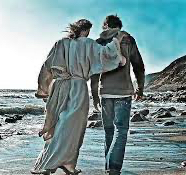
1. Pros – is a preposition of direction to give a sense of place or location. forward – toward – alongside of – drawing close to. (Example: Matthew 14:29 – And He said, “Come!” And Peter got out of the boat, and walked on the water and came toward Jesus.) and,
2. Euchomai – to make your wishes known.
The image is of one coming alongside to walk with God and making your wishes known. And we know that He responds by 1 John 5:14-15 – “This is the confidence we have in approaching God: that if we ask anything according to his will, he hears us. And if we know that he hears us-whatever we ask-we know that we have what we asked of him.”
In the words of Dallas Willard – “Whatever your situation, there is nothing more important on earth than to dwell in the knowledge of Christ and to lovingly bring that knowledge to others.” And as Peter encourages in 2 Peter 3:18 – “but grow in the grace and knowledge of our Lord and Savior Jesus Christ.”
To know Jesus beyond knowledge is not a new notion. A walking, talking growing relationship with God is beautifully described in the great hymn written over 100 years ago, In the Garden
I come to the garden alone
While the dew is still on the roses
And the voice I hear, falling on my ear
The Son of God discloses
He speaks and the sound of His voice
Is so sweet the birds hush their singing
And the melody that He gave to me
Within my heart is ringing
I stayed in the garden with Him
Though the night all around me is falling
But He bids me go, through the voice of woe
His voice to me is calling
Refrain: And He walks with me
And He talks with me
And He tells me I am His own
And the joy we share as we tarry there
None other has ever known
 Tucked In and Lamps Burning