Supplement to – Jesus: Our Commander In Chief? posted May 7th
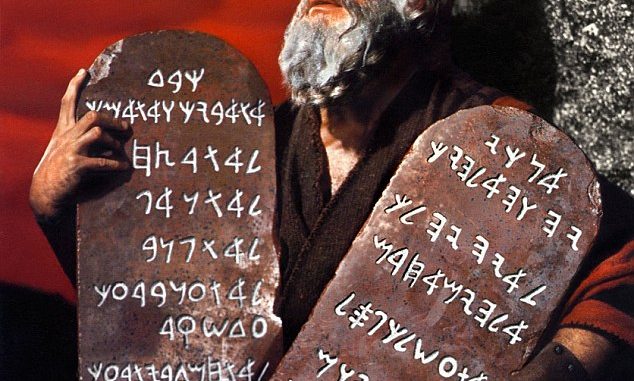 What would seem the clearest use of “Command” in the New Testament is the reference to God’s original Ten Commandments. In John 15:10-12 Jesus says, “If you keep My commandments, you will abide in My love, just as I have kept My Father’s commandments and abide in His love. These things I have spoken to you, that My joy may remain in you, and that your joy may be full. This is My commandment, that you love one another as I have loved you.”
Jesus refers to His Father’s Commandments saying His commandments are the same as His Father’s. Then Jesus is challenged in Matthew 22 to identify the greatest commandment in the law. He responded, “‘You shall love the Lord your God with all your heart, with all your soul, and with all your mind.’ This is the first and great commandment. And the second is like it: ‘You shall love your neighbor as yourself.’ On these two commandments hang all the Law and the Prophets.” To His disciples, He gives what I see as His own personalized “Commandment” in John 13:34, “A new commandment I give to you, that you love one another; as I have loved you, that you also love one another.”
So, loving God and one another is God’s primary “Command.”
Can Love Be Commanded?
My question is this: How can we be commanded to love anyone? We are given free will to enable us to freely choose to love God and others. It is not love if we are forced against our will to do so.
The Greek used here for commandments is Entolē, meaning an ordinance, injunction, command, or law. It comes from Entellomai, which means an Authoritative Prescription. Is there any latitude to consider another meaning for the term, “Ten Commandments?”
Is It The Ten Commandments or Ten Words?
What I recently learned is that the Title of the “Ten Commandments” is not accurate to the original language. In the Septuagint, the Greek translation of the Hebrew Bible was translated as Dekálogos or “ten words”; this Greek word became decalogus in Latin, which entered the English language as “Decalogue,” providing an alternative name – the Ten Commandments.
So, the Ten Commandments or literally the “Ten Words” in the Hebrew, are understood in light of the covenant in which they were given. The Ten Words should be read in a covenantal context – not as demands put upon the people but as an expression of the people’s devotion to Yahweh for His wondrous love.
It’s amazing that Deká-logos or “Ten Words” is the original title for what represents the Old Covenant, and with Jesus’ title as the “Word” (Logos) of God, He fully represents the New Covenant. The Old Covenant is done away with (Hebrews 8) and replaced by the Living Word, Jesus, under the New Covenant – the fulfillment of the law.
John 1:14 – “The Word (Logos) became flesh and made his dwelling among us. We have seen his glory, the glory of the one and only Son, who came from the Father, full of grace and truth.” John goes on to write in verses 16–17, “For from his fullness we have all received, grace upon grace. For the law was given through Moses; grace and truth came through Jesus Christ.”
The Logic of God
An interesting note is that while the Greek Logos is consistently translated as Word, some scholars would say that a better translation from the Greek would be Logic (logos-logic). All that God is, is perfectly, good and right and true. All of who He is and what He does is ordered in perfect logical order. We may not fully comprehend it now, but one day, when every knee will bow (Phil 2:10), it will partly be because of our wonder and admiration for the perfect logic of all He is and all He does.
If You Love Me, KEEP My Commandments
In John 14, Jesus tells his apostles how love is demonstrated to God. In verse 15, he puts it simply, “If you love Me, keep My commandments.” Whoa! I’ll admit that when I read this basic confirmation of my love for God, I blush. Do I really love God when I so often fail to live up to His standards? I guess I really don’t love Jesus because I regularly fail to “keep” God’s commandments. But how does this work in the light of undeserved, unearned grace?
If the translation of “Commandments” is more likely “Authoritative Prescriptions,” then these are what God prescribes for living the full and abundant life that demonstrates honor and love to God.
 So, what does it mean to “Keep” His Commands/Words? Jesus repeats the word Keep/Obey in verses John 14:15 and 23. The Greek words used here both come from the root word Teros, meaning to guard, to note, to detain, or to withhold. My take is that it does not mean we are faultless in obedience, but even when we fail, we embrace His instructions as God’s truth. We hold it close. We regard it as truth. We embrace it as our guide and prescription for what is good, and right, and true in our lives. We seek to live it out in our lives. When we fail to live up to the standard, we know we have failed and then can seek forgiveness and correct our behavior.
If we “Keep” His Words, we agree with the Psalmist, who writes in Psalm 19:7–9, “The law of the Lord is perfect, restoring the soul; The testimony of the Lord is sure, making wise the simple; The statutes of the Lord are right, rejoicing the heart; The commandment of the Lord is pure, enlightening the eyes; The fear of the Lord is clean, enduring forever; The judgments of the Lord are true and righteous altogether.”
Living a faith-based life following Jesus seems illogical to many people. But following the one who ordered the universe and has written prescriptions for life that lead to restoration, wisdom, rejoicing, clear vision, and a cleansed soul seems perfectly logical to me.
Are We Talking This Life or the Next?
Jesus always dealt from an eternal perspective, which includes this realm and the next. So, whether you have one day left on this planet or decades, we all face eternity. Jesus, as “The Living Word” declared in John 10:10, “The thief does not come except to steal, and to kill, and to destroy. I have come that they may have life, and that they may have it more abundantly.” Walking through this realm in relationship with the living God is the more abundant life that is then perfected in Heaven.
Paul clarifies the eternal perspective in 2 Corinthians 4:16-18, “Therefore we do not lose heart. Even though our outward man is perishing, yet the inward man is being renewed day by day. For our light affliction, which is but for a moment, is working for us a far more exceeding and eternal weight of glory, while we do not look at the things which are seen, but at the things which are not seen. For the things which are seen are temporary, but the things which are not seen are eternal.”
Today is the day of salvation. Embrace the living logic/word of God, Jesus Christ and follow Him.
 Tucked In and Lamps Burning