Believers? Why Such Unbelief?

But He said to them, “Where is your faith?” – Luke 8:25

I’m a Believer! A Christ-follower. I know in the core of my being that Jesus was true to all he said he was and to all he said he would do. The evidence is overwhelming that he lived, died, rose from the dead and ascended back into heaven. He is alive. I continue to grow in the knowledge of Jesus by going deeper into his word and responding to his voice.

So, Why So Much Unbelief?
As a follower of Jesus, my relationship compels me to, by faith, follow His leading – listen for his voice and act on his directives. Yet, I often don’t trust enough to act on my faith. I have more than enough experience to believe he is trustworthy and true, but I fail to act. Why?

James addresses this issue in James 2:26 saying, “For as the body without the spirit is dead, so faith without works is dead also.”

I sometimes think that if I could only experience relationship with Jesus in the flesh as the original Apostles did, that I would never fail. Yet, we find on a number of occasions in the Gospels where Jesus directly addressed the disciple’s unbelief. Let’s take a look at 2 episodes.

In Matthew 17 a man brings his epileptic son to the disciples for healing. They fail but Jesus steps in and declares in verse 17, “O faithless and perverse generation, how long shall I be with you? How long shall I bear with you? Bring him here to Me.”

Ouch! Jesus seems to be declaring his disciples as complete and utter failures. I think I hear his frustration and disappointment, Really? How long must I put up with your faithless incompetence? He must be questioning whether he picked the right dudes to follow him.

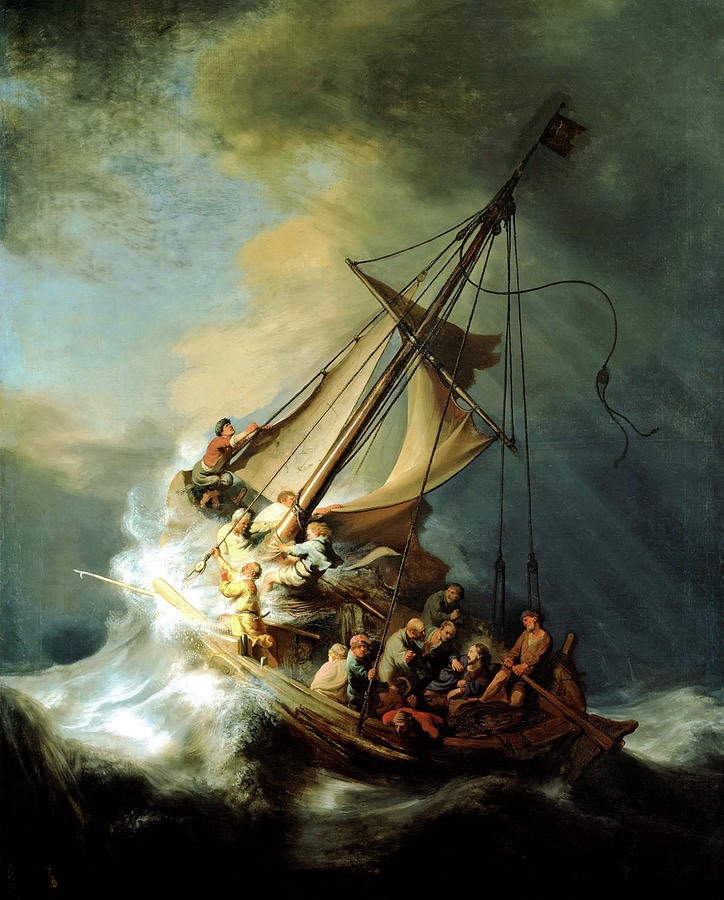
Then in Luke 8 we have another example of the disciples spiritual ineptitude. The disciples are directed to cross the sea while Jesus naps in the back of the boat. A great storm arises and the disciples do all they can to rescue themselves. Finally, they cry out to Jesus and say they are Apollumi – drowning or perishing. Jesus gets up bleary-eyed, shaking his head. He waves his hand at the storm and basically says, “Stop already.” And the storm immediately stops. Jesus then turns to his disciples with what sounds like a tinge of disgust saying, “Where is your faith?” before laying back down.

Ouch! Once again you can hear the irritation and disappointment. How many times have I heard this echo in my head when my faith has proven to be so weak? I declare myself to be a follower of Jesus. I am a believer who has been provided mountains of evidence of God demonstrating His reality – His goodness, righteousness and truth. When I fail to move out and act in faith on his direction He must be so disgusted with me. What a useless fraud!

That’s certainly how I might be tempted to respond to the disciple’s failure. But, if we test all of Jesus’ words against Galatians 5:22-23’s Fruit of the Spirit (love, joy, peace, patience, kindness, goodness, faithfulness, gentleness, self-control), and believe that Jesus words and actions were always a perfect expression of that Fruit then I get a different take on Jesus’ actions.

Let’s take a closer look at what I believe Jesus is saying in each of these two episodes.

Matthew 17 – The Disciples Fail to Heal
If it is true that Jesus only spoke words consistent with the Fruit of the Spirit, then these statements were not words of condemnation but words of truth and instruction. My take on Jesus addressing His disciples for failing to heal the boy, is that he is speaking not to their failure but to a “generation” of spiritual legalism that had distorted who God is resulting in a dependance on man’s abilities and a passivity with regards to trusting in God’s supernatural power. This is the spiritual culture the disciples had been enveloped in for their entire lives and were struggling to break free from.

Then Jesus reminded the disciples that he, as their Rabbi, would not always be there to model a man relying on the guidance of the Father and the power of the Holy Spirit. He was there not to do it all for them but to model what they themselves could do. Jesus stepped up, once again, to show them how to do it. What did Jesus do? He somehow knew it was not the illness of Epilepsy or being “Moon-struck” but there was a demon torturing this boy. He rebuked the demon and the boy was immediately healed.

To the disciple’s credit, they came to Jesus privately and asked him, “Why could we not cast it out?” In verse 20 Jesus replies, “Because of your unbelief; for assuredly, I say to you, if you have faith as a mustard seed, you will say to this mountain, ‘Move from here to there,’ and it will move; and nothing will be impossible for you.” Jesus as their Rabbi, compassionately tells them that their faith is still very small but it if they persist it will grow rapidly into something very big as they continue to step out in faith.

Then Jesus leaned in and added to his teaching saying in verse 21, “However, this kind does not go out except by prayer and fasting.”

Whoa! What!?
If I were one of the disciples, I’d be a little annoyed, Well thanks a lot Jesus for that little tidbit. It would have been nice if you had shared that before we prayed for healing! But then I’d be a bit confused, Wait? I didn’t see you stopping to pray and fast before you immediately healed the boy. When did all that happen?

My take on verse 21 is this: Jesus had a habit of meeting daily with the Father in the early morning hours. In that time of engaging with the Father, He would prepare Jesus for the day ahead – giving Jesus the words to say and showing him what to do. But, what was the fasting? I’m guessing it was Jesus willingness to give up (fast) his sleep time to be with the Father – Prayer and Fasting. This was Jesus teaching that to operate more fully in the Spirit you must consider prioritizing spending more time with the Father.

Luke 8 – The Disciples Come to Jesus to Calm the Storm
In this episode, we find Jesus reclined in the back of the boat while a wild storm arises and the disciples struggle mightily to save themselves. Finally, they come to Jesus for help. Jesus seems annoyed. But why? Isn’t the what we are supposed to do? When we realize we are at the end of our own strength, we turn to Jesus?

Firstly, the Greek word translated as “awaken”, may not actually mean that the disciples woke Jesus up but caused him to rise up. While Jesus was surely asleep at one point, it’s reasonable to presume that he was awakened by such a great storm. In the depiction of this episode in Mark 4, the disciples actually challenge Jesus asking, “don’t you care if we drown?” indicating Jesus was already awake but stayed reclined. So, I envision Jesus merely lying there watching the disciples as they struggled, wondering, When will they cry out to God the Father?

Jesus, as their Rabbi, was holding off intervening, giving them independence to do what Jesus had taught them to do. They did not need to come to him but could cry out to the Father directly for His power to stop the wind and waves.

Where is Your Faith?
Was Jesus being demeaning when he asked the disciples, “Where is your faith?” in Verse 25?
I don’t believe Jesus was chastising the disciples. I believe he was still instructing and challenging the disciples. He simply asked, “Where about is your faith?” The Greek adverb translated as ‘Where’ is Pou – and the original meaning has to do with estimating something – ‘somewhere about’. (When asked to guess the number of Jellybeans in the jar, you respond with, “Hmmm? Somewhere about 250”)
Jesus seems to be asking the disciples to consider “Along the continuum of faith, where about is your faith?” or “Where would you estimate your faith to be?” (from “no” faith to “my” faith) Where is your faith? He is not deriding them for their lack of faith but asking them to consider where they are with their faith.

So Why Such Little Faith or Unbelief?
Firstly, the original disciples grew in their faith. We see Jesus teaching and sending them out but it wasn’t until Jesus rose from the dead and ascended that we see them filled with the Holy Spirit and move with the power and authority of Jesus’ ministry.

So, what is our tipping point for us to move out in greater faith and belief? I believe it comes from moving out on God’s word – knowing His voice, listening and acting on His word. As Christians, we often draw a line in the sand and say this is as far as I want to go in my faith. Yet, God stands on the other side lovingly beckoning us to step over the line. He loves us right where we are but is a rewarder of those who step out further in faith. The greater steps of faith we are willing to take being motivated by His love, the more God will show up and respond to our faith. (Hebrews 11:6)

Just as James declared that faith without works is dead, the prophet Ezekiel warned of the people hearing God but not doing. Ezekiel 33:31 says, “So they come to you as people do, they sit before you as My people, and they hear your words, but they do not do them; for with their mouth they show much love, but their hearts pursue their own gain.”

Going back to James 2, James gives several examples of hearing God and the resulting action/works as evidence of our faith:

  1. The first is James describing how we respond to a person who is destitute. We don’t just send them off with warm wishes, we meet their need. How do we know that? We act on God’s Logos. His written word that is embraced in our heart. We don’t need to hear the voice of God commanding us. It is a truth we know of God’s character and desire for our behavior.
  2. The second, example was Abraham offering Isaac his son on the altar. Here is an example of God’s Rhema, His word spoken to our spirit that directed Abraham in a specific way. Based upon Abraham’s knowing God – His voice and trustworty, loving character, he stepped out in faith to do the unthinkable. By this James says faith was working together with works, and by works faith was made perfect.

As I see it, it all starts with a desire to draw deeper into relationship with God to know his word, hear his voice and see Him work more powerfully through us. (James 4:8)

One last thought: One of the things that restricts our stepping out more courageously in faith, is being connected with a fellowship and culture that does not encourage bold action and expectancy for God to move more supernaturally. That doesn’t mean God is not at work in churches that don’t. But, it may just be today’s version of the faithless (passive) and perverse (distorting) generation that Jesus cried out against for inhibiting people’s faith in the true power of God.

So, let us encourage one another in greater faith-led action and expectancy of who God is and what God can do through us! For God’s glory, for others to be impacted by the power of God and for all of our mutual joy.

Reconciling Jesus to the God of the Old Testament (Revised)

“Jesus Christ is the same yesterday and today and forever.” – Hebrews 13:8

“The Son is the image of the invisible God, the firstborn over all creation.” – Colossians 1:15

Image 1

One of the complaints most often made about God is this: How can a good and loving God allow such terrible atrocities to happen to people? In addition, many look back at the God displayed in the Old Testament with shock and dismay. How can this be the same God revealed by the life of the Son of God, Jesus Christ?

Image

The avowed atheist, Richard Dawkins in his book, The God Delusion, casts the Old Testament God as: “… arguably the most unpleasant character in all fiction … a vindictive, bloodthirsty ethnic cleanser; a misogynistic, homophobic, racist, infanticidal, genocidal, filicidal, pestilential, megalomaniacal, sadomasochistic, capriciously malevolent bully.”

Whoa! Tell us how you realy feel!

So, how do we reconcile the Prince of Peace, Jesus Christ, to the seemingly God-orchestrated episodes of brutality captured in the Old Testament?

How do I deal with this Conundrum?
First, I look to the one I know and trust and who has confirmed He is the perfect image/character of God in the flesh – Jesus Christ. He is the perfect display of the Fruit of the Spirit, which includes Love and Patience. Within His love is His perfect justice and mercy. Second, the Bible has proven to me to be reliable and trustworthy as the word of God. The Bible clearly identifies Jesus as God in the flesh:

  • John 14:7-9 – Says if you see me, you know God the Father.
  • John 14:10 – Says that He and God the Father are the same.
  • John 5:23 – Says all men should honor Him, even as they honor God the Father.
  • Hebrews 1:3 – Says that The Son is the radiance of God’s glory and His exact representation.
  • 1 Timothy 3:16 – Says there is no controversy that God was made known in the flesh.

So, I know the character of God – 1. By the life and teachings of Jesus recorded in His written word and 2. By my experience with the active and interactive relationship I have with God through Jesus Christ. And I know that God’s character has and will never change. Hebrews 13:8 declares, “Jesus Christ is the same yesterday and today and forever.”

Yeah, Dave, but what about the curious words and actions of Jesus that are hard to understand? Can we really know the character of Jesus?

Good point. I’m glad you asked. I’m writing a series on the character of Jesus that takes the odd episodes where Jesus does not appear to be acting very Christ-like (tearing up the temple, cursing the fig tree, mean treatment of the Pharisees, and other episodes). My humble opinion is that these episodes are often misinterpreted. My conviction is that all of Jesus’ words and actions must be consistent as a display of the Fruit of the Spirit found in Galatians 5:22-23 (love, joy, peace, patience, kindness, goodness, faithfulness, gentleness, self-control.) This requires that we dig deeper.

How Does This Angry God of the O/T Jive with Jesus?
So, we know God through Jesus, but how do we reconcile the character displayed by Jesus with the harsh God on display in the Old Testament? God commanded the killing of entire nations in the Old Testament. In the book of Genesis, God wipes out all humanity, save for Noah and his family with the great flood. Later in Deuteronomy, God seemingly instructs the Israelites to “utterly destroy” the seven “ites” nations inhabiting the Promised Land including women and children. So, these and other instances leave us with the question of how can these actions be not only justifiable but somehow consistent with the character displayed by Jesus?

We can rationalize God’s actions by a number of approaches: 1. We can simply reject the depictions of God in the OT as inconsistent with the God revealed by Jesus. 2. Or, we can reinterpret the descriptions of violence to make them less ugly. 3. Or, we can simply assert God’s right, as God, to do whatever He wants. 4. Or, we can provide better context to the violence within the story of the Bible.

Each of these approaches can provide a closer look at God’s intentions and provide some legitimate insights into the full character of God. However, personally, I’m satisfied with God’s intentions being the force for good in the age-old battle between Good and Evil.

The Battle Between Good and Evil

Who on this planet does not see these forces at play in history, in the arts, in politics and in their own lives? Whether religious or irreligious, we all see what we deem to be good being attacked by what we deem to be evil.

Such is the case of God in the Old Testament, under what is known as the Old Covenant. Bible Scholar and Theologian Michael S Heiser sums it up this way in His book, The Unseen Realm: Recovering the Supernatural Worldview of the Bible:
“With Eden the divine had come to earth, and earth would be brought into conformity. Humans were created to enjoy everlasting access to God’s presence, working side by side with God’s loyal Elohim (Spiritual Beings). But this yearning of God’s came with risk, a risk that was fully known by him and accepted. Free will in the hearts and hands of imperfect beings, whether human or divine, means imagers (those made in God’s image) can opt for their own authority in place of God’s. Sadly, that will also become a pattern. Both of God’s households (humans & spiritual beings) will experience rebellion. The result will be the commencement of a long war against God’s original intention. The good news is that there will be an equally committed effort on God’s part to preserve what he began.”

For those of God’s creation who chose to turn their backs on God, they would become irredeemably corrupt and evil; the Canaanites were an example of a brutal, aggressive people who engaged in bestiality, incest, and even child sacrifice. They had become so corrupt and evil and so disgusting to God that He says in Leviticus 18:25, “The land vomited out its inhabitants.” These people were so evil that their desires would turn to destroy anything good.

Still, in all cases God would exert much patience and effort to have them turn from their ways. But, after becoming so morally bankrupt and intent on destroying all that was good, would they not have to pay the price for their crimes? Not only for justice’s sake but in order to protect his people who have chosen to follow Him?

I find it interesting that the same people who are horrified by the God of the Old Testament avenging evil are very often the same ones who cry out that there is no justice for evil in this world.

Imagine yourself and your family living good, decent lives, but you are surrounded by people who hate you and continually threaten you. You make every effort to make peace, but they are determined to destroy you. Finally, these neighbors put a genocidal plan in place and begin murdering those you love. What choice do you have?

Whether you agree or not, this is the position that modern-day Israel finds itself in and has concluded it must destroy Hamas and those who side with Hamas. The carnage is horrific as Hamas uses the general public as human shields. Many people who have no idea what living under this threat is like cannot understand what’s required.

God’s Patience and Effort to Save
In the book of Jonah, we find the story of God going to great lengths, through His servant Jonah, to warn the people of Nineveh of their pending destruction if they would not change from their wicked ways. Though Jonah resisted, he finally arrived in Nineveh and preached repentance. The result is found in Jonah 3:10, “Then God saw their works, that they turned from their evil way; and God relented from the disaster that He had said He would bring upon them, and He did not do it.”

Is it fair to presume that the story of Jonah and the Ninevites is only one example of God’s patience and relentless efforts to turn people back to Him? Certainly, we see the patience of God as these enemies existed for centuries. But how many times did the God of the OT make the same efforts that were not recorded? In the Gospel of John, the Apostle supposes that all of what Jesus did could fill volumes that the whole world could not contain. The Bible is all we need, but not a comprehensive account of all God has done throughout history. (How much effort and patience does God continue to exert today?)

But Still, How Could God Seem So Callous?
Destroy women and children? Really? Justification for such actions could be that the entire people’s culture and religion had become so debase and evil that all would have to be destroyed. I wonder if it could be argued that some level of mercy was being exerted to put an entire people group out of their misery?
Throughout history, there are examples of cultures that can be argued became so debased, with widespread anguish and despair, that the tribe or nation self-destructed and no longer exists.

The Great Flood

Genesis 6:11-13 describes the world’s condition at the time of Noah. “Now the earth was corrupt in God’s sight and was full of violence. God saw how corrupt the earth had become, for all the people on earth had corrupted their ways. So God said to Noah, “I am going to put an end to all people, for the earth is filled with violence because of them.”

In another Heiser book, Reversing Hermon: Enoch, the Watchers, and the Forgotten Mission of Jesus Christ he takes a deep dive into the ancient book 1 Enoch. While this book is not scriptural cannon, Heiser makes the case that it provides legitimate insights into both Old testament and New testament writings, including elaborating on the events surrounding the Great Flood (Genesis 6-8). It is disturbing imagery of what the fall of man and the influences of ungodly spiritual forces had led to.
1 Enoch 7 details the condition of man that preceded the flood. “These and all the others with them took for themselves wives from among them such as they chose. And they began to go in to them, and to defile themselves through them, and to teach them sorcery and charms, and to reveal to them the cutting of roots and plants. And they conceived from them and bore to them great giants. And the giants begat Nephilim, and to the Nephilim were born Elioud (Arrogant Ones). And they were growing in accordance with their greatness. They were devouring the labor of all the sons of men, and men were not able to supply them. And the giants began to kill men and to devour them. And they began to sin against the birds and beasts and creeping things and the fish, and to devour one another’s flesh. And they drank the blood. Then the earth brought accusation against the lawless ones.”

Imagine a world where menacing giants forced men to do their bidding, working for the sole purpose to feed their insatiable appetite. When men could no longer meet their desire, the Giant Nephilim would turn to eat them. All of God’s beautiful creation being destroyed to feed their desires. Perhaps we can concieve of God stepping in to rescue the few righteous and destroy the overwhlming evil that had consummed humanity?

Yet, in Genesis 8:21 God promises that he would never deal with humanity’s corruption in this way again, “The Lord smelled the pleasing aroma and said in his heart: “Never again will I curse the ground because of humans, even though every inclination of the human heart is evil from childhood. And never again will I destroy all living creatures, as I have done.”

What was God’s future plan to deal with the evil in man’s heart? It was to send His Son, Jesus to rescue us from our sin. The flood was the reality of what we deserve, but God’s grace would pay the penalty for our sin, through Jesus’ sacrifice on the cross. Jesus walked on water as a sign that He was greater than any flood waters that may drown us.

Do These Answers Satisfy You?
The truth of the matter is that any attempts to reconcile the behavior of God in the OT to Jesus Christ can easily be construed as rationalizing, justifying, or explaining away bad behavior. Which takes me back to my original conviction: Without a personal relationship with the living God through Jesus Christ and without an assurance that the Bible is wholly true, you may never be satisfied with any explanation.

I know the character of God because he lives in me and I have grown in knowledge of him. And, the Bible, which has proven trustworthy in my life says that the God/man Jesus Christ, is the perfect representation of God, who has a loving character that fully displays His goodness, righteousness and truth which always was and will never change. Because of the recorded life of Jesus and due to his wonderful sacrifice, we can know the true Character of Jesus. To know his character is to know him.

2 Peter 3:18 – “but grow in the grace and knowledge of our Lord and Savior Jesus Christ.”
Colossians 1:10 – “that you may walk worthy of the Lord, fully pleasing Him, being fruitful in every good work and increasing in the knowledge of God;”
Psalm 100:3 – “Know that the Lord, He is God; It is He who has made us, and not we ourselves; We are His people and the sheep of His pasture.”

I mentioned before the Old Testament being under God’s Old Covenant. But God has provided a new Covenant for those who embrace the sacrificial gift of Jesus Christ. Turn from your old ways, embrace the gift of Jesus’ sacrifice on the cross for your sins, and follow Him. God promises eternal life. This is how you can know the gracious love of God.

One Final Thought
What about eternity for those that were destroyed by God in the OT? They never had the chance to hear the Gospel of Jesus Christ. How is that fair?
As I detailed in my previous Post, The God Who Desires/ Wishes/ Intends/ Designs/ Wills All Men to be Saved back in June, my conviction is that people will pay the price for their rebellion. However, it is also my conviction that the promise made in 2 Peter 3:9 is true, “The Lord is not slack concerning His promise, as some count slackness, but is longsuffering toward us, not willing that any should perish but that all should come to repentance.” Somehow, some way everyone will one day have the opportunity to be saved by embracing Jesus’ sacrifice on the cross for our sins.

Merry Christmas to all and glory be to the always good, righteous and true God!


My Sweet Jesus is Perfectly Good – Always! Then Who is This Meany of the OT?

“Jesus Christ is the same yesterday and today and forever.” – Hebrews 13:8

“The Son is the image of the invisible God, the firstborn over all creation.” – Colossians 1:15

Image 1

One of the complaints most often made about God is this: How can a good and loving God allow such terrible atrocities to happen to people? In addition, many look back at the God displayed in the Old Testament with shock and dismay. How can this be the same God revealed by the life of the Son of God, Jesus Christ?

Image

The avowed atheist, Richard Dawkins in his book, The God Delusion, casts the Old Testament God as: “… arguably the most unpleasant character in all fiction … a vindictive, bloodthirsty ethnic cleanser; a misogynistic, homophobic, racist, infanticidal, genocidal, filicidal, pestilential, megalomaniacal, sadomasochistic, capriciously malevolent bully.”

Whoa! Tell us how you realy feel!

So, how do we reconcile the Prince of Peace, Jesus Christ, to the seemingly God-orchestrated episodes of brutality captured in the Old Testament?

How do I deal with this Conundrum?
First, I look to the one I know and trust and who has confirmed He is the perfect image/character of God in the flesh – Jesus Christ. He is the perfect display of the Fruit of the Spirit, which includes Love and Patience. Within His love is His perfect justice and mercy. Second, the Bible has proven to me to be reliable and trustworthy as the word of God. The Bible clearly identifies Jesus as God in the flesh:

  • John 14:7-9 – Says if you see me, you know God the Father.
  • John 14:10 – Says that He and God the Father are the same.
  • John 5:23 – Says all men should honor Him, even as they honor God the Father.
  • Hebrews 1:3 – Says that The Son is the radiance of God’s glory and His exact representation.
  • 1 Timothy 3:16 – Says there is no controversy that God was made known in the flesh.

So, I know the character of God – 1. By the life and teachings of Jesus recorded in His written word and 2. By my experience with the active and interactive relationship I have with God through Jesus Christ. And I know that God’s character has and will never change. Hebrews 13:8 declares, “Jesus Christ is the same yesterday and today and forever.”

Yeah, Dave, but what about the curious words and actions of Jesus that are hard to understand? Can we really know the character of Jesus?

Good point. I’m glad you asked. I’m writing a series on the character of Jesus that takes the odd episodes where Jesus does not appear to be acting very Christ-like (tearing up the temple, cursing the fig tree, mean treatment of the Pharisees, and other episodes). My humble opinion is that these episodes are often misinterpreted. My conviction is that all of Jesus’ words and actions must be consistent as a display of the Fruit of the Spirit found in Galatians 5:22-23 (love, joy, peace, patience, kindness, goodness, faithfulness, gentleness, self-control.) This requires that we dig deeper.

How Does This Angry God of the O/T Jive with Jesus?
So, we know God through Jesus, but how do we reconcile the character displayed by Jesus with the harsh God on display in the Old Testament? God commanded the killing of entire nations in the Old Testament. In the book of Genesis, God wipes out all humanity, save for Noah and his family with the great flood. Later in Deuteronomy, God seemingly instructs the Israelites to “utterly destroy” the seven “ites” nations inhabiting the Promised Land including women and children. So, these and other instances leave us with the question of how can these actions be not only justifiable but somehow consistent with the character displayed by Jesus?

We can rationalize God’s actions by a number of approaches: 1. We can simply reject the depictions of God in the OT as inconsistent with the God revealed by Jesus. 2. Or, we can reinterpret the descriptions of violence to make them less ugly. 3. Or, we can simply assert God’s right, as God, to do whatever He wants. 4. Or, we can provide better context to the violence within the story of the Bible.

Each of these approaches can provide a closer look at God’s intentions and provide some legitimate insights into the full character of God. However, personally, I’m satisfied with God’s intentions being the force for good in the age-old battle between Good and Evil.

The Battle Between Good and Evil

Who on this planet does not see these forces at play in history, in the arts, in politics and in their own lives? Whether religious or irreligious, we all see what we deem to be good being attacked by what we deem to be evil.

Such is the case of God in the Old Testament, under what is known as the Old Covenant. Bible Scholar and Theologian Michael S Heiser sums it up this way in His book, The Unseen Realm: Recovering the Supernatural Worldview of the Bible:
“With Eden the divine had come to earth, and earth would be brought into conformity. Humans were created to enjoy everlasting access to God’s presence, working side by side with God’s loyal Elohim (Spiritual Beings). But this yearning of God’s came with risk, a risk that was fully known by him and accepted. Free will in the hearts and hands of imperfect beings, whether human or divine, means imagers (those made in God’s image) can opt for their own authority in place of God’s. Sadly, that will also become a pattern. Both of God’s households (humans & spiritual beings) will experience rebellion. The result will be the commencement of a long war against God’s original intention. The good news is that there will be an equally committed effort on God’s part to preserve what he began.”

For those of God’s creation who chose to turn their backs on God, they would become irredeemably corrupt and evil; the Canaanites were an example of a brutal, aggressive people who engaged in bestiality, incest, and even child sacrifice. They had become so corrupt and evil and so disgusting to God that He says in Leviticus 18:25, “The land vomited out its inhabitants.” These people were so evil that their desires would turn to destroy anything good.

Still, in all cases God would exert much patience and effort to have them turn from their ways. But, after becoming so morally bankrupt and intent on destroying all that was good, would they not have to pay the price for their crimes? Not only for justice’s sake but in order to protect his people who have chosen to follow Him?

I find it interesting that the same people who are horrified by the God of the Old Testament avenging evil are very often the same ones who cry out that there is no justice for evil in this world.

Imagine yourself and your family living good, decent lives, but you are surrounded by people who hate you and continually threaten you. You make every effort to make peace, but they are determined to destroy you. Finally, these neighbors put a genocidal plan in place and begin murdering those you love. What choice do you have?

Whether you agree or not, this is the position that modern-day Israel finds itself in and has concluded it must destroy Hamas and those who side with Hamas. The carnage is horrific as Hamas uses the general public as human shields. Many people who have no idea what living under this threat is like cannot understand what’s required.

God’s Patience and Effort to Save
In the book of Jonah, we find the story of God going to great lengths, through His servant Jonah, to warn the people of Nineveh of their pending destruction if they would not change from their wicked ways. Though Jonah resisted, he finally arrived in Nineveh and preached repentance. The result is found in Jonah 3:10, “Then God saw their works, that they turned from their evil way; and God relented from the disaster that He had said He would bring upon them, and He did not do it.”

Is it fair to presume that the story of Jonah and the Ninevites is only one example of God’s patience and relentless efforts to turn people back to Him? Certainly, we see the patience of God as these enemies existed for centuries. But how many times did the God of the OT make the same efforts that were not recorded? In the Gospel of John, the Apostle supposes that all of what Jesus did could fill volumes that the whole world could not contain. The Bible is all we need, but not a comprehensive account of all God has done throughout history. (How much effort and patience does God continue to exert today?)

But Still, How Could God Seem So Callous?
Destroy women and children? Really? Justification for such actions could be that the entire people’s culture and religion had become so debase and evil that all would have to be destroyed. I wonder if it could be argued that some level of mercy was being exerted to put an entire people group out of their misery?
Throughout history, there are examples of cultures that can be argued became so debased, with widespread anguish and despair, that the tribe or nation self-destructed and no longer exists.

The Great Flood

Genesis 6:11-13 describes the world’s condition at the time of Noah. “Now the earth was corrupt in God’s sight and was full of violence. God saw how corrupt the earth had become, for all the people on earth had corrupted their ways. So God said to Noah, “I am going to put an end to all people, for the earth is filled with violence because of them.”

In another Heiser book, Reversing Hermon: Enoch, the Watchers, and the Forgotten Mission of Jesus Christ he takes a deep dive into the ancient book 1 Enoch. While this book is not scriptural cannon, Heiser makes the case that it provides legitimate insights into both Old testament and New testament writings, including elaborating on the events surrounding the Great Flood (Genesis 6-8). It is disturbing imagery of what the fall of man and the influences of ungodly spiritual forces had led to.
1 Enoch 7 details the condition of man that preceded the flood. “These and all the others with them took for themselves wives from among them such as they chose. And they began to go in to them, and to defile themselves through them, and to teach them sorcery and charms, and to reveal to them the cutting of roots and plants. And they conceived from them and bore to them great giants. And the giants begat Nephilim, and to the Nephilim were born Elioud (Arrogant Ones). And they were growing in accordance with their greatness. They were devouring the labor of all the sons of men, and men were not able to supply them. And the giants began to kill men and to devour them. And they began to sin against the birds and beasts and creeping things and the fish, and to devour one another’s flesh. And they drank the blood. Then the earth brought accusation against the lawless ones.”

Imagine a world where menacing giants forced men to do their bidding, working for the sole purpose to feed their insatiable appetite. When men could no longer meet their desire, the Giant Nephilim would turn to eat them. All of God’s beautiful creation being destroyed to feed their desires. Perhaps we can concieve of God stepping in to rescue the few righteous and destroy the overwhlming evil that had consummed humanity?

Yet, in Genesis 8:21 God promises that he would never deal with humanity’s corruption in this way again, “The Lord smelled the pleasing aroma and said in his heart: “Never again will I curse the ground because of humans, even though every inclination of the human heart is evil from childhood. And never again will I destroy all living creatures, as I have done.”

What was God’s future plan to deal with the evil in man’s heart? It was to send His Son, Jesus to rescue us from our sin. The flood was the reality of what we deserve, but God’s grace would pay the penalty for our sin, through Jesus’ sacrifice on the cross. Jesus walked on water as a sign that He was greater than any flood waters that may drown us.

Do These Answers Satisfy You?
The truth of the matter is that any attempts to reconcile the behavior of God in the OT to Jesus Christ can easily be construed as rationalizing, justifying, or explaining away bad behavior. Which takes me back to my original conviction: Without a personal relationship with the living God through Jesus Christ and without an assurance that the Bible is wholly true, you may never be satisfied with any explanation.

I know the character of God because he lives in me and I have grown in knowledge of him. And, the Bible, which has proven trustworthy in my life says that the God/man Jesus Christ, is the perfect representation of God, who has a loving character that fully displays His goodness, righteousness and truth which always was and will never change. Because of the recorded life of Jesus and due to his wonderful sacrifice, we can know the true Character of Jesus. To know his character is to know him.

2 Peter 3:18 – “but grow in the grace and knowledge of our Lord and Savior Jesus Christ.”
Colossians 1:10 – “that you may walk worthy of the Lord, fully pleasing Him, being fruitful in every good work and increasing in the knowledge of God;”
Psalm 100:3 – “Know that the Lord, He is God; It is He who has made us, and not we ourselves; We are His people and the sheep of His pasture.”

I mentioned before the Old Testament being under God’s Old Covenant. But God has provided a new Covenant for those who embrace the sacrificial gift of Jesus Christ. Turn from your old ways, embrace the gift of Jesus’ sacrifice on the cross for your sins, and follow Him. God promises eternal life. This is how you can know the gracious love of God.

One Final Thought
What about eternity for those that were destroyed by God in the OT? They never had the chance to hear the Gospel of Jesus Christ. How is that fair?
As I detailed in my previous Post, The God Who Desires/ Wishes/ Intends/ Designs/ Wills All Men to be Saved back in June, my conviction is that people will pay the price for their rebellion. However, it is also my conviction that the promise made in 2 Peter 3:9 is true, “The Lord is not slack concerning His promise, as some count slackness, but is longsuffering toward us, not willing that any should perish but that all should come to repentance.” Somehow, some way everyone will one day have the opportunity to be saved by embracing Jesus’ sacrifice on the cross for our sins.

Merry Christmas to all and glory be to the always good, righteous and true God!


A Way of Escape

“No trial has taken you but such as follows the nature of man. But God is faithful, who will not suffer you to be tried above your strength, but will in the midst of the trial make a way of escape.” – 1 Corinthians 10:13


Screenshot 2024-09-03 at 7.23.45 AMJUST RELEASED – My 6th and final historical novel in the “Block Island Settlement Series” entitled, BLOCK ISLAND WAY OF ESCAPE.
     This is the final book in the set of six novels depicting the major events that led to the founding of the first true Democracy in America. This book encompasses the years 1659 through 1662.

    The Quaker, Mary Dyer survived imprisonment, torture and threats to hanging by Boston authorities for challenging their ruthless oppression of those who have differing religious opinions. Finally, she made her way back to Boston one last time and on June 1, 1660, she was hung on Boston Commons.

Below is a sample chapter from Block Island Way of Escape:


Chapter 6

June 1, 1660

Boston Commons

The drummers surrounded Mary Dyer on every side as they marched. She could not hear the crowd—could barely hear herself think as she walked to her death. I just want to cry out against the cruel laws and preach of God’s inner light, but I am trapped within this chamber of beating drums!

     She searched the crowd. Six months ago, I had marched with my friends. Now, I am alone. There is no one to comfort me but my Lord. Wisps of fear began to seep into her mind. Her heart pounded in rhythm with the drums.

     Then suddenly, familiar faces appeared in the crowd—sweet, comforting faces moving alongside the soldiers. Faces poking their way closer to Mary. She strained, Who is that? One of the faces broke through, calling out something, but Mary could not hear over the drums.

     Forcefully, Captain James Sands pushed in, pulling his wife, Sarah, to march alongside Mary. Through the banging of the drums, Sarah called into Mary’s ear, “Mary Dyer, don’t die! Come back to Rhode Island with us, where you might save your life. We beg of you! Go back! Go back and live!”

     She smiled. Sarah’s words will not change my mind but they do act as a remedy to my fear. Mary’s courage was restored. She shouted to Sarah, “Nay, I cannot go back to Rhode Island, for in obedience to the will of the Lord I came, and in His will, I abide faithfully to death.”

     James and Sarah were driven aside just as they arrived near Frog Pond and approached the great elm tree in Boston Commons. The Captain of the guard ordered the drums to quiet, and now Mary could hear the crowd’s agitation and anger.

     The Captain called over the crowd, “She has been here before and had the sentence of banishment upon pain of death. She has broken the law in coming again now. It is, therefore, she who is guilty of her own blood.”

     Pastor John Wilson joined Captain Web along with other leaders. Mary addressed her words directly to them. “Nay, I came to keep blood-guiltiness from you, desiring you to repeal the unrighteous and unjust laws of banishment upon pain of death made against the innocent of the Lord. Therefore, my blood will be required at your hands, who willfully do it.” She turned to the crowd and lifted her arms, calling out, “But for those who do it in the simplicity of their hearts, I desire the Lord to forgive them. I came to do the will of my Father, and in obedience to this will, I stand even to death.” She summoned a voice that seemed greatly magnified, and that rang out across the Commons as she declared, “My life not availeth me in comparison to the liberty of truth!”

     Pastor Wilson angrily cried, “Mary Dyer, oh repent, oh repent, and be not so deluded and carried away by the deceit of the devil.”

“Nay, man,” Mary said serenely, though she felt scorn. “I am not now to repent.”

     Others called to her from the crowd, and she tried to respond, but Captain Webb intervened, calling out, “No more!” He swallowed hard and then signaled to the officer of the gallows. The hangman adjusted the noose hanging from the great elm around her neck. He then began to assist Mary up the ladder.

     Mary Dyer shook her head. “I shall need no assistance.” She climbed the rickety scaffold, step by step, by herself. When she reached the top rung, and turned around, her eyes immediately fell on Captain James Sands and Sarah in the crowd, standing right in front of her. James’ lips trembled, and his eyes were sad and pleading. Sarah’s face was wet with tears, and her arms were outstretched, beckoning Mary to come down from the scaffold. Mary only offered a bright, beaming smile.

     Pastor Wilson, as he had done once before, angrily threw his large handkerchief to the hangman to place over Mary’s head and hide the smiling face that seemed to so disturb him.

     Mary stood quietly with the cloth now draped over her face. The colorful threads of needlepoint on the handkerchief glowed brightly as the morning sun’s rays fell directly upon it. The crowd grew quiet. All was peaceful and beautiful. Mary opened her mouth to proclaim the beauty and glory of God, but the ladder under her jerked, and she felt herself falling.

~~~

     The crowd collectively gasped. The sound of women and men softly crying spread throughout Boston Commons. James’ mouth hung open. He held Sarah tightly to his body while she convulsed with emotion. The horrible “crack” reverberated in his ears. Mary Dyer’s limp and lifeless body swung from beneath the massive elm. James looked around in disbelief. The sudden finality was hard to comprehend. Has this really just happened?

     He had failed to convince Mary to turn away the last time she marched to the gallows, so he had hoped that his beloved Sarah might have a greater influence to change her mind. They had arrived too late. Now, he felt sick and faint.

     James and Sarah stumbled over to Frog Pond and knelt to scoop water onto their faces. He glanced to his right, and there, on all fours, was a young guard, repeatedly vomiting into the pond. The man fell back and sobbed, “Alas! We have been murdering the Lord’s people!”

Sarah rose up, “James, let us return to Mary.”

     As they walked back, James caught the eye of an old military officer with whom he had once served. A strong breeze blew across the Commons, and Mary’s skirt flapped and billowed in the wind. The old man stared at the body and called out in a gravely, booming voice, “She hangs like a flag!”

James wondered, In what manner does he mean – a flag of warning or of liberty?

     They stared up at her as others began repeating the officers words, until as one voice, the crowd’s words rolled like a flag of freedom waving, “Ay, she hangs like a flag!”

     James glanced over at John Wilson and the other leaders gathered together, their faces scowling at the people’s reaction.

     “I had never understood Mary Dyer’s passion.” James mused. “I had always thought that there was something not right with her mind. Certainly, the God I know would not lead people to walk directly into the teeth of death. Yet, now it makes sense.”

     Sarah wiped her tears. “What will it take to change hard-hearted men like Endicott and Wilson? Perhaps God had put it upon Mary’s heart that this is what it would take.

     James asked, “Do you believe a change will come one day?”

     “I do.” Sarah answered. “But likely not any day soon.” She stared at the billowing flag. “This day and the name of Mary Dyer and her cause shall not be soon forgotten. She flies raised up as a rallying flag to a cause that others shall certainly gather behind.”

     James looked over and caught John Wilson’s eye. He felt his blood boil. Pointing directly at Wilson, he filled his lungs and yelled, “Yes, she hangs like a freedom flag for others to take as an example!”


The Story Continues:

Weeks later a group of 20 dissenters gathered at the home of Dr. John Alcock in Roxbury, Massachusetts. The Pioneers accelerate their plans to escape to Block Island while a mysterious benefactor, a leading Puritan, provides cover for their plans.

     Meanwhile, the indentured Scottish Highlanders time of indenture expired and they join the venture. Preparations were completed for the first landing of men to begin settling Block Island in the Spring of 1661.

     25 years earlier the Manissean Natives had fought to repel the Puritan attack in retribution for the death of John Oldham. Now, they can only watch as the new owners land on the Island for the first time at Cow Cove.

     With the survey work completed and the work to settle the Island well underway, the proprietors moved their families to the Island with the second landing in the Spring of 1662.

     Days later James Sands, brings a “Prize” to the Island. The new Islanders are taken to their knees when they realize the surprise is something that none of them could have ever imagined.

     At the conclusion, the leading pioneers James Sands, Thomas Terry, and Simon Ray agree to form a democracy and commit to one another that Block Island will never know of stocks or whips or severed ears or punctured tongues or gallows.

~~~

 If you are a Block Island lover or have an appetite for early American history brought to life and the colonial journey of faith, I expect you’ll find this fast-paced read educational and entertaining.
     This Book and all previous books in the series are available on Amazon in Paperback or as an E-Book.
https://www.amazon.com/dp/B0DFM77D88?psc=1&smid=A1Y53T3O3Q25L8&ref_=chk_typ_imgToDp

The Logic of God

Supplement to – Jesus: Our Commander In Chief? posted May 7th

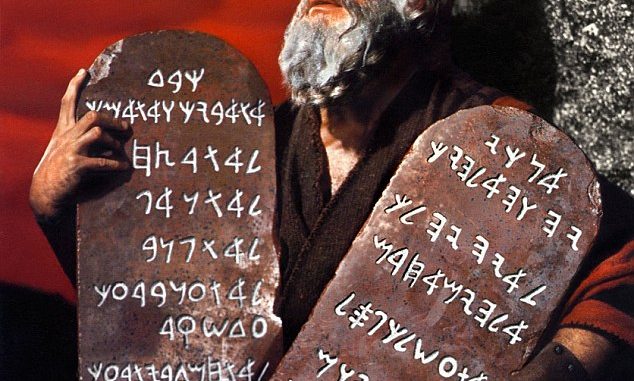
Ten-Words-634x381What would seem the clearest use of “Command” in the New Testament is the reference to God’s original Ten Commandments. In John 15:10-12 Jesus says, “If you keep My commandments, you will abide in My love, just as I have kept My Father’s commandments and abide in His love. These things I have spoken to you, that My joy may remain in you, and that your joy may be full. This is My commandment, that you love one another as I have loved you.”

Jesus refers to His Father’s Commandments saying His commandments are the same as His Father’s. Then Jesus is challenged in Matthew 22 to identify the greatest commandment in the law. He responded, “‘You shall love the Lord your God with all your heart, with all your soul, and with all your mind.’ This is the first and great commandment. And the second is like it: ‘You shall love your neighbor as yourself.’ On these two commandments hang all the Law and the Prophets.” To His disciples, He gives what I see as His own personalized “Commandment” in John 13:34, “A new commandment I give to you, that you love one another; as I have loved you, that you also love one another.”

So, loving God and one another is God’s primary “Command.”

Can Love Be Commanded?

My question is this: How can we be commanded to love anyone? We are given free will to enable us to freely choose to love God and others. It is not love if we are forced against our will to do so.

The Greek used here for commandments is Entolē, meaning an ordinance, injunction, command, or law. It comes from Entellomai, which means an Authoritative Prescription. Is there any latitude to consider another meaning for the term, “Ten Commandments?”

Is It The Ten Commandments or Ten Words?

What I recently learned is that the Title of the “Ten Commandments” is not accurate to the original language. In the Septuagint, the Greek translation of the Hebrew Bible was translated as Dekálogos or “ten words”; this Greek word became decalogus in Latin, which entered the English language as “Decalogue,” providing an alternative name – the Ten Commandments.

So, the Ten Commandments or literally the “Ten Words” in the Hebrew, are understood in light of the covenant in which they were given. The Ten Words should be read in a covenantal context – not as demands put upon the people but as an expression of the people’s devotion to Yahweh for His wondrous love.

It’s amazing that Deká-logos or “Ten Words” is the original title for what represents the Old Covenant, and with Jesus’ title as the “Word” (Logos) of God, He fully represents the New Covenant. The Old Covenant is done away with (Hebrews 8) and replaced by the Living Word, Jesus, under the New Covenant – the fulfillment of the law.

John 1:14 – “The Word (Logos) became flesh and made his dwelling among us. We have seen his glory, the glory of the one and only Son, who came from the Father, full of grace and truth.” John goes on to write in verses 16–17, “For from his fullness we have all received, grace upon grace. For the law was given through Moses; grace and truth came through Jesus Christ.”

The Logic of God

An interesting note is that while the Greek Logos is consistently translated as Word, some scholars would say that a better translation from the Greek would be Logic (logos-logic). All that God is, is perfectly, good and right and true. All of who He is and what He does is ordered in perfect logical order. We may not fully comprehend it now, but one day, when every knee will bow (Phil 2:10), it will partly be because of our wonder and admiration for the perfect logic of all He is and all He does.

If You Love Me, KEEP My Commandments

In John 14, Jesus tells his apostles how love is demonstrated to God. In verse 15, he puts it simply, “If you love Me, keep My commandments.” Whoa! I’ll admit that when I read this basic confirmation of my love for God, I blush. Do I really love God when I so often fail to live up to His standards? I guess I really don’t love Jesus because I regularly fail to “keep” God’s commandments. But how does this work in the light of undeserved, unearned grace?

If the translation of “Commandments” is more likely “Authoritative Prescriptions,” then these are what God prescribes for living the full and abundant life that demonstrates honor and love to God.

So, what does it mean to “Keep” His Commands/Words? Jesus repeats the word Keep/Obey in verses John 14:15 and 23. The Greek words used here both come from the root word Teros, meaning to guard, to note, to detain, or to withhold. My take is that it does not mean we are faultless in obedience, but even when we fail, we embrace His instructions as God’s truth. We hold it close. We regard it as truth. We embrace it as our guide and prescription for what is good, and right, and true in our lives. We seek to live it out in our lives. When we fail to live up to the standard, we know we have failed and then can seek forgiveness and correct our behavior.


If we “Keep” His Words, we agree with the Psalmist, who writes in Psalm 19:7–9, “The law of the Lord is perfect, restoring the soul; The testimony of the Lord is sure, making wise the simple; The statutes of the Lord are right, rejoicing the heart; The commandment of the Lord is pure, enlightening the eyes; The fear of the Lord is clean, enduring forever; The judgments of the Lord are true and righteous altogether.”

Living a faith-based life following Jesus seems illogical to many people. But following the one who ordered the universe and has written prescriptions for life that lead to restoration, wisdom, rejoicing, clear vision, and a cleansed soul seems perfectly logical to me.

Are We Talking This Life or the Next?

Jesus always dealt from an eternal perspective, which includes this realm and the next. So, whether you have one day left on this planet or decades, we all face eternity. Jesus, as “The Living Word” declared in John 10:10, “The thief does not come except to steal, and to kill, and to destroy. I have come that they may have life, and that they may have it more abundantly.” Walking through this realm in relationship with the living God is the more abundant life that is then perfected in Heaven.

Paul clarifies the eternal perspective in 2 Corinthians 4:16-18, “Therefore we do not lose heart. Even though our outward man is perishing, yet the inward man is being renewed day by day. For our light affliction, which is but for a moment, is working for us a far more exceeding and eternal weight of glory, while we do not look at the things which are seen, but at the things which are not seen. For the things which are seen are temporary, but the things which are not seen are eternal.”

Today is the day of salvation. Embrace the living logic/word of God, Jesus Christ and follow Him.

The God Who Desires/ Wishes/ Intends/ Designs/ Wills All Men to be Saved

“The Lord is not slack concerning His promise, as some count slackness, but is longsuffering toward us, not willing that any should perish but that all should come to repentance.” – 2 Peter 3:9

Recently, I spoke with 2 different people, each distraught over the recent deaths of people close to them. Their lives had ministered to these people about the love of Jesus but the individuals never prayed to receive Christ as their Savior. I was asked, basically, What hope do we have for them?

Obviously, there was regret on their part that they never seized the opportunity to clearly share that Gospel to those they ministered to. It is a wake up call to come face to face with the reality of 2 Corinthians 6:2 that, “now is the day of salvation.”

Of course, our hope is in our good and righteous and true God (Ephesians 5:9) who is perfectly loving and just in every way. Christ is our living hope (1 Peter 1:3). But how might that hope play out for all people?

Salvation

As a Christian, I was always taught that sin is like a disease. Our stain of imperfection separates us from a perfect God. He will not ruin His perfection by, in essence, condoning or accepting our sinful state. However, He, Himself provided the payment for the penalty of our sin through Jesus’ death on the cross. Those who embrace Jesus and accept this gift of salvation gain eternal life. Those who don’t continue in eternal death.

The Bible is clear that there are 2 places to spend eternity – what is known as Heaven with God, or what is called Hell separated from God. The Biblical choice for eternity is either an eternity spent in glory with God, or in torment apart from God.

Wait a minute. What About . . .?

If salvation is all about putting our faith/belief in and following the God/Man Jesus, then what about those who have died before Jesus’ death on the cross or who will die before ever hearing about Jesus? Where does that leave them? Destined to Hell? That doesn’t seem just or fair.

The primary source of spreading the Gospel is by those who have embraced the free gift of salvation who then are given the charge to share this gift with the rest of the world. The great Commission is our charge to bring salvation to the world. Even while this world grows darker and we see Godless atheism and the brutality of hateful religions spread, the outpouring of God’s love through Jesus is igniting fires around the globe. Yet, many have died and will die without hearing of and coming to know Jesus. How will God deal with them?

Those Who Died Before Jesus’ Life, Death and Resurrection:

I believe that a commonly accepted principle for those who died before Jesus is that they are justified by their faith. Just as we are justified by our faith in Jesus Christ, those before Jesus, were justified by their faith based on the level of their knowledge of the living God who promised to save them. In essence, putting their faith in the vision of the Savior who was to come. There is an interesting exchange Jesus had with a crowd of Jews in the Gospel of John, chapter 8. Jesus said, “Your father Abraham rejoiced to see My day, and he saw it and was glad. Then the Jews said to Him, “You are not yet fifty years old, and have You seen Abraham?” Jesus said to them, “Most assuredly, I say to you, before Abraham was, I AM.”

We humans are limited by time, space and matter. God is not. How faith in God and trusting in a Savior prior to Jesus’ death on the cross is measured and quantified, God only knows.

What of Those Who Have Died Since Who Have Never Heard?

I do not believe the concept of Universal Salvation (Jesus’ Death on the Cross paid for all sin and casts a blanket of salvation over everyone) is Biblical. Salvation is reserved for those who embrace the free gift of grace by faith in Christ. Yet, based upon several scriptures, I place my hope in God’s righteous, perfect love and justice. God has made a way for all to have the opportunity to choose eternity with God or without.

  • In Titus 2:11 Paul writes, “For the grace of God that brings salvation has appeared to all men”
  • In 2 Peter 3:9 Peter writes, “The Lord is not slack concerning His promise, as some count slackness, but is longsuffering toward us, not willing that any should perish but that all should come to repentance.
  • And in 1 Timothy 2:4 Paul writes that God, desires all men to be saved and to come to the knowledge of the truth.”

When Peter writes that God is “Not Willing,” the Greek word for “Willing” is Boulomenos, meaning to will, intend, desire, or wish. In 1 Timothy the Greek word for “Desire” is Thelei. It could also be translated as God’s Wish, Intention, Design or even His Will. Both words reflect God’s desire/wish/intent/will that none should perish. Any of these translations makes a powerful statement about where God stands with regards to the offer of salvation. If it is truly God’s Desire, then He would have to provide everyone with a clear opportunity to know of salvation through Jesus.

But, Again, What of Those Who Have Never Heard and May Never Hear?

What of those who have never heard the Gospel? Or, those who are incapable of hearing or understanding? What if I’m giving someone their one chance to hear the Gospel and I botch it? (which I have).

For all of these people we rely on God’s perfect love, justice, mercy and grace. God promises that ALL will have at least one opportunity to embrace Jesus. How might that work? Some believers believe it may happen through what is known as the Second Resurrection.

The Second Resurrection

The Bible refers to all people given a real chance for salvation through the doctrine of the “resurrection of the dead” and God’s judgment referred to in Hebrews 6:2.

It is clear that God will resurrect the saints at Christ’s return (1 Thessalonians 4:16; 1 Corinthians 15:52), but there is Christ’s teachings about a second resurrection. He spoke of people from different ages coming face-to-face in “the day of judgment” (Matthew 11:20-24, Matthew 12:41-42; Luke 10:12-15).

A Second Resurrection May Allow for A First Chance at Salvation

As seen in Hebrews 6:4-6 and Hebrews 10:26-29, all people have at least one chance at salvation. However, a second chance at life is not the same as a second chance at salvation. Coming to life again will enable those brought to life in the second resurrection to have their chance for salvation.

A second resurrection is implied in Romans 11:26-27, and the book of Revelation speaks of it as specifically as Christ did (Revelation 20:5, Revelation 20:11-12). These references are not about the resurrection of the saints spoken of in 1 Corinthians 15:52, for the people in the above references are called enemies (Romans 11:28) and are contrasted with the saints (referred to as “the rest of the dead” in Revelation 20:5).

In Revelation 20:5 it says, “But the rest of the dead did not live again until the thousand years are finished”. This speaks of dead who will not live again until the thousand-year reign is over. This part of the verse seems to be speaking of those who died without a chance at salvation.

Of those to be brought to life in the second resurrection, Jesus said it would be “more tolerable” (better) for some than for others (Matthew 10:15). If God resurrects these people only to sentence them to death, Christ’s comments wouldn’t make any sense. If all were to die, judgment would not be “more tolerable” for one than for another. But clearly, their judgment is incomplete, and hence, God brings them back to physical life.

Paul writes of this in Romans 2:12 & 16, “For as many as have sinned without law will also perish without law, and as many as have sinned in the law will be judged by the law . . . in the day when God will judge the secrets of men by Jesus Christ, according to my gospel.” In other words, we all have God’s morality imprinted on our hearts. There is no excuse that we may have never actually seen it written down. All fail to live up to God’s standard (Romans 3:23). It’s only the Good News of Jesus paying the penalty for our sin that brings salvation. At some point all will be offered the free gift, but not all will recieve it.

Ezekiel 37:1-14 speaks of an entire nation that died without hope of life and without the knowledge of God that could lead to their salvation. God promises them two things—to resurrect them to physical life and to give them spiritual understanding (Ezekiel 37:10, Ezekiel 37:14).

Most people who have died over history did not know the name of Jesus – the only name by which salvation is possible (Acts 4:12). Some Christians may not agree with this interpretation of the Second Resurrection. But, without some plan like the Second Resurrection, the majority of people down through history would suffer unfair condemnation to death without ever having a chance at conversion. However, based upon a God who “Desires (Wishes, Intends, Designs, Wills) all men to be saved and to come to the knowledge of the truth,” as stated in 1 Timothy 2:4, He must provide a way. Once again, we are left trusting in the goodness, righteousness and truth of our God – our living hope.

I am not an expert on end-times chronology of events, but from the God who operates outside of time, space and matter, John was given a vision of heaven. He describes this in Revelation 7:9-10, “After these things I looked, and behold, a great multitude which no one could number, of all nations, tribes, peoples, and tongues, standing before the throne and before the Lamb, clothed with white robes, with palm branches in their hands, and crying out with a loud voice, saying, “Salvation belongs to our God who sits on the throne, and to the Lamb!” In other words, there will be a tremendous, incalculable number of souls in heaven – some of whom may surprise us.

  • My understanding of those people who are sent off to be eternally separated from God is that they are those who hate God, have chosen to be their own God in this life, and desire to do so for all eternity. As an example of who could possibly consider eternity seperated from God, here is a disturbing post from the chat site Quara.
    • “If there is a deity out there who condemns me to eternal torture just because I refuse to have faith in the existence of such a creature in the absence of any shred of objectively verifiable evidence then I hereby declare that I willfully and without fear choose eternal torture over worshiping such an arrogant, vile. . . ”
      • Very sad. No shred of evidence? Seek and you shall find.

If This Doctrine Is True, What Does That Mean for Us Christians?

If you believe that God will provide a way for everyone to clearly hear the Gospel and make a decision for Christ, then the way I see it, that overwhelming burden I often feel of my need to rescue the world from eternal torment comes off my shoulders. Then the question is, why would I risk offering the Gospel to others who may reject their one chance at salvation? Why bother?

Why Bother To Share the Good News?

As a primary element of God’s plan, He charges His followers – those who have experienced the love and, grace and fullness of God with spreading the Good News. God chooses to work through us. We know that God works in wondrous ways beyond our capabilities. As an example, there is currently an amazing global phenomenon where thousands of Muslims, who certainly know of Jesus as a prophet, are having dreams and awakening to Jesus as their Savior. God does not need us but gives us the privilege to be the primary source of spreading this Good News to the world.

What Is The “Charge” From the Great Commission?

Matthew 28:18-20 – “Then Jesus came to them and said, “All authority in heaven and on earth has been given to me. Therefore go and make disciples of all nations, baptizing them in the name of the Father and of the Son and of the Holy Spirit, and teaching them to obey everything I have commanded you. And surely I am with you always, to the very end of the age.”

So, I wonder: Is not the work of eternal salvation, God’s work and our charge is to bring others to the knowledge and commitment to follow Jesus? We are yoked together with Jesus in this work but ultimately, Jesus saves.

What is our Charge from the Great Commission? It is to make “Disciples of all Nations”. To make pupils/students/followers of Jesus Christ. I certainly wouldn’t want to diminish the tremendous value of escaping eternal torment. But, perhaps our greater motivation is to offer to a weary, confused and hopeless world what we know to be true – the fullness of the abundant life in Christ in this world. Even as this world spins out of control, we bring hope, peace, joy, purpose, and power to overcome.

Pastor Dan Mohler preached a similar message, saying, “God made man with intention. God made man with a purpose. This isn’t about dying and going to heaven. I know we sell that all over the world, dying and going to heaven. No, it is about getting back to the Father and getting the Father back to you. It’s about becoming something, not going somewhere.”

I, for one, have felt the terrible burden to rescue the world from Hell’s fire. Are we relying on God’s power to act on His very own desire (will/ wish/ intention/design) that all will have a fair opportunity to gain eternal life?

Paul wrote the perfect description of our role in preaching the Gospel in Romans 10:15, “And how shall they preach unless they are sent? As it is written: “How beautiful are the feet of those who preach the gospel of peace, Who bring glad tidings of good things!””

The glad tidings and good things are described by Jesus in John 10:10 as the “Abundant Life” – being saved from the attack of the enemy in this life. Obviously, complete salvation extends to eternal life and with that, we have escaped the eternal torment as described by Jesus and the New Testament writers.

The Wonderful Gospel

If you haven’t ever heard God’s Good News before, here it is: It is that we can not only know now about eternity, but experience God starting now. Though we were separated from a perfect God by our sin, God sent His Son, Jesus, to live a perfect life, die on the cross to pay the penalty for our sin, rise from the dead to prove it all true and then ascend back to heaven to take his rightful place on the throne. All that is required is that we turn away from our selfish desires and believe/embrace Jesus. He is the way, the truth and the life. No one comes to the Father but through Him. It’s God’s perfect plan of salvation.

Just a reminder to my fellow Christ-followers: We, by the power of the Holy Spirit, lead people to Jesus – Jesus Saves! (Romans 6:23)

For those who don’t know Jesus: Today is the day of salvation! Commit to following Jesus today. You will be eternally grateful.

Jesus: Our Commander In Chief?

“And these words which I command you today shall be in your heart. You shall teach them diligently to your children, and shall talk of them when you sit in your house, when you walk by the way, when you lie down, and when you rise up.” – Deuteronomy 6: 6-7


In my regular reading/study of God’s written Word, I encounter words or phrases that pester me, like an annoying gnat buzzing around my head. Typically, I’ll swipe at them and move on. At some point, though, I’ll need to pull out the fly swatter.

Question: Is it pestering me because I just don’t like it, or because it’s begging me to take a closer look? Perhaps both. In this case, the troublesome word is Command.

As a Christian and a believer in an all-powerful, perfectly righteous God, why would I find His commands troublesome? Easy enough. Maybe it’s because, as a rebellious, self-righteous, sinful creature, I don’t like being commanded what to do.

But that’s not where it starts. Some form of the word “command” appears over 130 times in the New Testament. Some studies identify Jesus as giving over 300 commands recorded in the Gospels. In Greek, about 25 words are translated in various New Testament Bible translations as some form of Command.

Is this what we should expect in a relationship with the living God that it would all be about us being ordered around and obeying commands?

Jesus’ Use of Command

As someone who has spent some time looking closely at Jesus’s character, I have struggled to imagine Him being so dominant, controlling and dictatorial. Certainly, he operated with Kingdom authority – commanding storms to cease and demons to depart.

However, given Jesus’s character, I am not sure the translation from the Greek to Command is always accurate. When He is teaching or directing others, the word command does not always seem to fit. When Jesus addresses his disciples, the crowds, or those being healed, is he really like General Patton barking out orders and commanding His troops?

For instance, take a look at Matthew 15:35 (NKJV), “So He commanded the multitude to sit down on the ground.” The Greek here for Commanded is Parangeilas – meaning to notify, command, charge, entreat solemnly. So, the use of “Command” is a reasonable translation. But, in context, it doesn’t seem quite right.

My wife is Greek, and we recently attended a large birthday party for her cousin, Maria. At one point the Greek priest got up to say a few kind words about her. People were mulling around and chatting so he called out, “Kátse káto! Kátse káto!” meaning “Sit down.” The priest did not command everyone to sit down. He “charged”, “entreated”, or “asked,” everyone to “sit down.” Given Jesus’ character, I believe that it’s unlikely Jesus ordered everyone to sit down, but much like the Greek priest he urged everyone to sit and listen.

1(Kátse káto is a Greek expression we use when our young kids (now Grandkids) are out of their chairs at dinner time – “Kátse káto!” The kids laugh and repeat it back in their best Japanese accent)

This is just an example of what I see as an overuse of the Greek translations as Command. Did Jesus really demand that the people sit? Charging or entreating the people to sit seems more likely.

Or, in Matthew 8:18, “And when Jesus saw great multitudes about Him, He gave a command to depart to the other side.” The Greek word used here is Ekeleusen, meaning to command, order, direct, and bid – from a primary kello, meaning ‘hail’; to incite by word or order. Once again, the use of command is a fair translation but does it fit in context with Jesus’ character? Did Jesus really order his Disciples around like that? I’m guessing it was more of a bidding or direction like, “Come on. Let’s go.”

Did Jesus Order People Around?

Jesus led by love and the Word of God. It was the Holy Spirit shining through Him that compelled those to follow Him not by heavy-handed authority. He is the Way, the Truth and the Life. Jesus acknowledges all authority was given to him (Matthew 28:18), but he acted on it by humble obedience displaying the full Fruit of the Spirit.

What about the Ten Commandments?

Perhaps the clearest use of “Command” in the New Testament is the reference to God’s original Commandments. In John 15:10-12 Jesus says, “If you keep My commandments, you will abide in My love, just as I have kept My Father’s commandments and abide in His love. These things I have spoken to you, that My joy may remain in you, and that your joy may be full. This is My commandment, that you love one another as I have loved you.”

Jesus refers to His Father’s Commandments saying His commandments are the same as His Father’s. He then gives what I see as His one additional “Commandment.” In other words, He is saying, You know my Father’s Commandments, now this is my Commandment.”

The Greek used here for commandments is Entolē, meaning an ordinance, injunction, command, or law. It comes from entellomai, meaning an Authoritative Prescription. I really love that definition! I’ll come back to this later.

What about the Great Command? Err, I Mean the Great Commission?

Matthew 28:18-20 says, “Jesus came and told his disciples, “I have been given all authority in heaven and on earth. Therefore, go and make disciples of all the nations, baptizing them in the name of the Father and the Son and the Holy Spirit. Teach these new disciples to obey all the commands I have given you. And be sure of this: I am with you always, even to the end of the age.” The Greek word used here is Eneteilamēn: To give orders (injunctions, instructions, commands)

This is well known as the Great Commission but very often what Jesus “Commissioned” the Disciples to do is referred to as Commands. Yet, Jesus was called “Rabbi” by both His Disciples and His opponents. In reading the four Gospels, one sees that the main function of His ministry beyond Salvation was to teach. The Rabbi in Jesus’ day did not command his students he taught/instructed them. Based on Jesus’ character and the relationship he had with the Apostles, Instructions or Charges would seem more accurate than Commands.

Command Vs Charge?

It is interesting to note how often people take The Great Commission and start talking about Jesus’ Commands. A Commission is a Charge. There is a distinction to be made between Commands and Charges. The difference between Charge and Command is significant. While both words imply authority, they have different connotations and are used in different contexts.

When someone is commissioned into Christian service by a church community, we are agreeing with God’s calling/charge to the ministry, recognizing their adequate preparation for the ministry and committing our support. We are not commanding/ordering them to go.

screen-shot-2011-05-10-at-3-35-21-pmBoth Charge and Command imply authority, but charge is more associated with giving instructions, while command is more associated with having control or power over something or someone. It is important to consider the context when making the translation.

What’s the Point?

The point is that I hear many Bible teachers and preachers referring to Jesus and New Testament writers as giving Commands to their audience when there may be something else going on.

So, it is my humble opinion that some of the New Testament translations and descriptions of New Testament instruction by Bible teachers and preachers are not always accurate when referring to them as Commands.

In some cases, the use of “Command” devalues the free will and grace elements of God’s love. It seems to me that the use of “Command” makes it almost easier to authoritatively order people around rather than implore them while taking the time to explain why it is good, right, and true to follow God’s instruction.

More often, in the epistles, the accurate tone of these charges seems more in line with the posture of begging. These directives come from love, not coercion. The use of Command comes across to me as a cudgel and a threat. I don’t believe that is the tone intended in many cases.

How Did the New Testament Writers Most Often Address Their Audience?

man-pleading-with-unwilling-woman_u-L-Q1BWDYB0Most often the New Testament writers exhorted, implored, beseeched, pleaded, begged and urged as well as corrected and rebuked the readers of their letters to faithfulness and obedience. These humble leaders knew they could not browbeat and strong-arm the saints into obedience. Their example as Christ imitators was to plead with them to follow their example by the power of the Holy Spirit. (At the end of this post are samples of these scripture pleadings)

An Authoritative Prescription

But what about 1 Corinthians 14:37, where Paul writes, “If anyone thinks himself to be a prophet or spiritual, let him acknowledge that the things which I write to you are the commandments (Entolē) of the Lord?” Is this not proof that we are being commanded to follow these instructions?

1000_F_500620539_P1A9MLObEGsIvLHHyCPwFBX0EoGnDc1bAs mentioned before, the word Entolē comes from Entellomai, meaning an injunction or an authoritative prescription. This would be something like an expert doctor prescribing a treatment. The doctor knows what is good for you and necessary to save your life but cannot order you to take it. Yet, if you don’t, you will die.
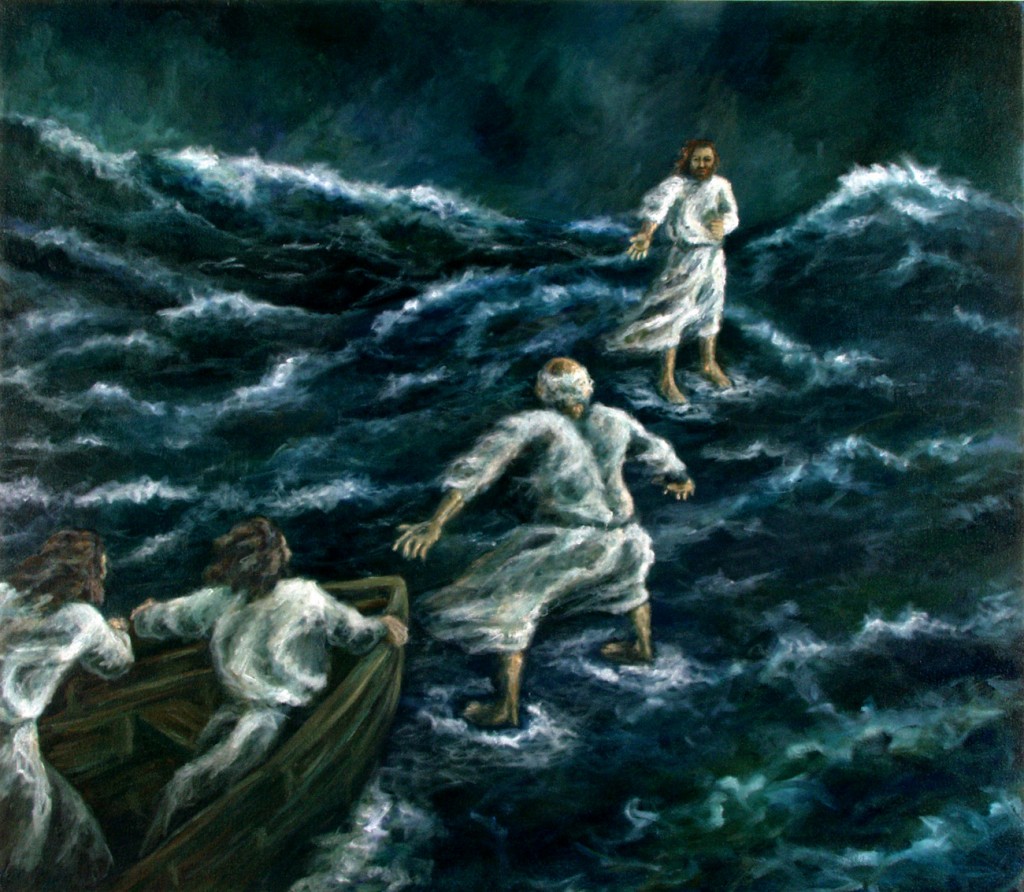

I am not a Greek language expert, but if these translations of the Greek “Command” are accurate, then the commands are not just to dictate and force God’s will upon us but because the boundaries are being set for our own good and welfare. They are established as an expression/demonstration of His perfect love for us. Now, we can fully love God because, through Jesus, He demonstrated how He first loved us. 1 John 4:19, “We love Him because He first loved us.”

Not only that, but in the middle of the John 5:10-12 verses about the commandments Jesus says in verse 11, “These things I have spoken to you, that My joy may remain in you, and that your joy may be full.” Wow! His words and commands/instructions are about His joy being our joy! They are not intended to burden us but to set us free.

God Has Every Right to Command Us

God, as the Supreme Being and Creator of all that is good, has every right to order His creation to do His bidding. Perhaps the use of “Command” is correct more often than I think. In some ways, I wish it was. How often have I wished God would just command me to do something I keep failing at? “God, just make me do it!” The fact is He doesn’t.

walk_by_faith_peter_walking_on_water-1024x892

As an example, when Jesus walked on water it says in Matthew 14:28, “And Peter answered Him and said, “Lord, if it is You, command(keleuson) me to come to You on the water.” But, in verse 29, what does Jesus do? He simply says, “Come”(Elthe). Peter wanted Jesus to compel/order him to come, but Jesus did not force him. It was up to Peter to take the step of faith. God’s design is for us to be co-laborers in our life on earth. Why? That we might share this life in a deep, working relationship with the Living God.

1 Corinthians 3:9 – “For we are God’s fellow workers; you are God’s field, you are God’s building.”

Ephesians 2:10 – “For we are His workmanship, created in Christ Jesus for good works, which God prepared beforehand that we should walk in them.”

Once again, I could be wrong, but I’m not sure that the use of “Command” is always the spirit of God’s word. 2 Timothy 3:16-17 confirms the purpose of recorded scripture with no reference to it being something that we are being ordered to do. It says, “All Scripture is given by inspiration of God, and is profitable for doctrine, for reproof, for correction, for instruction (training, discipline) in righteousness, that the man of God may be complete, thoroughly equipped for every good work.” It is not just about being ordered to do His bidding.

Don’t get me wrong, if God orders, “Jump!” our only question should be, “How high?” God can just order us around, and we should simply comply. But God’s desire is for His love to compel us to grow in our relationship with Him to become the finished work of Jesus Christ (James 1:4, “. . . that you may be perfect and complete, lacking nothing.”)

So, what compels us to follow Jesus’ instructions? 2 Corinthians 5:14 says, “For the love of Christ compels us.” And what is required of us? Micah 6:8 says, “He has shown you, O man, what is good; And what does the LORD require (seek/ask) of you But to do justly, To love mercy, And to walk humbly with your God?”

Our Chief Priest

Is Jesus our Commander in Chief? No. He is our Chief Priest who sits on the throne of grace. He is described in Hebrews 4:14-16: “Seeing then that we have a great High Priest who has passed through the heavens, Jesus the Son of God, let us hold fast our confession. For we do not have a High Priest who cannot sympathize with our weaknesses, but was in all points tempted as we are, yet without sin. Let us therefore come boldly to the throne of grace, that we may obtain mercy and find grace to help in time of need.”

Without dictating and commanding, Paul sums up the Christ-like approach to addressing the brethren so well in Colossians 1:9-10, “For this reason we also, since the day we heard it, do not cease to pray for you, and to ask that you may be filled with the knowledge of His will in all wisdom and spiritual understanding; that you may walk worthy of the Lord, fully pleasing Him, being fruitful in every good work and increasing in the knowledge of God;”

As I write this today, it is Greek Easter, so I proclaim, Christos Anesti! Alēthōs Anëstē! – Jesus our Great High Priest, the Son of God is alive!


Just a sample of Epistle Pleadings:

  • Romans 12:1 – I beseech you therefore, brethren, by the mercies of God, that you present your bodies a living sacrifice, holy, acceptable to God, which is your reasonable service.
  • 1 Corinthians 4:16 – Therefore I urge you, imitate me.
  • 2 Corinthians 8:4 – imploring us with much urgency that we would receive the gift and the fellowship of the ministering to the saints.
  • Philippians 4:2 – I implore Euodia and I implore Syntyche to be of the same mind in the Lord.
  • 1 Peter 2:11 – Beloved, I beg you as sojourners and pilgrims, abstain from fleshly lusts which war against the soul,
  • 1 Thessalonians 4:1 – Finally then, brethren, we urge and exhort in the Lord Jesus that you should abound more and more, just as you received from us how you ought to walk and to please God;
  • 1 Timothy 6:13 – I urge you in the sight of God who gives life to all things, and before Christ Jesus who witnessed the good confession before Pontius Pilate,
  • Titus 3:14 – And let our people also learn to maintain good works, to meet urgent needs, that they may not be unfruitful.
  • Hebrews 13:19 – But I especially urge you to do this, that I may be restored to you the sooner.
  • Romans 12:8 – he who exhorts, in exhortation; he who gives, with liberality; he who leads, with diligence; he who shows mercy, with cheerfulness.
  • 2 Corinthians 9:5 – “Therefore I thought it necessary to exhort the brethren . . .”
  • 1 Thessalonians 4:1 – Finally then, brethren, we urge and exhort in the Lord Jesus that you should abound more and more, just as you received from us how you ought to walk and to please God;
  • 2 Timothy 4:2 – Preach the word! Be ready in season and out of season. Convince, rebuke, exhort, with all longsuffering and teaching.
  • Titus 2:15 – Speak these things, exhort, and rebuke with all authority. Let no one despise you.
  • Jude 1:3 – . . . I found it necessary to write to you exhorting you to contend earnestly for the faith which was once for all delivered to the saints.

Dis-Unity of The Spirit?

“with all lowliness and gentleness, with longsuffering, bearing with one another in love, endeavoring to keep the unity of the Spirit in the bond of peace.” – Ephesians 4:2-4


For me, Instagram is a very dangerous thing. It can consume my time and attention with funny and foolish videos. But, before I know it, I’ve wasted hours on no real productive endeavor.

As I limit my time on social media/Instagram, I’ve also been narrowing what I look at. There is a lot of good Christian content, and I have been blessed by some great insights and commentary. However, you also see the full spectrum of diverse opinions along with some ugly backbiting. Some Christian ministries are compelled as their mission to tear down other Christian ministries that they disagree with. They have decided other ministries are not “authentic” or are actually “unbiblical” or even “demonic.”

As the world around us grows ever darker and desperate for the Gospel, many in the Christian world spend their time judging one another.

big-foam-fingers-in-blue-45cm-bulk-buy-foam-hands-uk-quantity-300-1.59-per-unit-(0)-0-pCan we find some Godly wisdom on what unites us – what makes us as one?

I’m a bit of a theological simpleton, but I’ll grab hold of what Paul wrote to the Ephesians as a guide. The purpose of the letter to the Ephesians was to encourage unity in the early church. Paul counsels the people of Ephesus not to be divided by their former statuses as Gentiles or Jews. What unites the church, Paul argues, is God’s Holy Spirit establishing their shared commitment to the cause of Christ and their agreement on His divinity.

We find that the Unity of the Spirit has 7 key elements that make us one church.

In Ephesians 4:2-6 Paul writes, “with all lowliness and gentleness, with longsuffering, bearing with one another in love, endeavoring to keep the unity of the Spirit in the bond of peace. There is one body and one Spirit, just as you were called in one hope of your calling; one Lord, one faith, one baptism; one God and Father of all, who is above all, and through all, and in you all.”

Verse 5&6 says that there is One . . .

  1. Body – Church
  2. Spirit – Holy Spirit
  3. Hope – The Glory of God realized
  4. Lord – Jesus
  5. Faith – the substance of things hoped for, the evidence of things not seen
  6. Baptism – confirming the new man
  7. Father – God the Father

That is it! The true church is united in agreement on these primary seven absolutes. First is the agreement that there is, in fact, one church bound together by the following elements. The church body goes beyond our local church body and even Christian denominations to all those who agree in a triune God made up of Father, Son, and Holy Spirit. Beyond that, we are . . .

Bound Together with a Common Hope:

Christian hope is when God promises that something will happen, and you put your trust in that promise. It is a confidence that something will come to pass because God has promised it will— the realization of the full gospel through the saving work of Jesus Christ. 1 Peter 1:13—“Set your hope fully on the grace that will be brought to you at the revelation of Jesus Christ.”

Bound Together with a Common Faith:

Completely trusting in the God of three persons is the tangible evidence of our reliance on the above hope that is unseen. “Now faith is the substance of things hoped for, the evidence of things not seen.” Hebrews 11:1

Bound Together By a Common Baptism:

While water baptism is not necessary as a means of obtaining eternal life, it was clearly Jesus’ teaching that we should be baptized. For the sake of the church, it is a symbol of Christians united in their faith and hope. We honor Christ by this step of faith. Through it, each believer demonstrates an outward expression of an inward experience – our old person is gone, and the new has come. Beyond symbolism, who is to say what the spiritual impact of God’s regenerative work is at baptism?  “Therefore if anyone is in Christ, he is a new creature; the old things passed away; behold, new things have come.” 2 Corinthians 5:17.

That is it. Everything else is based on a contrite heart seeking God’s wisdom to form our opinions. Can we disagree and critique when we believe certain practices are unscriptural or unhealthy? Yes. But, it should be in the context of the rest of Paul’s teaching in Ephesians 4 that disagreements over all the “other stuff” are conducted, “with all lowliness and gentleness, with longsuffering, bearing with one another in love, endeavoring to keep the unity of the Spirit in the bond of peace.”

Do we leave room for God to lead others in scripturally defensible ways beyond how we are led?

istockphoto-1422846187-612x612Do Not Think So Highly of Your Own Thoughts

“For I say, through the grace given to me, to everyone who is among you, not to think of himself more highly than he ought to think, but to think soberly, as God has dealt to each one a measure of faith.” – Romans 12:3

“Rejoice with those who rejoice, and weep with those who weep. Be of the same mind toward one another. Do not set your mind on high things, but associate with the humble. Do not be wise in your own opinion.” – Romans 12:15-17

Humble Yourself

“Humble yourselves in the sight of the Lord, and He will lift you up. Do not speak evil of one another, brethren. He who speaks evil of a brother and judges his brother, speaks evil of the law and judges the law. But if you judge the law, you are not a doer of the law but a judge.” – James 4:10-11

Love One Another

There are many places where Jesus is described as commanding others in one way or another. After studying this form of speech, I’ve concluded that there is actually only one “commandment” that Jesus added to the original 10. It’s found in John 13:34-35, “A new command I give you: Love one another. As I have loved you, so you must love one another. By this everyone will know that you are my disciples, if you love one another.”

So let’s turn down the self-righteous critiquing rhetoric towards fellow Christ Followers and adopt the one commandment Jesus gave to His disciples – to love one another. Does loving mean we can’t question or challenge one another? No! Paul did it all the time. In 1 Thessalonians 5:21, Paul recommends we “Test all things; hold fast what is good.” But in the form of love, it will be a humble, gentle, and patient spirit striving to grow together in the knowledge of God as a demonstration of the unity of the Spirit in the bond of peace.

There may not be any greater evidence to the world of the power of the Gospel than the Body of Christ united by their love for one another. We are a unique group of people, willing to set aside racial, ethnic, economic, political, and even theological opinion differences to love one another for the love of our Savior.

So, brothers and sisters, for our God’s sake, let’s make the effort (endeavor) to keep the unity of the Spirit in the bond of peace.

Beyond This Gift-Giving Season – He Keeps on Giving Good Gifts

Wrapped+Gift“But to each one of us grace was given according to the measure of Christ’s gift. Therefore He says: “When He ascended on high, He led captivity captive, And gave gifts to men.”” – Ephesians 4:7-8

“You have ascended on high, You have led captivity captive; You have received gifts among men, Even from the rebellious, That the Lord God might dwell there. Blessed be the Lord, Who daily loads us with benefits, The God of our salvation! Selah” – Psalm 68:18-19


In his letter to the Ephesians, Paul is repeating the Psalmist’s words referring to Christ’s great victory. The enemy is now captive and the to the victor belongs the spoil. These spiritual gifts are now given to those who are in Christ Jesus by the Holy Spirit. What gifts could these be? Whatever they are, they are “According to the measure of Christ’s gift.” Not only referring to the “accceptible” spiritual gifts of men but also to the supernatural gifts Jesus as a man fully exercised.

Let Me Be Crystal Clear

The greatest gift God has given to mankind is Jesus Christ – THE very Son of God. This GIFT from God is described in the classic verse John 3:16 – “For God so loved the world that He gave (Edōken – to offer as a gift) His only begotten Son, that whoever believes in Him should not perish but have everlasting life.”

The Son of God humbled Himself to become a man and His death on the cross pays the penalty for our sin giving all those who rebel against God the chance to turn back to God and experience the eternal life that was intended for them.

Thank You God! Any other gift pales in comparison to this majestic gift of God’s love.


jesus-hand_1_Just an FYI – The corroborating evidence that Jesus Christ not only existed but, lived, died, resurrected, and ascended back to heaven continues to mount. The fact is that the person of Jesus satisfied every one of the 324 Old Testament prophecies as to who the Savior would be. The statistical probability of one man fulfilling even 10% is virtually impossible and to fulfill all of these is beyond comprehension. If anyone says that Jesus was a myth and did not exist as some still tout, no serious historian could agree.
If Jesus’ life proved to be true, and his own words about his death and resurrection were proven reliable then who can reasonably question His declaration to be the very Son of God? (Jesus’ deity confirmed by Jesus in, John 5:14–18, 6:35, 8:56–59, 10:25–33, 14:6–11 & Luke 22:66–71. Also, confirmed by the Apostle John in John 1:1–3 and by the Apostle Paul in Colossians 1:15–20 & 2:9–10, & Philippians 2:5–7)
With that, Jesus simply and lovingly calls out to “Follow me!” So, by the Spirit of God satisfying my intellect, my emotions, and my very soul, I’m compelled to follow.

Today is the day to choose eternal life! Put your faith and trust in the reality of the one, true living God.


Beyond the Gift of Eternal Life, God Keeps Giving Gifts

In Paul’s first book to the Corinthians chapter 12 he writes in verses 7-11 – “But the manifestation of the Spirit is given to each one for the profit of all: for to one is given the word of wisdom through the Spirit, to another the word of knowledge through the same Spirit, to another faith by the same Spirit, to another gifts of healings by the same Spirit, to another the working of miracles, to another prophecy, to another discerning of spirits, to another different kinds of tongues, to another the interpretation of tongues. But one and the same Spirit works all these things, distributing to each one individually as He wills.” He goes on is verse 28, “And God has appointed these in the church: first apostles, second prophets, third teachers, after that miracles, then gifts of healings, helps, administrations, varieties of tongues.”

The Gifts Are Awesome but, What For?

What are the spiritual gifts for? Hebrews 2:4 says, “God also bearing witness both with signs and wonders, with various miracles, and gifts of the Holy Spirit, according to His own will.”

In Ephesians 4:7 & 8 Paul writes, “But to each one of us grace was given according to the measure of Christ’s gift. Therefore He says: “When He ascended on high, He led captivity captive, And gave gifts to men.” He goes on to say in verses 11-13, “And He Himself gave some to be apostles, some prophets, some evangelists, and some pastors and teachers, for the equipping of the saints for the work of ministry, for the edifying of the body of Christ, till we all come to the unity of the faith and of the knowledge of the Son of God, to a perfect man, to the measure of the stature of the fullness of Christ;”

So, God gives these Spiritual Gifts to us:

  1. To Increase our experiential knowledge of (grow in relationship with) God,
  2. To Equip us for the ministry to bear witness to the reality of the power of God,
  3. To Build us up as a church in the unity of our faith,
  4. To stretch our faith in the reliance and expectancy of God in our lives, and
  5. To Grow us into the fullness of the man Jesus modeled for us.

Ultimately, all of the above is for the purpose of us growing in our relationship with God and to have that spill out pointing souls to the greatest gift of salvation through Jesus Christ.

Really? All of These Spiritual Gifts For Us Today?

In my book EMPTIED, I detail in Exhibit 7 evidence that the Miraculous gifts were performed by Men of faith before Christ and were continued by His Disciples. Exhibit 7 is reprinted here:


Exhibit 7 – Based Upon the Continued Miracles Performed by His Disciples

In the book of Acts, Jesus’ original Disciples carried out miraculous works with some being what could be described as “even greater things.” Also, we see other non-original Disciples (Paul and Stephen) who carried out miraculous works.

If Jesus did the miracles as God then it would seem that men or disciples would not have been able to continue doing them. Jesus, himself, taught that all the power was from God the Father and that men could and would do even greater things than what the Father did through Jesus.

In John 14:12-14 Jesus responds to Philip saying, “Most assuredly, I say to you, he who believes in Me, the works that I do he will do also; and greater works than these he will do because I go to My Father. And whatever you ask in My name, that I will do, that the Father may be glorified in the Son. If you ask anything in My name, I will do it.”

The Greek word for “works” is also often translated as “things,” which I believe, in context, is commonly understood to be the great and powerful signs and wonders that were performed through Jesus. The same word is used in Matthew 11:4-5: “Jesus answered and said to them, “Go and tell John the things which you hear and see: The blind see and the lame walk; the lepers are cleansed and the deaf hear; the dead are raised up and the poor have the gospel preached to them.” (Italics added)

We see these works or things continued by the Apostles in Acts 5:12,16: “And through the hands of the apostle’s many signs and wonders were done among the people . . . Also, a multitude gathered from the surrounding cities to Jerusalem, bringing sick people and those who were tormented by unclean spirits, and they were all healed.”

The writer of Hebrews testifies that these works or things continue through common men in Hebrews 2:4: “God also bearing witness both with signs and wonders, with various miracles, and gifts of the Holy Spirit, according to His own will.”

Even Greater Things

John 14:12 is an amazing declaration by Jesus. A very common and perhaps the most prevalent interpretation of this passage is that Jesus is speaking to the Disciples and He is saying that as the Body of Christ, they will one day do even greater things than He could as one person. When Jesus spoke these words, He had not yet died on the cross for mankind’s salvation, and His followers would be entrusted with the greater task of preaching the Gospel and leading mankind to salvation through belief in Jesus.

However, the Greek to me is open to some interpretation and can indicate something else. I believe Jesus is answering the disciple, Philip, with “Most assuredly, I say to you, he who believes in Me, the works that I do he will do also; and greater works than these he will do, because I go to My Father.”

The Greek word used in this passage is kakeinos, meaning “and he, he also.” A few major English translations translate kakeinos as “they” but the vast majority of English translations use “he.” The indication is that Jesus is not only referring to His church as a whole but to His individual disciples as well.

Speaking Directly to Disciple Philip?

As further indication that Jesus may have been referring to individual disciples in John 14:12, we find this account in Acts chapter 8. The focus is on Philip going to Samaria. What did he do there? If Jesus was responding directly to Philip in John 14:12, saying that he, as an individual follower, could do the same and even greater things, Luke records that Philip did indeed do many of the same works as Jesus. In Samaria, the multitude heeded Philip for what he spoke, and the miracles he did brought great joy to the entire city.

In Samaria, the multitude came to believe in Christ and were baptized due to Philip’s ministry. Later, Philip converted the Ethiopian and when he baptized him it says, “the Spirit of the Lord caught Philip away” and he found himself in Azotus. In Luke 4 Jesus mysteriously passed unnoticed through an angry mob, but there is no record of Jesus ever being whisked away and teleported over 15 miles. Nice trick. Hmmm? A greater thing?

Greater Than Jesus?

The concern here is that we might be saying a Christ-follower could be greater than Jesus himself. Christ-followers are not greater than Jesus—He always was and always will be THE Son of God. We are saved by Jesus’ unique life, death, and resurrection. He is the Christ – the Messiah – our only Savior. And, Jesus was uniquely filled with the Spirit without measure as confirmed in John 3:34, “For he whom God hath sent speaketh the words of God: for God giveth not the Spirit by measure unto him.” (KJV)

As Christians, we are called to be followers and imitators of Christ. We follow Him. If we are doing a good imitation, then Jesus could be interpreted as saying in John 14:12 that we can do the things He did as a man empowered by the Holy Spirit. And, possibly do even greater things or works. What those greater things or works are, is a whole other debate.

A disciple, doing some works that appear greater than what Jesus did (Billy Graham or other evangelists reaching crowds greater in size than Jesus ever spoke to) would not make him/her God or greater than Jesus because it is only by the Spirit of God/Jesus working in them and through them that they can do any of these things.

Could it be that Jesus may be challenging the church (Body of Christ) and even his individual disciples to do things beyond what He had done? Even while writing books about spiritual matters, I’m realizing that Jesus never wrote a book. I am particularly ill-equipped to do it and it’s a daunting task, but if I am following God’s leading, then Jesus is saying, I didn’t do it, but you can!

When writing to the Ephesian church, Paul (doing a greater thing?) seemed to want to encourage the Ephesians to measure themselves to the man Jesus, writing in Ephesians 4:13: “Till we all come to the unity of the faith and of the knowledge of the Son of God, to a perfect man, to the measure of the stature of the fullness of Christ.”

(The original Greek uses the phrase, “full measure” or plērōmatos metron which implies being filled up to a limited portion of the fullness of Christ. Hagin refers to it as, “Believers having the Spirit by measure.”)

This interpretation of John 14:12 can be a scary proposition for many Christians for what it implies as to the potential power we may have in Christ Jesus and how much may be going unrealized.

Still, I believe it is God encouraging us and coaxing us to the fullness of the life and ministry He intended for us. If nothing else, I see the language leaving an opening for differing opinions and debate.

One opinion holds that certain gifts Jesus and the first Apostles performed are no longer available to us today. While this is not what I see, I humbly acknowledge that many scholarly and very credible Christ-followers believe this. (For more on Cessation of Sign Gifts see Appendix A)

A Study of Jesus’ Miracles

Is Jesus actually saying, You know all the miraculous things I have done? Yes, you can do those and even greater ones?

I have to say that John 14:12 is one scripture, in particular, when reading it I would roll my eyes and just move on. Right! Even greater things than the Son of God? Come on, man!

But, as the idea that Jesus may have carried on throughout his life fully as a man took hold, I decided to take a closer look at His miracles. I did a study of the 37 documented miracles of Jesus as described in the Gospels.

Considering the different miracles Jesus performed, I researched how the miracles performed by other Biblical figures might compare to Jesus’ miracles.

Peter declares in Acts 2:22 “Men of Israel, hear these words: Jesus of Nazareth, a Man attested by God to you by miracles, wonders, and signs which God did through Him in your midst, as you yourselves also know.” (Italics added)

With that in mind, I wondered if any other person in the Bible had done something equivalent to each of the miracles recorded of Jesus?

Based on my research, I have concluded that with every recorded miracle performed by Jesus, there was something similar initiated by another Biblical figure (human) – and in several cases in what could be described as an “even greater” way. Below is a sampling of what I found:

  1. All of the same physical healings performed by Jesus were performed by the Disciples in the book of Acts – even on two occasions raising someone from the dead.
  2. Jesus called Lazarus from the grave but in 2 Kings 13:20–21 Elisha’s bones caused a dead man to come back from the grave.
  3. Jesus turned a few vats of water into fine wine – Moses turned an entire river of water to blood in Exodus 7:17
  4. Jesus calmed storms – Moses parted the Red Sea – Exodus 14:13 and Elijah stopped the rain for seven years before bringing the rain again in 1Kings17-18 & James 5:17-18
  5. Jesus multiplied loaves and fishes to feed 4000 and 3000 – Moses prayed for food (meat and manna) to feed the entire Hebrew people for years – Exodus 16:11-12
  6. Jesus caused a fish to deliver tax money from its mouth – Jonah was delivered from a fish’s mouth onto the shores of Nineva.
  7. How about walking on water? Certainly, Jesus was the only one to do that! – Oops, that’s right, Peter walked on water too. While Moses avoided getting wet by parting the Red Sea so a whole nation could pass through.

I have looked at every recorded miracle of Jesus and found Biblical figures whom God used to do something similar and in some cases done in arguably greater terms. (A more complete list is found in Appendix B)

Please do not take this as an attempt to diminish who Jesus was/is. No one has ever had the scope and breadth of the miraculous ministry that Jesus had. And, no one else was or will ever be THE Son of God and THE anointed Messiah who was uniquely filled with the Spirit without measure.

What excites me is to find that what I considered to be one of the most outlandish statements Jesus ever made is proven true right within the Biblical record.

~~~

R.A. Torrey writes, “He (Jesus) lived, thought, worked, taught, conquered sin and won victories for God in the power of that same Spirit whom we may all Have. Whatever He realized through the Holy Spirit is there for us to realize also.”


AE322DBA-65CE-4C9C-8E50-D3FF2F548000If you want to review the complete list of “Greater Things” done by Biblical figures compared to the 37 recorded miracles of Jesus, you can find them in Appendix B of my Book, EMPTIED

So, is Exercising Miraculous Gifts What God Requires of Me?

The Prophet Micah succinctly details what God requires of us in Micah 6:8 – “He has shown you, O man, what is good; And what does the Lord require of you But to do justly, To love mercy, And to walk humbly with your God?”

For today, enjoy the greatest gift of all and walk with your Savior!

For This Christmas – Be N.O.R.M.A.L.

“The thief does not come except to steal, and to kill, and to destroy. I have come that they may have life, and that they may have it more abundantly.” – John 10:10

Be N.O.R.M.A.L. (Not Only Religious but More Abundant Living)

istockphoto-667514312-612x612The above acronym came to me a long time ago when I first really zeroed in on John 10:10. We as Christ-Followers have life more abundantly. What does it mean? In our American culture celebrating financial wealth and achievement/celebrity it is often interpreted as being God’s physical blessings – wealth of opportunity and financial success. It is a trap.

Many famous wealthy and successful people will testify to the emptiness of this kind of abundance. It not only feels empty but often gets in the way of truly enjoying the abundant life intended for us through following Jesus.

This word “abundant” in the Greek is perisson, meaning “exceedingly, very highly, beyond measure, more, superfluous, a quantity so abundant as to be considerably more than what one would expect or anticipate.” A superabundance of a thing.

With all the crazy, upside down reality in our world today, it is particularly disturbing that the enemy to all that is good is so blatantly on the attack – stealing, killing and destroying. What is it the enemy is destroying? Is it our physical things? Not necessarily. He’s happy for us to focus our attention on all that. It certainly is our peace and Joy he is effectivity destroying, leaving us with feelings of disappointment, emptiness, anxiety and general dissatisfaction with life.

The true “Abundant life” refers to life in its abounding fullness of joy and strength for spirit, soul and body bringing a peace that is beyond understanding. (Philippians 4:7)

Here we are in the Christmas season – supposed to be the perfect experience of joy and contentment – the picture of family gathered around a loving circle relishing Gods goodness and abundance. Unfortunately, with many that is not often the case.

Abundance on the Ranch

This particular season we find our family splintered for various reasons – by physical distance as well as emotional/spiritual discord. It does not feel like God’s abundance.

bonfire-sparks-flying-around-600nw-526806133.jpgBut, just when we were feeling our lowest we got a call from our Friends in Christ to join them for a worship night at the “Popadic Ranch.” There we gathered with their family and friends on a cool South Florida night around a roaring camp fire. Their kids led us in worship.

I looked up to the crescent moon shining through palm trees and Scanned around the fire. I saw 3 generations of this family with their friends worshipping God. Generations of faithfulness. Each one spiritually in various places along their journey but now united for this night in their love for one another and for God – sharing His abundance. We praised Him and He poured His word into us and through us. We praised Him but He gave even more back to us. Soooooo sweet.

The abundant life God offers us is more than a kumbaya moment. But, that night was a taste of what God intended. The “Abundant life” through God’s Spirit overcoming feelings of lack, emptiness, and dissatisfaction.

John 10:10 “The thief does not come except to steal, and to kill, and to destroy. I have come that they may have life, and that they may have it more abundantly.” Unlike a thief, Jesus does not come for selfish reasons. He comes to give, not to take. He comes that people may have life in Him that is meaningful, purposeful, joyful, and eternal. We receive this abundant life the moment we accept Him as our Savior. This is what can be normal.

Jesus promises us a life far better than we could ever imagine, a concept reflected of 1 Corinthians 2:9: “No eye has seen, no ear has heard, no mind has conceived what God has prepared for those who love him.” Ephesians 3:20 says God is able to do exceedingly abundantly above all that we ask or think, and He does it by His power, a power that is at work within us if we belong to Him.

This Christmas, before we begin to have visions of lavish temporal gifts and more money than we know what to do with, let’s pause and think about what Jesus teaches regarding this abundant life. The Bible tells us that wealth, prestige, position, and power in this world are not God’s priorities for us (1 Corinthians 1:26-29).

Abundant life is eternal life. The biblical definition of life is provided by Jesus Himself: “Now this is eternal life: that they may know you, the only true God, and Jesus Christ, whom you have sent” (John 17:3). The knowledge of and growing relationship with God is the truly abundant life.

A Christian’s life revolves around growing in the grace and knowledge of our Lord and Savior Jesus Christ. (2 Peter 3:18). It consists of life that is eternal, and, therefore, our interest is in the eternal, not the temporal. Paul admonishes us, “Set your minds on things above, not on earthly things. For you died, and your life is now hidden with Christ in God” (Colossians 3:2-3).

So, for this Christmas, let’s cast aside reliance on being religious, and the temporal things the world values and seize hold of the more abundant life our God promises.

Go ahead this Christmas be N.O.R.M.A.L.