 “But to each one of us grace was given according to the measure of Christ’s gift. Therefore He says: “When He ascended on high, He led captivity captive, And gave gifts to men.”” – Ephesians 4:7-8
“You have ascended on high, You have led captivity captive; You have received gifts among men, Even from the rebellious, That the Lord God might dwell there. Blessed be the Lord, Who daily loads us with benefits, The God of our salvation! Selah” – Psalm 68:18-19
In his letter to the Ephesians, Paul is repeating the Psalmist’s words referring to Christ’s great victory. The enemy is now captive and the to the victor belongs the spoil. These spiritual gifts are now given to those who are in Christ Jesus by the Holy Spirit. What gifts could these be? Whatever they are, they are “According to the measure of Christ’s gift.” Not only referring to the “accceptible” spiritual gifts of men but also to the supernatural gifts Jesus as a man fully exercised.
Let Me Be Crystal Clear
The greatest gift God has given to mankind is Jesus Christ – THE very Son of God. This GIFT from God is described in the classic verse John 3:16 – “For God so loved the world that He gave (Edōken – to offer as a gift) His only begotten Son, that whoever believes in Him should not perish but have everlasting life.”
The Son of God humbled Himself to become a man and His death on the cross pays the penalty for our sin giving all those who rebel against God the chance to turn back to God and experience the eternal life that was intended for them.
Thank You God! Any other gift pales in comparison to this majestic gift of God’s love.
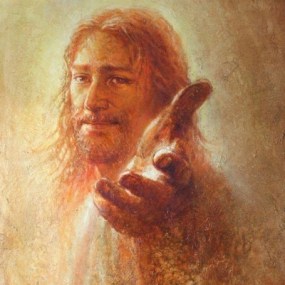 Just an FYI – The corroborating evidence that Jesus Christ not only existed but, lived, died, resurrected, and ascended back to heaven continues to mount. The fact is that the person of Jesus satisfied every one of the 324 Old Testament prophecies as to who the Savior would be. The statistical probability of one man fulfilling even 10% is virtually impossible and to fulfill all of these is beyond comprehension. If anyone says that Jesus was a myth and did not exist as some still tout, no serious historian could agree.
If Jesus’ life proved to be true, and his own words about his death and resurrection were proven reliable then who can reasonably question His declaration to be the very Son of God? (Jesus’ deity confirmed by Jesus in, John 5:14–18, 6:35, 8:56–59, 10:25–33, 14:6–11 & Luke 22:66–71. Also, confirmed by the Apostle John in John 1:1–3 and by the Apostle Paul in Colossians 1:15–20 & 2:9–10, & Philippians 2:5–7)
With that, Jesus simply and lovingly calls out to “Follow me!” So, by the Spirit of God satisfying my intellect, my emotions, and my very soul, I’m compelled to follow.
Today is the day to choose eternal life! Put your faith and trust in the reality of the one, true living God.
Beyond the Gift of Eternal Life, God Keeps Giving Gifts
In Paul’s first book to the Corinthians chapter 12 he writes in verses 7-11 – “But the manifestation of the Spirit is given to each one for the profit of all: for to one is given the word of wisdom through the Spirit, to another the word of knowledge through the same Spirit, to another faith by the same Spirit, to another gifts of healings by the same Spirit, to another the working of miracles, to another prophecy, to another discerning of spirits, to another different kinds of tongues, to another the interpretation of tongues. But one and the same Spirit works all these things, distributing to each one individually as He wills.” He goes on is verse 28, “And God has appointed these in the church: first apostles, second prophets, third teachers, after that miracles, then gifts of healings, helps, administrations, varieties of tongues.”
The Gifts Are Awesome but, What For?
What are the spiritual gifts for? Hebrews 2:4 says, “God also bearing witness both with signs and wonders, with various miracles, and gifts of the Holy Spirit, according to His own will.”
In Ephesians 4:7 & 8 Paul writes, “But to each one of us grace was given according to the measure of Christ’s gift. Therefore He says: “When He ascended on high, He led captivity captive, And gave gifts to men.” He goes on to say in verses 11-13, “And He Himself gave some to be apostles, some prophets, some evangelists, and some pastors and teachers, for the equipping of the saints for the work of ministry, for the edifying of the body of Christ, till we all come to the unity of the faith and of the knowledge of the Son of God, to a perfect man, to the measure of the stature of the fullness of Christ;”
So, God gives these Spiritual Gifts to us:
- To Increase our experiential knowledge of (grow in relationship with) God,
- To Equip us for the ministry to bear witness to the reality of the power of God,
- To Build us up as a church in the unity of our faith,
- To stretch our faith in the reliance and expectancy of God in our lives, and
- To Grow us into the fullness of the man Jesus modeled for us.
Ultimately, all of the above is for the purpose of us growing in our relationship with God and to have that spill out pointing souls to the greatest gift of salvation through Jesus Christ.
Really? All of These Spiritual Gifts For Us Today?
In my book EMPTIED, I detail in Exhibit 7 evidence that the Miraculous gifts were performed by Men of faith before Christ and were continued by His Disciples. Exhibit 7 is reprinted here:
Exhibit 7 – Based Upon the Continued Miracles Performed by His Disciples
In the book of Acts, Jesus’ original Disciples carried out miraculous works with some being what could be described as “even greater things.” Also, we see other non-original Disciples (Paul and Stephen) who carried out miraculous works.
If Jesus did the miracles as God then it would seem that men or disciples would not have been able to continue doing them. Jesus, himself, taught that all the power was from God the Father and that men could and would do even greater things than what the Father did through Jesus.
In John 14:12-14 Jesus responds to Philip saying, “Most assuredly, I say to you, he who believes in Me, the works that I do he will do also; and greater works than these he will do because I go to My Father. And whatever you ask in My name, that I will do, that the Father may be glorified in the Son. If you ask anything in My name, I will do it.”
The Greek word for “works” is also often translated as “things,” which I believe, in context, is commonly understood to be the great and powerful signs and wonders that were performed through Jesus. The same word is used in Matthew 11:4-5: “Jesus answered and said to them, “Go and tell John the things which you hear and see: The blind see and the lame walk; the lepers are cleansed and the deaf hear; the dead are raised up and the poor have the gospel preached to them.” (Italics added)
We see these works or things continued by the Apostles in Acts 5:12,16: “And through the hands of the apostle’s many signs and wonders were done among the people . . . Also, a multitude gathered from the surrounding cities to Jerusalem, bringing sick people and those who were tormented by unclean spirits, and they were all healed.”
The writer of Hebrews testifies that these works or things continue through common men in Hebrews 2:4: “God also bearing witness both with signs and wonders, with various miracles, and gifts of the Holy Spirit, according to His own will.”
Even Greater Things
John 14:12 is an amazing declaration by Jesus. A very common and perhaps the most prevalent interpretation of this passage is that Jesus is speaking to the Disciples and He is saying that as the Body of Christ, they will one day do even greater things than He could as one person. When Jesus spoke these words, He had not yet died on the cross for mankind’s salvation, and His followers would be entrusted with the greater task of preaching the Gospel and leading mankind to salvation through belief in Jesus.
However, the Greek to me is open to some interpretation and can indicate something else. I believe Jesus is answering the disciple, Philip, with “Most assuredly, I say to you, he who believes in Me, the works that I do he will do also; and greater works than these he will do, because I go to My Father.”
The Greek word used in this passage is kakeinos, meaning “and he, he also.” A few major English translations translate kakeinos as “they” but the vast majority of English translations use “he.” The indication is that Jesus is not only referring to His church as a whole but to His individual disciples as well.
Speaking Directly to Disciple Philip?
As further indication that Jesus may have been referring to individual disciples in John 14:12, we find this account in Acts chapter 8. The focus is on Philip going to Samaria. What did he do there? If Jesus was responding directly to Philip in John 14:12, saying that he, as an individual follower, could do the same and even greater things, Luke records that Philip did indeed do many of the same works as Jesus. In Samaria, the multitude heeded Philip for what he spoke, and the miracles he did brought great joy to the entire city.
In Samaria, the multitude came to believe in Christ and were baptized due to Philip’s ministry. Later, Philip converted the Ethiopian and when he baptized him it says, “the Spirit of the Lord caught Philip away” and he found himself in Azotus. In Luke 4 Jesus mysteriously passed unnoticed through an angry mob, but there is no record of Jesus ever being whisked away and teleported over 15 miles. Nice trick. Hmmm? A greater thing?
Greater Than Jesus?
The concern here is that we might be saying a Christ-follower could be greater than Jesus himself. Christ-followers are not greater than Jesus—He always was and always will be THE Son of God. We are saved by Jesus’ unique life, death, and resurrection. He is the Christ – the Messiah – our only Savior. And, Jesus was uniquely filled with the Spirit without measure as confirmed in John 3:34, “For he whom God hath sent speaketh the words of God: for God giveth not the Spirit by measure unto him.” (KJV)
As Christians, we are called to be followers and imitators of Christ. We follow Him. If we are doing a good imitation, then Jesus could be interpreted as saying in John 14:12 that we can do the things He did as a man empowered by the Holy Spirit. And, possibly do even greater things or works. What those greater things or works are, is a whole other debate.
A disciple, doing some works that appear greater than what Jesus did (Billy Graham or other evangelists reaching crowds greater in size than Jesus ever spoke to) would not make him/her God or greater than Jesus because it is only by the Spirit of God/Jesus working in them and through them that they can do any of these things.
Could it be that Jesus may be challenging the church (Body of Christ) and even his individual disciples to do things beyond what He had done? Even while writing books about spiritual matters, I’m realizing that Jesus never wrote a book. I am particularly ill-equipped to do it and it’s a daunting task, but if I am following God’s leading, then Jesus is saying, I didn’t do it, but you can!
When writing to the Ephesian church, Paul (doing a greater thing?) seemed to want to encourage the Ephesians to measure themselves to the man Jesus, writing in Ephesians 4:13: “Till we all come to the unity of the faith and of the knowledge of the Son of God, to a perfect man, to the measure of the stature of the fullness of Christ.”
(The original Greek uses the phrase, “full measure” or plērōmatos metron which implies being filled up to a limited portion of the fullness of Christ. Hagin refers to it as, “Believers having the Spirit by measure.”)
This interpretation of John 14:12 can be a scary proposition for many Christians for what it implies as to the potential power we may have in Christ Jesus and how much may be going unrealized.
Still, I believe it is God encouraging us and coaxing us to the fullness of the life and ministry He intended for us. If nothing else, I see the language leaving an opening for differing opinions and debate.
One opinion holds that certain gifts Jesus and the first Apostles performed are no longer available to us today. While this is not what I see, I humbly acknowledge that many scholarly and very credible Christ-followers believe this. (For more on Cessation of Sign Gifts see Appendix A)
A Study of Jesus’ Miracles
Is Jesus actually saying, You know all the miraculous things I have done? Yes, you can do those and even greater ones?
I have to say that John 14:12 is one scripture, in particular, when reading it I would roll my eyes and just move on. Right! Even greater things than the Son of God? Come on, man!
But, as the idea that Jesus may have carried on throughout his life fully as a man took hold, I decided to take a closer look at His miracles. I did a study of the 37 documented miracles of Jesus as described in the Gospels.
Considering the different miracles Jesus performed, I researched how the miracles performed by other Biblical figures might compare to Jesus’ miracles.
Peter declares in Acts 2:22 “Men of Israel, hear these words: Jesus of Nazareth, a Man attested by God to you by miracles, wonders, and signs which God did through Him in your midst, as you yourselves also know.” (Italics added)
With that in mind, I wondered if any other person in the Bible had done something equivalent to each of the miracles recorded of Jesus?
Based on my research, I have concluded that with every recorded miracle performed by Jesus, there was something similar initiated by another Biblical figure (human) – and in several cases in what could be described as an “even greater” way. Below is a sampling of what I found:
- All of the same physical healings performed by Jesus were performed by the Disciples in the book of Acts – even on two occasions raising someone from the dead.
- Jesus called Lazarus from the grave but in 2 Kings 13:20–21 Elisha’s bones caused a dead man to come back from the grave.
- Jesus turned a few vats of water into fine wine – Moses turned an entire river of water to blood in Exodus 7:17
- Jesus calmed storms – Moses parted the Red Sea – Exodus 14:13 and Elijah stopped the rain for seven years before bringing the rain again in 1Kings17-18 & James 5:17-18
- Jesus multiplied loaves and fishes to feed 4000 and 3000 – Moses prayed for food (meat and manna) to feed the entire Hebrew people for years – Exodus 16:11-12
- Jesus caused a fish to deliver tax money from its mouth – Jonah was delivered from a fish’s mouth onto the shores of Nineva.
- How about walking on water? Certainly, Jesus was the only one to do that! – Oops, that’s right, Peter walked on water too. While Moses avoided getting wet by parting the Red Sea so a whole nation could pass through.
I have looked at every recorded miracle of Jesus and found Biblical figures whom God used to do something similar and in some cases done in arguably greater terms. (A more complete list is found in Appendix B)
Please do not take this as an attempt to diminish who Jesus was/is. No one has ever had the scope and breadth of the miraculous ministry that Jesus had. And, no one else was or will ever be THE Son of God and THE anointed Messiah who was uniquely filled with the Spirit without measure.
What excites me is to find that what I considered to be one of the most outlandish statements Jesus ever made is proven true right within the Biblical record.
~~~
R.A. Torrey writes, “He (Jesus) lived, thought, worked, taught, conquered sin and won victories for God in the power of that same Spirit whom we may all Have. Whatever He realized through the Holy Spirit is there for us to realize also.”
 If you want to review the complete list of “Greater Things” done by Biblical figures compared to the 37 recorded miracles of Jesus, you can find them in Appendix B of my Book, EMPTIED
So, is Exercising Miraculous Gifts What God Requires of Me?
The Prophet Micah succinctly details what God requires of us in Micah 6:8 – “He has shown you, O man, what is good; And what does the Lord require of you But to do justly, To love mercy, And to walk humbly with your God?”
For today, enjoy the greatest gift of all and walk with your Savior!
 The above acronym came to me a long time ago when I first really zeroed in on John 10:10. We as Christ-Followers have life more abundantly. What does it mean? In our American culture celebrating financial wealth and achievement/celebrity it is often interpreted as being God’s physical blessings – wealth of opportunity and financial success. It is a trap.
 But, just when we were feeling our lowest we got a call from our Friends in Christ to join them for a worship night at the “Popadic Ranch.” There we gathered with their family and friends on a cool South Florida night around a roaring camp fire. Their kids led us in worship.
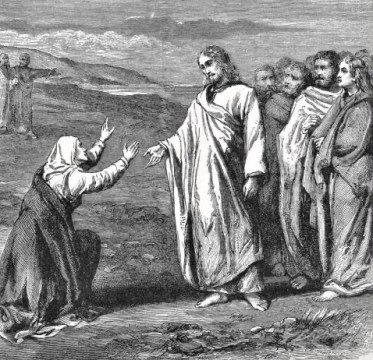 In this book, I explore a strange Gospel episode found in Matthew 15:21-28 and Jesus’ treatment of a Gentile woman seeking His help.
 We had just gone to my eldest son’s college graduation. Unfortunately, I did not have time to make plans for lunch afterward, and many area restaurants were already booked, so we ended up at a Chili’s restaurant. After we finished our entrées, we all agreed that we would share one of their infamous lava cakes for dessert. Chili’s offers a chocolate and a vanilla lava cake. We took a vote and all agreed on ordering the vanilla and gave our order to the waitress.
 Wow!
Wow!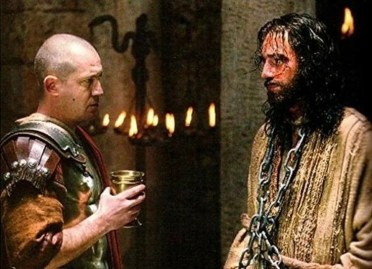 With all the deception, counter-deception, fraud, disinformation, conspiracy theories, false flags, and political games, who can tell what is true? What I see as plainly evident as truth is seen by seemingly rational others completely differently. Is it just the news outlets we watch? Am I the one being deceived? l all seems so amorphous these days. Like Pontius Pilot, we ask, “What is Truth?”
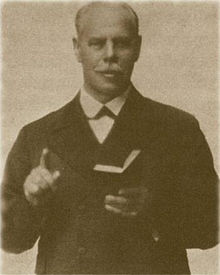 Last year I wrote a 4-part series on Smith Wigglesworth. The posts have been, by far, the most viewed on my site. I am not sure why. Is it just general interest in the person and ministry of Smith Wigglesworth, or are people looking for answers to the “Kicking the Baby like a Football” episode? I don’t know. But, based on this interest, I’ve decided to revise the posts and add some additional content to compile it into a short book.
 There is a Strength in His Grip That Won’t Let Go
 “Most assuredly, I say to you, he who believes in Me, the works that I do he will do also; and greater works than these he will do because I go to My Father.” – John 14:12
 Or, it can be argued that God does fill each one of us up to the brim but the filling is limited to the space we allow for the Holy Spirit. Why do I go through the drive-through and order a soda without ice? Because I’m a cheapskate and I want a full cup of soda, not a lot of ice and little soda. If we fill up a jar of water that is already filled with rocks, there is not a lot of room left for the water.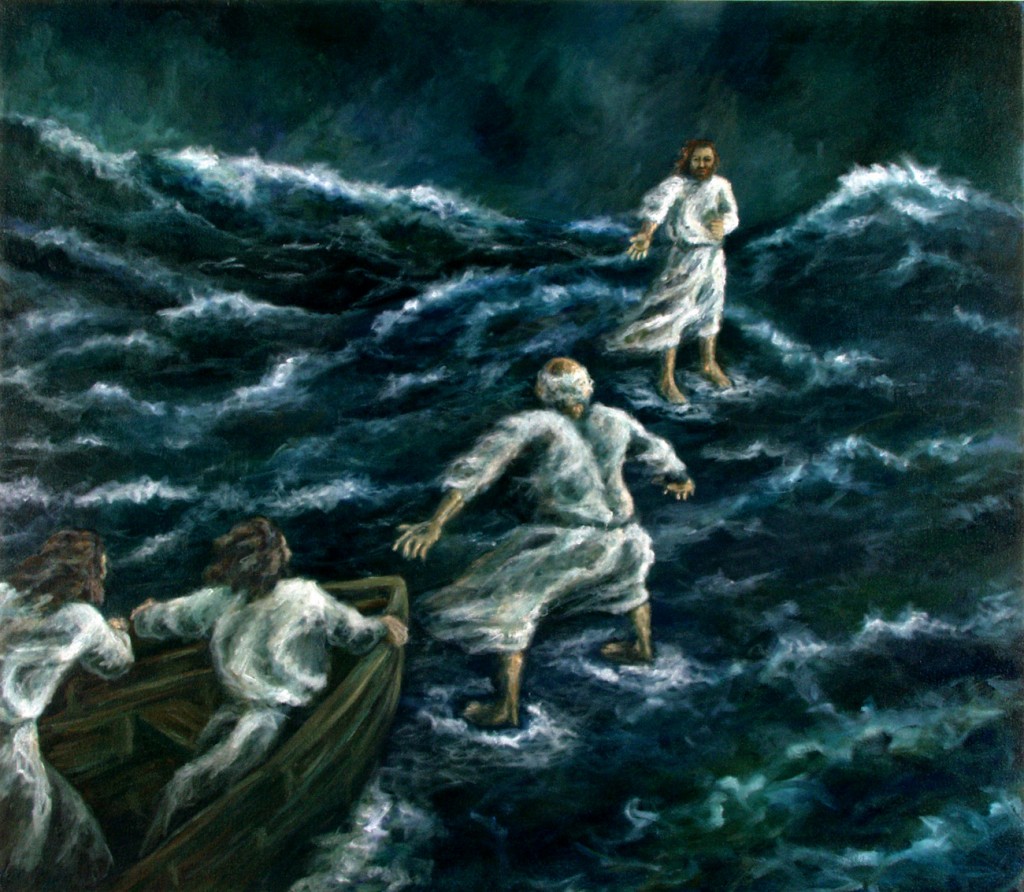
 The English Civil War of the 1650s once again pitted 2 Christian groups against one another. Cromwell’s New Model Army under the Anglican Church of England invaded Presbyterian Scotland. While the battle was not really about religious differences, it is another example of Christ-followers ignoring the Biblical call to oneness established by the Unity of the Spirit found in Ephesians 4:3 – “endeavoring to keep the unity of the Spirit in the bond of peace.”
 Guthrie’s men huddled together on the cold, dank floor of Durham Cathedral. It had been several weeks since thousands of Scottish soldiers were forced on a death-march south toward England, to prevent any attempt by the Scots to rescue them. No food or water was given. The wounded, ill, and starving who collapsed along the way were beaten, stabbed, and left to die. Robert was grateful—his men carried him and Henry Merrow, caring for them as best they could.

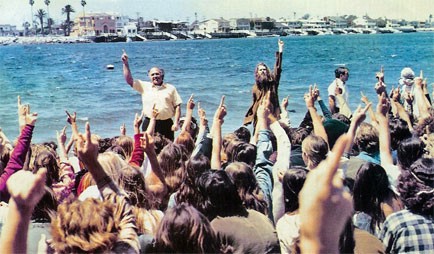 Much like when I investigated the controversy surrounding Smith Wigglesworth, there is some contention surrounding the ministry of Lonnie Frisbee. The movie Jesus Revolution could not address the full scope and power of his ministry. In addition, it does not address the stigma that almost had him erased from the recorded history of the Jesus revolution movement(s).
 REMEMBER TO FORGET
 I honor the life of Lonnie Frisbee for being something like the Apostle Paul who even as he wrestled with failing to always do that which was right, could boldly proclaim as in 1 Corinthians 11:1, “Imitate me, just as I also imitate Christ.”
 The first day the movie Jesus Revolution was available in theatres we attended a showing. My wife Eleni and I were excited to relive the period that led to the most momentous event in our lives. If you have any interest in getting insight into My and Eleni’s Spiritual Journey, go see the movie Jesus Revolution.
 So, the Lineage of our salvation is that we were invited to Calvary Chapel in Costa Mesa, where Lonnie Frisbee led Gregg Laurie to the Lord, who then led us to the Lord. We were fed the Word of God by Chuck Smith and continued to be fed through a Calvary Chapel tape ministry when we moved back East. We were Baptized at Pirates Cove and for good measure, Eleni was healed through Lonnie Frisbee’s ministry. Pretty much the Whole Enchilada.
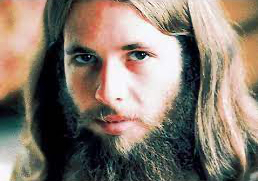 The Lonnie Frisbee Dilemma
 Tucked In and Lamps Burning