The Wigglesworth Dilemma – Part IV – Final Conclusions

1482744098-mr-t-mrt-pity-the-fool-pities-mohawk“But the natural man does not receive the things of the Spirit of God, for they are foolishness to him; nor can he know them, because they are spiritually discerned.” – 1 Corinthians 2:14


After about a year’s worth of reading, researching, reviewing, reflecting and praying I will now post my conclusions about the challenging elements of the ministry of Smith Wigglesworth. (Certainly, the world has been waiting with bated breath!)

But, a legitimate question is – Why?

Why bother? Couldn’t I have spent my time in a more constructive pursuit? Along the way, I have asked myself this question but then I’m reminded that this is more about seeking God. To explore His character and how He works in us and through us. This has not been just an effort to legitimize the life and ministry of one man, it is about coming to grips with the ways of God and our charge as Christ-followers to be imitators of Jesus.

I certainly can’t say, as most everyone alive today cannot, that I know Smith Wigglesworth (1859-1947) from personal experience. But, based upon all that has been written of him, often by those who were closer to him, we get a consistent theme of his character – one described by the full Fruit of the Spirit.

Even having read about how he handled controversy over his ministry during his lifetime, he seemingly couldn’t have cared less about how people judged him. His sole concern was to discern the leading of God’s Holy Spirit and to act on that leading. He did not seek to please man. God’s reward was enough.

Based upon what I have read of the life of this plumber/evangelist, he became a devout follower of Jesus Christ, whose life was a great imitation of Jesus. After his conversion to Christ, he was known to be a tender-hearted, loving, caring, humble saint who was selfless in the pursuit of the ministry and relentlessly drinking in the word of God. He was never about flashy self-promotion but dedicated himself to reading and studying and living out the Word of God to an extent that few Christians I know of can ever claim.

The overwhelming body of evidence tells me that Smith Wigglesworth was an amazing modern-day Apostle of Jesus. How many Christians, in or out of Christian ministry, do I know that were totally dedicated to absorbing the word of God such that they would not even read another book or let a newspaper into their house to entertain messages contrary to God’s word?

You can react to say, “That’s just weird!” or “That’s too extreme!” But, I believe the Biblical message is that extreme dedication to God’s word and the steady filling of the Holy Spirit, along with boldness to step out with radical faith consistent with the Character of Christ leads to extreme results. Yet, very few of us are willing to go to such extremes.

That’s what I see in the life of Smith Wigglesworth – a radical faith along with an extreme reliance on God’s word and a steady filling of the Holy Spirit. This led to the reliable exercise of a spiritual gift to see into the spiritual realm. His was a dedication far beyond where many of us are willing to go.

Equal of Jesus?

unnamedIn Matthew 10:37 Jesus says, “Anyone who loves their father or mother more than me is not worthy of me; anyone who loves their son or daughter more than me is not worthy of me.” He goes on to say in verse 38, “And he who does not take his cross and follow after Me is not worthy of Me.” These are extremely challenging words from Jesus.

Part of the challenge for Christ-followers is to dig deeper. Consider the word ‘unworthy’ that seems to reflect great offense by Jesus. He seems to be saying that He will have nothing to do with us, dismissively waving his hand signifying that we are not really his disciples. I am being rejected by Jesus because I am so pathetic and unworthy.

However, the Greek word for ‘worthy’ is axios—meaning the weight of something – something that has the equal weight of another thing of like value, like the equal values on both ends of a balanced scale.

What is Jesus saying? That we can’t be His equal in some way? How can we be equal with the Son of God? But, Jesus seems to be saying that he who does not take up his cross is not equal to Jesus. So, if we do take up our cross we can be equal to Jesus? Whoa! How can we possibly be His equal? We certainly can never be the equal to the Son of God – an equal member of the Triune God! Certainly not. How then?

Perhaps Jesus is saying that we will not be able to do what He did in His ministry while the Son of God chose to walk the earth as Son of Man – being guided by the Father and empowered by the Holy Spirit. We could never be able to fulfill the challenge Jesus posed in John 14:12 that we can do even greater things than Him.

So, I’d say it is not about being loved and accepted by God or being equal with God but about being fully empowered for the ministry that Jesus modeled for us.

My conclusion with regard to the Christ-likeness of Smith Wigglesworth:

Smith Wigglesworth, along with everything he determined to do to save the lost should be celebrated as an amazing work of God’s doing. One episode should not be focused on any more than another. Some things God does may challenge our notion of how God works but if nothing else it should then draw us deeper into searching out God’s wisdom on a matter. Each of the thousands of recorded healings of SW deserves equal honor TO GOD as Peter declared even of Jesus in Acts 2:22 “Men of Israel, hear these words: Jesus of Nazareth, a Man attested by God to you by miracles, wonders, and signs which God did through Him in your midst. . .”

I have no doubt Smith Wiglesworth fell short of the perfection of Christ. We all do. But, I venture to guess that his imitation of Christ was a lot closer than mine may ever be. Does that mean I’m loved any less by God? No! But, still, God keeps beckoning me to draw closer to the image of Christ and like Paul, if our desire is to grow in the things and the power of the ministry of Jesus, if nothing else, Smith’s life says “Imitate my dedication to imitating Christ.”

Also, when I look at the life of SW, I am not who God made SW to be, nor am I what the world made out of SW that perhaps God took what was meant for evil and used it for the good – to take bad and put it to good use. Genesis 50:20, “As for you, you meant evil against me, but God meant it for good. . .”

My conclusion concerning the Smith Wigglesworth kicking the baby controversy:

With all I have considered, my conclusion is that Smith Wigglesworth did not wind up and kick a baby like a football nor did he slam a baby against the wall. This is man’s irrepressible desire to elaborate and exaggerate an event to make it more intriguing and compelling and even salacious than it needs to be (as a writer I know of this temptation all too well). As if the version of the miracle described by SW’s great-granddaughter, Lillian De Fin wasn’t amazing enough? Also, it is not beyond our enemy in this world to take something of God and twist it into something that would then be used to divide the Body of Christ.

My conclusion with regard to the use of getting physical as a part of miraculous healing:

God used this particular man for all of who he was at that particular time and for those particular people in those particular places and in particular ways to 1. grab people’s attention, 2. stir up their faith, and 3. occasionally use physical means as part of invasive ‘machaira’ surgery Jesus alludes to in Matthew 10:34-36“Think not that I am come to send peace on earth: I came not to send peace, but a sword.”

Further thoughts on Jesus words in John 14:12  “Most assuredly, I say to you, he who believes in Me, the works that I do he will do also; and greater works than these he will do, because I go to My Father.”

Some of the alternative translations of the Greek word meizon translated as “greater” are – larger, elder, stronger, more (In James 4:6, it is often translated as more). Could it be that Jesus may be challenging the church (body of Christ) and even his individual disciples to do things beyond what He had done?

I believe Jesus is actually encouraging his followers to not be limited to just the things he did. Throughout the Bible there are examples of God working through His people in miraculous signs and wonders that could be described as ‘greater’ than any of the miracles performed by Jesus.

Yet, for myself, I insist upon the qualifier that we strive to maintain the Biblical Character of Christ in all we do. Of all the things Jesus may have “emptied” Himself of when he came to earth as stated in Philippians 2:7 (NASB)“but emptied Himself by taking the form of a bond-servant and being born in the likeness of men.” He certainly did not give up His very character as God – that God’s goodness, righteousness, and truth would be fully displayed in the flesh. (Colossians 1:15 – The Son is the image of the invisible God …..)

So, with all that said, are you going to see me anytime soon punching or kicking someone who needs healing? No, I can’t imagine it.

But, is my ability to hear and see God’s guidance dedicated enough to be certain I know that it is God’s voice saying, “Do it out of my love” and to proceed with the faith of Abraham to know it will not hurt but only heal? Whew! I have a long way to go if that is my heart’s desire.

For myself, as I pursue growing in Christ I feel certain that it requires stepping out into new territories that may be awkward and strange (Faith). But, I will have to be pretty darn certain of God’s voice if I hear him say, “Give that demon a good whack” and there just happens to be a human body in the way.

So, who am I to judge?

judge-1-300x2921-1Every healing work documented in the Gospels was unique and only the author knows with certainty exactly why those unique elements were required. (BTW – based on the Apostle John’s estimation, the 37 or so miraculous episodes recorded in the Gospels were only a taste of that which could fill volumes to fill up the world.) Jesus saw, listened, and obeyed to follow the Father’s instructions. That is what I see of the heart of Smith Wigglesworth.

As I have already mentioned, I don’t believe it was Jesus’ intent saying in Matthew 7:1 “Judge not, that ye be not judged” for us to ignore our need to make judgments about the things (physical & spiritual) that challenge us in life. The ministry of Smith Wigglesworth should challenge us. This is fair game – to look at others’ words and actions, not necessarily to condemn but to decide where God stands on a matter and how we are to be led. But, it is only a righteous judgment if we consider our own personal challenges to becoming all God wants us to be and look to God’s guidance and wisdom on these matters.

That leaves me with a major takeaway: Yes, I should follow the character of other mature Christ-followers as they are consistent with Christ. But, I don’t believe we are called to imitate how God leads others in the exercise of spiritual gifts. It is the Holy Spirit who guides and directs us in the exercise of spiritual gifts that are tailored uniquely for each individual.

Just because SW may have been led to be physical on occasion does not mean I have a license to do the same. Who do we look to? Jesus as our example, the Father’s leading and the Holy Spirit’s power are unique to who we are and how God calls and directs us.

Unless I am determined to imitate Jesus to the extent I am fully dedicated to only act on what I see and hear the Father do, empowered by the Holy Spirit, how can I judge someone whose life seemed fully dedicated to just that – regardless if he got it right every time?

Still, that God can even use my poor imitation of Jesus continues to amaze me as I am reminded in Ephesians 2:13“for it is God who works in you to will and to act in order to fulfill His good purpose.”

Concluding with Lillian De Finn’s response to my posts (Great Granddaughter of Smith Wigglesworth)

Hi David,

. . . I’m sure you have read how as a young believer Smith Wigglesworth fasted for ten days specifically I believe to humble himself before the Lord with regard to his quick temper. The Lord met him, and Grandma Polly said after that he never fussed in the house or complained about his food. So, I find it hard to hear that people would contribute his unusual behavior to a violent temper. My mother said he was always compassionate and gentle.

I believe people are genuinely looking for the secret of Smiths’ power. It is found in:

Luke 3:16 – John answered, saying to all, “I indeed baptize you with water; but One mightier than I is coming, whose sandal strap I am not worthy to loose. He will baptize you with the Holy Spirit and fire.”

It’s not Smith Wigglesworth’s anointing that we need. It is the baptism of the Holy Spirit and fire. Jesus said in Luke 4:18 “The Spirit of the Lord is upon Me, Because He has anointed Me ………

……… Lately the Lord has been challenging me to live in this scripture:

Philippians 4:8 Finally, brethren, whatever things are true, whatever things are noble, whatever things are just, whatever things are pure, whatever things are lovely, whatever things are of good report, if there is any virtue and if there is anything praiseworthy—meditate on these things.

I trust you will be able to distinguish the truth from the exaggerated stories. The good report from the false report and the pure and lovely from anything harmful to his reputation. Find the praiseworthy and meditate on these things.

Yours in His Service, Lilian de fin

To the above I say – Thank you Lillian and AMEN!


Because of the continued interest in the ministry of Smith Wigglesworth, I have combined the posts with additional material into a book. Feel free to enjoy the posts or purchase the new book on Amazon.

The Wigglesworth Dilemma – Part III: Some Answers

Street artist performing isolated on white background“that you do not become sluggish, but imitate those who through faith and patience inherit the promises” – Hebrews 6:12

 The Wigglesworth Dilemma: The apparent conflict between the behavior and Character of Christ found in the Gospels and what appears to be contrary behavior of those in seemingly powerfully but effective Christian healing ministry.


I continued on this investigation wondering if there is any basis for God working through Smith Wigglesworth’s use of violent acts?

I came up with these 5 questions as I sought wisdom on the matter:

  1. Has God Used His People through Violent Means Before?
  2. Does God choose to use imperfect/flawed human beings?
  3. Can God use violent acts to bring Himself glory and to win people to Christ?
  4. How/why might God use a man’s violent temper to accomplish His will?
  5. Jesus was never violent but did He ever act out of anger or inappropriately?

  1. Has God Used His People through Violent Means Before?

    • God has used his people to fight off evil in the Old Testament. Even today there are physical battles going on between the forces of good and evil involving violent action. (Although the lines between good and evil have become quite blurred in these days)
    • Yet, Jesus never advocated or modeled any violent behavior. Nor, did his disciples after Jesus’ death ever model or advocate the use of violence.
  1. Does God choose to use Imperfect/flawed human beings? (Unfortunately, that’s all He’s got)

    • The Biblical record clearly shows that God uses imperfect people but those who have a heart for Him. God not only uses all he made us to be but even that which the world has twisted out of shape.  SW, before coming to Christ was known to have a violent temper. As a Christian, Wigglesworth was reportedly courteous, kind, and gentle. However, he became forceful when dealing with the devil, whom he believed caused all sickness. Did God use what the world made of him and use it for good? 

God honors the underlying heart and dedication of the man.

    • King David – David was a moral failure in some major ways. He committed adultery and in trying to hide his sin, he sent Bathsheba’s husband Uriah to certain death. King David’s power had corrupted him to think he could get away with anything. Yet, in Acts 13:22, it says God found David to be a man after his own heart. David acknowledged his sin and asked for forgiveness. He paid a price for his wrong but God loved his heart and was still able to use him for God’s glory.
    • Abraham and Isaac – God spoke to Abraham to take his beloved son and sacrifice him. How was that consistent with God’s loving character? Abraham must have been confused. Why would God promise him a son and then take the son away? It feels like a strange inconsistency or maybe even a dirty trick. But, based on Abraham’s relationship with God, he was certain he knew God’s character. Once, he even asked God in Genesis 18, “Will not the judge of all the earth do right?”
    • Abraham obeyed God’s unexpected command because he trusted God’s promise and knew him to be good and trustworthy. Abraham didn’t believe Isaac would die. In fact, God was so certain that Abraham knew God’s heart that He used Abrahams heart as a reflection of His own heart and the story as a prophetic foretelling of how God would be willing to sacrifice his own son to save mankind. James 2:23 “And the Scripture was fulfilled which says, “Abraham believed God, and it was accounted to him for righteousness.”

Do we always hear God correctly?

    • Is it possible that SW on occasion misunderstood God’s instruction and acted incorrectly? SW was a damaged human as we all are, but even someone as dedicated and gifted at discerning God’s spirit as SW still leaves the possibility he occasionally misheard God.
    • I know, for myself, that when I have dedicated myself to seeking God’s will and hearing His voice on a matter that I have to wade through my own self-interests, desires and wounded-ness. I’m not always successful and get it wrong. (Still amazed at how often God still uses it for good.)
    • Even if SW actions in these cases were misguided, God still used it. Many Christians then and now denounce Wigglesworth and his actions. Yet, haven’t there been sincere Christians over the decades that have been sinful or misguided or who misunderstood God in certain ways but were still used by God because he honored their core faith and desire?
    • Jehu in 2 Kings was a man that did not always behave righteously but God blessed Jehu for his obedience to stand up for the things of God in certain matters, granting him a dynasty that lasted four generations. Eventually, God took His blessing away from him for willfully choosing to continue in sin. God still used the imperfect man Jehu.
  1. Can God use violent acts to bring Himself glory and to win people to Christ?

That leads me to the question: Can an act of physicality/violence be an act of love?

Delivery Room Doctor About to Spank NewbornYes, I believe we see many examples of this:

  1. Slapping someone who has become incoherent or extremely irrational.
  2. Providing loving correction to a child by a healthy spanking
  3. Providing for a person’s safety by shoving them away from oncoming danger
  4. Using violence to protect a victim from violence
  5. Performing invasive surgery for healing and to save a life – Going under the knife, as they say, is not intentionally violent but you can’t get much more physical – cutting flesh and breaking bone for a person’s welfare.

Where is the violence directed? – Jesus declared in Matthew 10:34 that he did not come to sprinkle peace but he came with a sword (machara) to do spiritual surgery for deep healing out of love. For SW, he was seeing in these people an evil spirit that had to be removed and God was leading him, on occasion, to get physical in this way.

Were those needing healing willing participants? – SW always prepared the people for what God was instructing him to do and then asked them for permission. Following Proverbs 3:5 – “Trust in the Lord with all your heart, And lean not on your own understanding” and based on their desperate need and desire to stretch their faith, they would then give him permission.

What were the Results? – We have every right to make a judgement as to how a behavior stands up to the measure of Christ but there is no better measure than – was God called upon ‘In Jesus’ name’ and did God answer the call? SW exerted his anger and physicality towards the demons at the source of the damage and not to the person. The claim has been repeated that no one was ever hurt by his actions but only healed.

How do we handle others in Christian ministry who behave differently?

Jesus addressed a similar issue with his followers taking exception to “others” healing in Jesus’ name in Mark 9:38 – “Teacher,” said John, “we saw someone driving out demons in your name and we told him to stop, because he was not one of us.” “Do not stop him,” Jesus said. “For no one who does a miracle in my name can in the next moment say anything bad about me, for whoever is not against us is for us.”

Paul wrote something similar in Philippians 1:18 “What then? Only that in every way, whether in pretense or in truth, Christ is preached; and in this I rejoice, yes, and will rejoice.”

What about Matthew 7:1-3? – “Judge not, that you be not judged. For with what judgment you judge, you will be judged; and with the measure you use, it will be measured back to you. And why do you look at the speck in your brother’s eye, but do not consider the plank in your own eye?”

We have every right and responsibility to size up anyone in Christian ministry based on scripture and to make decisions accordingly for how we are led. But, I believe it is clear that we are not called to “pass judgement” on how God can use what I may gauge as a biblicaly challenging ministry. By God’s leading we may be called upon to bring correction but my primary charge is to keep my focus on how God is leading me in the ministry I have been appointed to.

  1. How/why might God use a man’s violent temper to accomplish His will?

    1. To compel into action– Upon seeing the demons who occupied the health of those seeking healing, did God redirected SW’s temper to forcefully attack those spirits? Perhaps God used Smith’s penchant for anger to motivate Smith into action.
    2. To connect with a culture – 1 Corinthians 9:22 Paul declares – “. . . I have become all things to all people so that by all possible means I might save some.” In this case God used a strong, working-class, hard-nosed individual to connect with the rugged common folk of the day.
    3. For the purpose of getting the people to focus their attention. SW said the reason he spoke bluntly and acted forcefully with people was that he knew he needed to get their attention so they could focus on God.

God led him through anger directed toward the devil and sickness to act in a seemingly rough way. No one was ever recorded as being hurt by this startling treatment. Instead, they were remarkably healed. He believed that Satan should never be treated gently or allowed to get away with anything.” (From The Best of Smith Wigglesworth (pp. 234-235). Whitaker House.)

  • For myself, on several occasions when praying for others, the thought has come into my mind/spirit that some people who step forward for prayer do not really believe anything will happen. They stand in a physical, mental and emotional fog. They even fear what a possible change to the unfortunate circumstances they have come to accept and let define them might mean to their lives. They are completely hopeless and faithless. Do they even want to be healed?
  • In this regard, SW’s actions strike me as something like when Jesus asked what seems a merely rhetorical question “Do you want to be healed?” to the invalid in John 5:6. Of course he did. Or did he?
    • (BTW – This is also the very episode where when challenged by the Pharisees in John 5:19 Jesus declares, “Most assuredly, I say to you, the Son can do nothing of Himself, but what He sees the Father do; for whatever He does, the Son also does in like manner.”)
  • On the occasions mentioned above I have felt compelled to ask the same question – “Do you want to be healed?” To be completely transparent there are times I have felt like some people needed a good slap to say, “Hey, wake up! God is really here and He wants to enter into your life to only do good for you.” (I have always resisted this temptation)
  • Honestly, there are occasions when I have needed a good slap myself. Not a physical slap but God certainly knows how to lovingly jar me awake. (I’m left figuratively rubbing my jaw but saying, Ouch! I needed that!) It’s the kind of verbal slap (Jarring wake-up call) that Jesus gave the same healed beggar later on in John 5:14. Jesus catches up with the healed man now begging at the temple and says to him, “See, you have been made well. Sin no more, lest a worse thing come upon you.” In other words, “Hey, you have been given new life, don’t waste it by going back to the old life!” (smack!)
  1. Did Jesus ever act out of anger or in a seemingly inappropriate way?

Did Jesus ever act out of Anger?

The only time in the Gospels Jesus is described using the word ‘angry’ was in Mark 3:1-6. He became angry/disappointed with the Pharisees lack of compassion for a man seeking to be healed on the Sabbath. What did Jesus do with that anger? – he transferred it to a show of love by healing the deformed hand.

In the case of Jesus cleansing the temple, most people assume Jesus was acting out of righteous anger. I would argue otherwise; that Jesus did not go into a wild rage but simply did a thorough cleansing to put his Father’s house back in order. However, if Jesus was acting out of anger the result was kingdom teaching, healing and joyous celebration of God.

Did Jesus act inappropriate at any time?

I’d argue – quite often. Let’s take Jesus’s healing the blind man in John 9:6-11 as an example. If I was able to fully listen to God’s instruction as an imitator of Christ and came upon a blind man that God showed me to, first spit on the ground, create mud and then smear it over this eyes. Would I do it? Furthermore, would I then tell him to wade through a crowd of people, likely laughing at his muddy face as he struggled to find water to wash it off? Would I really risk humiliating the man If that was the direction God gave me? Would I act on that instruction? Seems like a heartless and cruel joke to play on a blind person.

Yet, what was the result? Gloriously, the blind man’s sight was restored. Those who were laughing were now sobered by the healing reality. But, beyond that the man came to know that God was real, that God loved him and he was no longer defined by the sin others attributed to him – a man now experiencing the fullness of God by physical, emotional and spiritual freedom.

Not a violent bone in Jesus’s body?

Scripture indicates that Jesus was tempted in every way, so this likely means that he was tempted at some point to be violent. He resisted the temptation and remained our perfect example. Yet, there were some episodes where Jesus appears to be acting unkindly and out of Christ-like character.

Bs1eIfHCMAA7g_BBelow are just a few examples of Jesus seemingly acting inappropriately:

      1. As described above – when he humiliates the blind man by smearing mud on his face
      2. When he calls the Phoenician woman a dog
      3. When he casts demons into swine and they charge off a cliff to their death
      4. When he curses and kills a fig tree for not providing him figs
      5. When he waits 3 days and lets Lazarus die
      6. When he tells his disciples, that they can’t follow Him unless they hate their family

In these and other episodes there were people who were dismayed and even appalled by Jesus’ behavior. It wasn’t until the work was completed and we take a closer look that we can understand that this behavior was a means to fully realize God’s goodness, righteousness and truth.

If Jesus only did what the Father showed Him to do then these were examples of Jesus merely acting out how He was directed by the Father. Who of us fully knows the purpose of these awkward gyrations? I know I don’t and I’m pretty sure that there is no other person that knows with certainty why these actions were necessary for miracles to take place.

What do I know?

What do any of us really know about the endless capabilities of God? We do know that it was never the strange element Jesus used as part of the healing, but God’s hand in it. Whatever Jesus did, whether it was smearing mud, touching a tongue, giving a wet-willy, it was somehow about triggering faith – which always pleases God.

Finally, I recruited my tech-savvy friend Albert to search for a way to reach Smith Wigglesworth’s great Granddaughter, Lillian De Fin. He easily found her Facebook page. (I don’t know how I missed it). I reached out and asked Lillian about the infamous episode. She was generous to respond and I was not surprised by her message reprinted below:

“Hi David, I have heard my family discuss the healing of the baby on the stage. None of them were present when this healing took place. So, they can only repeat what they have heard. It would seem that many of the stories have been exaggerated over the years. From what I know the story is that the baby had a spinal problem. Most likely a condition known as spina-bifida. He did apparently put the baby on the stage and push it off the stage with his foot. The baby landed on his back fully healed. I am told many times the people would gasp at his actions but he always said “I know my business”. He operated in the gift of discerning of Spirits. My mom told me that at times he would see the demon causing the sickness and at other times he would see two hands touching the sick body. I think it’s unfortunate that people need to keep discussing the controversial healings when there are so many wonderful miracles that took place in grandpa’s ministry.”

Next Week: The Wigglesworth Dilemma – Part IV: Final Conclusions


Because of the continued interest in the ministry of Smith Wigglesworth, I have combined the posts with additional material into a book. Feel free to enjoy the posts or purchase the new book on Amazon.

The Wigglesworth Dilemma – Part II: The Search

Blessed are those who keep His testimonies, Who seek Him with the whole heart! – Psalm 119:2

Leap of faithThe Wigglesworth Dilemma – Definition: The apparent conflict between the behavior and Character of Christ found in the Gospels and what appears to be contrary behavior of some people in Christian healing ministry.


My search involves looking for a documented account of the infamous Smith Wigglesworth healing of a 2-year-old baby with spina bifida by throwing the boy against the wall and then kicking him like a soccer ball. Did this really happen and how could this behaviour possibly be reconciled to the Jesus I know?

Up to this point I have searched through over 15 books written about the life and ministry of Smith Wigglesworth (SW) and searched through numerous websites dedicated to keeping alive the legacy of Wigglesworth. So far I have found no documented record of this episode. These books and sites have recorded hundreds of miraculous healings – healings recorded in newspapers and through first-hand testimonies. Yet, even in what I would assume to be the most comprehensive listing of major SW miracles in the book titled, The Miracles of Smith Wigglesworth by Dr. Michael H Yeager this infamous episode is strangely absent. Why?

The closest account I found was in the book, Smith Wigglesworth: The Complete Story by Julian Wilson. On pages 126-127 it documents the following:

“According to eyewitness accounts, a child of around two years old with deformed feet was brought to the platform during a meeting to be prayed for. Wigglesworth requested that the infant be placed on the platform and then kicked the child into the audience. The child landed on its feet and ran off down the aisle.”

Hmmm? Not the same story but pretty amazing. Yet, it’s another story of SW kicking a child but not the same story of kicking an infant. Still, a reference to SW being led to kick a child as an avenue to see God’s healing power.

I’m left wondering; is this particular story of SW kicking an infant just some kind of urban legend or perhaps a conglomeration of different healing stories that people have mashed together over the years?

I Did Find This Story Documented. Where?

Of all places, the only place I could find this notorious account in writing was the one highlighted in my previous post via a posting by the BSA Louisiana State Director on the Northeast Arm-wrestling Message Board back in 2005. (What?) In the post the Director identifies that the story was “Legally Recorded” in some way. The Director is a Christian and he was sharing an article he had read about this amazing healing from the website Born-Again-Christian.org.

The only other documented account I found was a video clip from the TV program It’s Supernatural. On the show, the host Sid Roth describes the account and then the show moves on to Sid interviewing SW’s great granddaughter, Lillian de Fin, (who continues in wonderful Christian ministry). She mentions several healing accounts by her Great Grandfather but does not comment on the “kicking an infant” episode.

Digging Even Deeper

So, I went to the Born-Again-Christian.org site and found that the article was no longer there. I reached out to the editor and he was kind enough to respond with the following:

Dear David, Thank you for your note about Smith. I’ve not included that particular event on our articles, for many reasons. Smith was widely criticized by those ignorant about spiritual matters, and focusing on such an extreme example will only provide excuses to continue in that vein. It is mentioned in several books about SW, and I have no reason to doubt its veracity, but think it unwise to highlight it in your writing. Colin Melbourne English missionary in Asia

Hmmm? While this response caused me to pause and reconsider the “mission” I’ve set upon, I sensed God prodding me to press on and to “Keep Digging”

Regarding the Sid Roth program, I’ve looked up the several interviews I could find on line with Lillian de Fin and while she recounts many miraculous stories of healing by her Great Grandfather, she does not reference this particular account. I tried searching to contact her but failed to find a point of contact. (As you will see, I obviously didn’t look hard enough)

Is it just a myth or did it really happen? What I take from this additional information is there is a credible source who believes the story to be true as recorded in several books that I have failed to find. The indication, though, is that it seems an effort has been made to try and wipe it clean from the records by those trying to protect the Smith Wigglesworth legacy. (If that is true, I find it interesting how some things we try to hide, will likely only grow in their notoriety)

Still I wondered: Is that right? If Smith Wigglesworth was a true mighty man of God and the miracles were of God working through him, is it right to not fully glorify the works of God just because they are uncomfortable or not easily understood?

What Is Recorded of Smith’s “Violent” Behavior?

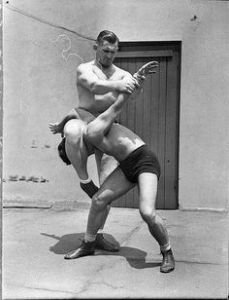
bustin chopsIn fact, while there are several recorded accounts and acknowledgements of SW’s occasional healing practice involving slapping, punching, or kicking, the occurrences recorded seem rare. The indication is also that these were not acts of extreme violence. The slap, punch or kick were startling but not actually ‘heavy handed’ or forceful.
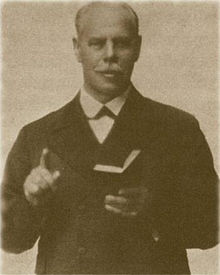
When asked about this behavior, Wigglesworth would answer, “It’s not my fault that you got in the way of the devil.” SW’s claim was that God told him to get physical with some of the infirmed who came to him. The physical acts were aimed at the spiritual enemy at the core of the illness. In other words, he was exerting anger towards the demons at the source of the damage and not to the person. The claim has been repeated that no one was ever hurt by his actions but only healed. However, based on my requirements for confirming a word from God, what can I possibly conclude?

Reconciling Smith Wigglesworth’s violent actions with The Character of Christ

Let me reiterate that this is my journey of discovery that I am sharing. I will admit at this point that my hope/desire is to seek answers to come to grips with SW’s actions. As I have learned, his life as a Christ-Follower and an example as an imitator of Christ was too significant and his ministry too powerful to cast aside because of a few episodes where my sensibilities make me turn off my ability to seek after God in a deeper way. Christ challenges us to be seekers. He beckons us to “seek first the kingdom” and to “seek and you shall find.”

Seeking Answers:

What can soften the “blow” of Wigglesworth’s actions? Is there any basis for God working through Smith Wigglesworth using violent acts?

I came up with these 5 questions as I sought God’s wisdom on the matter:

  1. Has God Used His People through Violent Means Before?
  2. Does God choose to use imperfect/flawed human beings?
  3. Can God use violent acts to bring Himself glory and to win people to Christ?
  4. How/why might God use a man’s violent temper for His purpose?
  5. Jesus was never violent but did He ever act out of anger or inappropriately?

Next Week:The Wigglesworth Dilemma – Part III: Answers


Because of the continued interest in the ministry of Smith Wigglesworth, I have combined the posts with additional material into a book. Feel free to enjoy the posts or purchase the new book on Amazon.

The Wigglesworth Dilemma (Part I)

Because of the continued interest in the ministry of Smith Wigglesworth, I have combined the posts with additional material into a book. Feel free to enjoy the posts or purchase the new book on Amazon.

God’s voice thunders in marvelous ways; he does great things beyond our understandingJob 37:5

220px-Smith_Wigglesworth_preachingPursuing Hearing Gods Voice

In pursuing a more active relationship with Jesus by seeking to hear and know His voice, I have determined to establish certain disciplines to give me confidence that what is coming into my spirit/mind is from God. Most critical is determining . . . 1. Is what I’m hearing consistent with the goodness, righteousness and truth of God in scripture and 2. Is it a reflection of the overall Character of Jesus – Using Galatians 5:22-23 – But the fruit of the Spirit is love, joy, peace, forbearance, kindness, goodness, faithfulness, gentleness and self-control. Against such things there is no law” as the core description of Jesus’ character.

My personal conviction is that, at its core, exercising all spiritual disciplines and spiritual ‘sign’ gifts involves hearing God’s voice (being instructed) in some form. Jesus declared in the Gospel of John:

  • John 12:49“For I did not speak on my own, but the Father who sent me commanded me to say all that I have spoken.”
  • And in John 5:19Jesus gave them this answer: “Very truly I tell you, the Son can do nothing by himself; he can do only what he sees his Father doing, because whatever the Father does the Son also does.”

So, if we are to trust the spoken word (rhema) that flows into our mind and spirit, we must know his voice which is best captured in the written word/scripture(logos)and consistent with the overall Character of Christ as revealed in scripture.

  • Hebrews 4:12For the word (Logos) of God is living and powerful, and sharper than any two-edged sword, piercing even to the division of soul and spirit, and of joints and marrow, and is a discerner of the thoughts and intents of the heart.
  • Romans 10:17So then faith cometh by hearing, and hearing by the word (rhema) of God.
  • Ephesians 6:17– And take the helmet of salvation, and the sword of the Spirit, which is the word (rhema) of God:

If Jesus came to be our example (albeit perfect example) to follow – only doing what he saw the Father do and only saying what he heard the Father say, are we not called to be imitators of Christ? – Therefore, be imitators of God, as beloved children; and walk in love, just as Christ also loved you and gave Himself up for us, an offering and a sacrifice to God as a fragrant aroma, to follow how He lived his life.Ephesians 5:1-2

Likewise, Jesus said that those who follow him would know his voice. – My sheep listen to my voice; I know them, and they follow me. – John 10:27

Who do I imitate?

I am a Christ-follower who believes that the ‘sign’ Gifts of the Spirit (miraculous healing as an example) are for today. They have been practiced by men and women of faith for centuries since Christ. Have there been abuses over the centuries? YES.

How much of what is marvelously good as God’s creation has been stolen and abused for wrong or misguided or selfish purposes? Do we throw it all out because of those who abuse what is good?

While on this journey I have checked out various ministries, and been challenged by some as to whether they are a good reflection of what I’ve come to know about the Character of Jesus – i.e. good imitations (none of us are perfect imitations). If I gauge that they fall seriously short, I move on undeterred in my belief that these gifts from God are still real and true.

Yet, I wonder if it is possible to exercise these Spiritual gifts even when those exercising the gifts are not the most consistent reflection of the Jesus found in the Gospels?

While I have come across a number of good and (what I gauge to be) biblically accurate ministries regularly experiencing signs and wonders, there have been some pastors, preachers, evangelists, healing ministries (allowing for their inevitable flawed humanity to surface) that I have decided – Well, I cannot reject that God is involved, but this is just not a ministry I will associate with.

Paul, in one of the boldest statements of faith made by any Christian says in 1 Corinthians 11:1Imitate me, just as I also imitate Christ.”The writer of Hebrews goes on to encourage, “that you do not become sluggish, but imitate those who through faith and patience inherit the promises.”We are to not only look to Christ but look to those tangible, in-the-flesh Christians who have demonstrated to be faithful and good imitators of Christ.

The Wigglesworth Dilemma

Yet, how do we handle those in Christian ministry who I gauge do not always line up with the standard of the character of Christ? Their imitation of the Christ I see and know from scripture does not seem an accurate one? Instead of displaying the Fruit of the Spirit, I see someone who is harsh, judgmental, self-righteous, flamboyant, maybe even angry and mean – even violent! And yet God seems to be using them to draw people to Himself.

Let’s take the infamous preacher/evangelist and agent of miracles of the early 1900’s, Smith Wigglesworth (SW) and some of his practices as an example.

SW has come to be known for resorting to violence; slapping, punching and kicking those that would seek out miraculous healing from God. His life and ministry is controversial among some Christian circles today. He claimed that God would instruct him to punch, slap or kick some of the infirmed who came to him.

Many celebrate his dedication to hearing God’s voice and faithfully acting upon God’s instruction with miraculous results. But, some other Christ-followers are offended by his actions and reject him as an authentic minister of God. Based on my requirements for confirming a word from God, what would I conclude about Smith Wigglesworth? Perhaps his most infamously challenging episode is found in the following account:

The Healing GOOOOOOOAAL!

This particular episode described below, is the clearest version of various versions I have heard. This account goes as follows:

A 2-month-old baby boy was born with a defect known as spina bifida where the spine grows outside of the body. The child was being cared for in the hospital but the parents had little hope for their child’s survival. The parents stole their baby from the hospital and brought the child to a Smith Wigglesworth service and asked Smith to pray for him.

Smith held that baby in his arms and prayed to God. He then asked the Mother and Father “Will you allow me to do what the Father is telling me?” They replied “Certainly.”

soccorSmith raised the child over his head and prayed. The Mother and Father praised God thinking Smith was lifting the child in a symbolic dedication to God. What was Smith led to do? Smith threw the baby against the wall! The baby fell to the ground as Smith then went up to the baby and kicked it like a football (Soccer Ball).



The Mother and Father were horrified by Smith’s actions. In shock, they ran over to their baby. But, they were stunned to find their baby alert and not even crying. Inspecting the baby, they realized it was totally and miraculously healed. Not a single bruise or marking was on the child and the spine was returned to a normal state.

The parents then took the baby back to the hospital so they, by print, could confirm that the baby was indeed the same child.

I’ve heard other slightly different versions of the story including describing the baby as recently died and then brought back to life.

Applaud or Appalled?

Okay, regardless of the version, it involves kicking an infant. This action divides the Christian community into two camps – those who applaud and those who are appalled.

Some Christians applaud it as an amazing example of Wigglesworth’s dedication to discerning God’s directive and acting on it. While others are completely appalled by something so contrary to their understanding of the character of Christ and the way Jesus behaved as documented in scripture.

And, based upon my disciplines for confirming God’s voice, I go to scripture. With Jesus as my example, do I see him ever being physically violent with those he sought to bring healing? Easy enough – No.

In Matthew 19:14-15 Jesus famously declared his affection for little children – “Jesus said, “Let the little children come to me, and do not hinder them, for the kingdom of heaven belongs to such as these.” When he had placed his hands on them, he went on from there.”Mathew records Jesus laying on of hands but I guess he must have failed to record that part about Jesus kicking kids like a football.

I must say that the life of Smith Wigglesworth created a real dilemma for me as it has for some other Christians. As I reviewed his life and ministry, I saw a man totally dedicated to God’s word and the things of God, in every other way living out the full Fruit of the Spirit. A minister of God who repeatedly confirmed that his sole purpose was to lead people into a right relationship with God and who saw thousands come to Christ through his ministry. His life and these particular aspects of his ministry challenged my notion of how God works through His people.

So, I set on a mission to take a deeper dive into the life and ministry of Smith Wigglesworth and to find the writings documenting this particular (kicking an infant) episode. I wanted to see if I could reconcile this behavior to the Christ I know and who is described in scripture and to the biblical standard I have set for hearing and acting upon God’s voice.

Next Week:The Wigglesworth Dilemma – Part II: The Search

Go Ahead . . . I Triple Dog Dare You!

Be anxious for nothing, but in everything by prayer and supplication, with thanksgiving, let your requests be made known to God; and the peace of God, which surpasses all understanding, will guard your hearts and minds through Christ Jesus.Philippians 4:6-7 NKJV

Anxious

For those who follow Christ, the above Scripture is one of the dearest sources of comfort and peace. The day after 9/11 I was asked to pray comfort for the over 1,000 employees at my company’s world headquarters. It wasn’t hard to find the right scripture.

What do I see? In the midst of political transition, people searching for a sign of any reason for hope while the temperature of anxiety continues to rise. The thermometer is about to burst. Now, with Covid-19 and the growing epidemic of anxiety and depression we turn again to Philipians 4 for the ‘Peace of God’

Even now, after the election and the inauguration of a new president, one side is depressed and angry for certainty they have been cheated and disenfranchised while the other side (the winners) seem angry and bent on the destruction of those who have differing opinions.

The Challenge

I have to acknowledge that this verse is more often translated as, “Do not be anxious about anything”. The structure of the Greek text seems to say “Of nothing be anxious for”. However, in my New Kings James Version the phrase is written as “Be anxious for nothing.”

The NKJV of this verse has always come across as something of a challenge. Paul declaring, “Be anxious – for nothing . . .” In other words – Go ahead; be anxious. I dare you. Go ahead. . . you’ll find it leads to nothing.

The verb used here ‘be anxious’ (Merimnao) in the Greek is present imperative which is more like a command, not just an exhortation and not something optional that would be nice to do if we decide to do it. It is as if Paul is acknowledging our inclination to be anxious. He is daring us to be anxious and to then discover it’s worthlessness.

Go ahead. . . I triple dog dare you!

The imagery that pops into my mind is a scene from the movie Christmas Story– the kids are outside at school recess on a winter day. Schwartz challenges Flick to put his tongue on the freezing metal flag pole. He dares him. Flick waves it off convinced nothing will happen. The challenger then ‘Double Dog Dares’ him. Everyone gasps. Flick waves it off again. But, when Schwartz ‘Triple Dog Dares’ him there is no turning away. Flick must take the challenge or be humiliated as a coward.  We know how this scene ends; with Flick stuck, flailing about and screaming for help.

So, the way I have read scripture is as Paul’s challenge. “Go ahead be anxious, see that it leads to nothing.” When we choose to be anxious we are left stuck, flailing about and screaming for help. There is simply no benefit to our anxiety. It’s not only wasted energy but energy that studies show makes us less healthy and shortens our life on earth.

But, God knows that anxiety is part of the human condition. It is often put upon us based on extreme circumstances and/or the words and actions of others. What we have come to expect to be stable and safe has become fractured and unstable threatening our safety and very existence.

We can all see what the impact of the pandemic has done to the overall anxiety level in our country. Pile onto that the pathetic lack of unity by our leaders to come together for the benefit of those they serve and agree on how to best navigate this tremendous challenge. Instead of working together to instill a sense of hope and peace and comfort, many politicians use it as an opportunity to ramp up fear in order to gain political advantage. (And, while we are at it why don’t we pile on with subverting the constitution, trashing the economy, fomenting divisive racial discord and encouraging violent rioting for good measure.)

Paul Brings Really Good News

Even as Christ declared that in this world we will have tribulation (You will experience pressure and anxiety), He brings the good news that He has overcome the world (John 16:33). This scripture formula Paul provides for relieving/eliminating our anxiety is the way we recognize Christ has overcome the world:

. . . in everything by prayer and supplication, with thanksgiving, let your requests be made known to God.

My first reaction is – That’s way too simplisticReally? I just pray, act happy and my anxiety magically goes away?

But, there are three components to this formula. It’s not just saying in 3 different ways to pray. Paul is instructing how to pray. It says ‘in all things’ but I think it can be inferred in this case he is talking about all things that bring you anxiety. He instructs, By . . .

  1. Prayer– Proseuche– The Greek word is defined as a prayer addressed to God but also a place set apart or suited for the offering of prayer. Often translated as synagogue or a particular place set apart for prayer.
    • I believe Paul is instructing to remove yourself in order to dedicate time to engage with God. This is not a ‘pray-on-the-fly’ kind of thing. If you are anxious, go and dedicate time with the one who can answer you and bring you supernatural peace.
  2. With Supplication– Deesis– Defined as a need, indigence, want, privation – a seeking, asking, entreating of God.
    • How often do we come to God with our shotgun prayers? We detail our list of concerns, say “amen” and rub our hands together – Done! Unfortunately, many of us just drop our list and walk away leaving God ready to respond but we’ve already left the room. Come to God with specific anxieties and engage with God expecting to hear from him through his written word and even his word spoken directly to our spirit.
  3. With Thanksgiving– Eucharistia– Simply being thankful.
    • Paul is saying to remove yourself to be in an intimate exchange with God about what you are earnestly and passionately crying out for and bring along a thankful heart. Why in the midst of anxiety are we to be thankful? We are thankful for 2 reasons: 1. That we have someone who listens and is big and strong and capable enough to hand our worries over to, being confident that we know He will answer us and, 2. He promises to bring us peace beyond what we could imagine under difficult circumstances. I love going to the store and getting “2 for 1” deals. This is the ultimate “2 for 1” deal.

The dynamic Paul details reminds me of occasions where I had a problem at work – one that frustrated my ability to be successful at my job but I did not have the authority to fix it myself. What could I do? I would, 1. Set up a meeting for a specific time and place with a person who was in authority and whom I trusted, 2. I would meet with that person to explain the situation, and enter into a dialogue and, 3. That person would say, “I understand. I’ll take care of it.” and I would gratefully respond, “Thank you.” I would then leave the meeting not necessarily knowing how the person in authority would resolve the problem but knowing it would be fixed. The burden was lifted.

The worthlessness of anxiety is repeated in numerous places in the Bible. Matthew captured Jesus’ teaching in Chapter 6:

  • Matthew 6:25 – “For this reason I say to you, do not be anxious for your life, as to what you shall eat, or what you shall drink; nor for your body, as to what you shall put on. Is not life more than food, and the body than clothing?”
  • Matthew 6:27 – “And which of you by being anxious can add a single cubit to his life’s span?
  • Matthew 6:28 – “And why are you anxious about clothing? Observe how the lilies of the field grow; they do not toil nor do they spin,”
  • Matthew 6:31 – “Do not be anxious then, saying, ‘What shall we eat?’ or ‘What shall we drink?’ or ‘With what shall we clothe ourselves?’”
  • Matthew 6:34 – “Therefore do not be anxious for tomorrow; for tomorrow will care for itself. Each day has enough trouble of its own.”
  • Matthew 10:19 – “But when they deliver you up, do not become anxious about how or what you will speak; for it shall be given you in that hour what you are to speak.”

Let Me Be Honest (Share more openly)

I let plenty of things in my life become more important than following this trustworthy formula even as I stew in my anxiety. Why I don’t prioritize the time to follow this formula more often is a bit of a mystery. But, I can testify that God is a rewarder of those who diligently seek Him and I have seen him respond with answers and peace in times of trouble. I point back to my previous post as an example.

I invite you to hear God’s voice speaking through Philippians 4:6-7 as a challenge – “Go ahead. You want to be anxious? Be anxious. But, I have something better for you.”


Follow-up to my last post – A “Chance” Text Encounter from January 8th

I invited the Senator to read my post and he graciously accepted. He responded with appreciation and welcomed me to be public about who the ‘mystery’ Senator is. He is US Senator from Connecticut, Richard Blumenthal.

We continue to exchange texts as part of my commitment to pray for the Senator. The great temptation is to take this opening to make political commentary but my directive is to pray that God would speak to his heart in ways I never could, assuring him of the reality of God’s great love, peace and joy. Ultimately, that God would meet the true desire of his heart – to be a peacemaker in this anxiety riddled time of division and turmoil.

I invite you to pray for Senator Blumenthal and all our leaders in Federal, State and Local government – that God’s Spirit would coax them to shed their political motivations and to take bold steps to serve as true Peacemakers.

A “Chance” Text Encounter

I returned and saw under the sun that – The race is not to the swift, Nor the battle to the strong, Nor bread to the wise, Nor riches to men of understanding, Nor favor to men of skill; But time and chance happen to them all.”– Ecclesiastes 9:11

(Even as I go to post this article I’m dealing with the upset over scenes revealing the utter decay and disfunction of our society. Demonstrations turned into violent rioting over the Summer now spilling into our Nation’s Capitol Building. Political ideologies one-upping the other in “righteous” anger. The cloud of ugly evil and duplicity creates a veil making it hard to see where God is in all this. Yet, this is a blog about God showing up. Even as he appears to be pulling back while giving over to our growing collective selfish desires, He steps in when called. Jeremiah 33:3‘Call to Me and I will answer you, and I will tell you great and mighty things, which you do not know.’)

—————————————-

I had a strange “chance” encounter happen recently.

It started with a very difficult and emotional discussion with a loved one. As many are experiencing, it involved the very real health, economic, emotional and spiritual struggles going on through this pandemic. If the pressures from all that aren’t enough, the torrent of ugliness spewed from both ends of the political spectrum has generated feelings of sheer hopelessness.

At this point I must admit that I have my own political leanings but I struggle to put those aside. What I have been most angry and exorcised about is the lack of sensitivity and/or caring on the part of our political leaders as to the impact of their terroristic hyperbole on the emotional well-being of the people they serve. The politician may see it as political theater but many take it deadly serious. Yet, both sides claim they are out to rescue ‘the soul of our nation’.

Pushed to the Edge

One side demonizes the other as either corrupt Russian agents out to destroy the world or as power hungry manipulators bent on turning our country into the next Venezuela. For most people, it’s near impossible, what with media manipulation, to determine what is ‘fake news’ and what is true? Add the growing fear that if you dare voice your legitimate political opinions to the wrong person, they will bash your head in. It is all driving a fever-pitched despair leading to skyrocketing anxiety and depression, alcoholism, drug use, leading to deaths from overdoses and suicides (A category now referred to as “Deaths From Despair”)

After that painful conversation, along with others I know who have expressed the fear and hopelessness they are experiencing, coupled with growing numbers of those “too-close-to-home” who have died from overdoses and suicide, my own anger and frustration is boiling over. I just want to find a politician and shake some sense into them. Do I call my congressman? The Whitehouse? Do I write an op-ed piece? Do I light cars on fire, tear down statues and burn buildings? How do I exercise this anger and frustration?

So, what do I do?

I can’t sleep so I get on my knees and pray (Sorry, I know, not very radical). I cry out to my God in desperation. It is a deep emotional cry from the heart that I rarely express. Crying out for my family and for the sad state of affairs, particularly with our leaders leaving the ones I love hopeless and me feeling helpless to do anything about it. What can I do God? I cry out to God for an open window to allow me to have an impact for God’s goodness, righteousness and truth.

So, I vent all the frustration and anger to almighty God. At the end, I thank God for listening and caring and for reassuring me that He is the only Being wise enough, strong enough and gracious enough to do anything about this mess man’s solutions have brought us to.

Did God just Respond?

Okay. I breathe, sensing that supernatural peace God promises sweep over me. I’m good enough with that as an answer to my prayer. But, shortly after this prayer, I get this strange text message. Someone dialed up the wrong number and texted me by mistake. I ignored it. That was followed up with a voicemail that I did not listen to but read on the voicemail printout (They left their name. Hmm, looks familiar?) That was followed up with another text. At that point, out of annoyance, I texted back, “You have the wrong number, I am not ______”

That should have been the end of it.

I was about to delete the messages but the name left from the sender was so familiar. I checked the area code and it was a Washington DC number. Could it really be who I think it is? I listen to the voicemail and the voice leaves little doubt that it is who I think it is. OMG – The person mistakenly contacting me is a US Senator! One I had met decades ago.

Is this possible?

Oooh. Initially, I thought I should delete these messages. But, then I realize this might be an odd answer to my prayers – an opening God has provided to take this opportunity to address all my anger and frustration in a text back to a US Senator. My initial impulse was to rant – Go big and go ugly!

Wait. I stopped and took a breath. Do I really want to be one more voice of ugly rage? If this is really of God’s doing then I have to ask, “What would you have me text back?”

I hate long text messages but away I went. The message was still a bit of a rant. It was tough. Not trying to bash a political side but trying to expose the damage being caused by both sides. It was what God put on my heart to create awareness if there was none. Does this person know the impact they are having? A personal challenge. Here is what I texted back:

No-Holds-Barred

I realized who you are and want to let you know I have met you, supported you and voted for you in the past. It was an honor but now so disappointed in the disgusting vitriol of DC. I am no Trump fan but you and others behave no better. The worst part is that all the ugliness and hyper destruction of Trump directly impacts the health and welfare of the people you are supposed to serve. You can count yourself among the underlying causes of skyrocketing anxiety, overdoses and suicide. I hope the no-holds-barred struggle for political power is worth it. Be better.

I said a prayer and pushed ‘send’. That was that. I held no expectation whatsoever I’d get a response. (Other than law enforcement possibly showing up at my door).

Lo and Behold

I stood in shock staring at my phone. Unbelievably, I received a voicemail back from the Senator asking me to call to talk about my text. Oh boy. Wasn’t counting on that.

I meditated all day on what I would say and what to expect from the Senator. I expected rationale and justification, blaming Trump and the other side. I didn’t care to hear any of that. So, I prayed and called actually hoping to get voicemail. But, the Senator picked up. My heart raced.

The person who was on the other end was a weathered version of the chipper, bright-eyed, going-to-Washington-to-make-a-difference politician I had briefly met decades earlier. The voice was worn, sounding a bit broken and contrite. The Senator was genuinely struck by the text and wanting to hear more about my thoughts. The voice was not defensive but acknowledging that, “It has never been this bad.” To the Senator’s credit, not casting off blame.

We talked about our families and the Senator’s loved ones who were not immune to the anxiety and fear surging through our country.

I mentioned that I am a praying person and have always prayed for our leaders in a bi-partisan way. The Senator humbly acknowledged that it was going to take something like prayer to break through the dynamics of Washington. I said that, having now made this contact, the Senator would be in my prayers regularly.

After asking me more of my thoughts, I asked the Senator to be courageous by resisting the party line and working to change the tone in Washington. And, I would take it as a personal favor if the Senator would work to fight the epidemic of overdoses and suicides that rivals the number of actual Covid-19 deaths. Surely, this can be a bi-partisan fight?

After about 20 minutes, we wrapped up. I was stunned when the Senator invited me to stay in touch to continue sharing my thoughts. Wow!

So, now I pray for this Senator and for this open door. There is no doubt in my mind that this was no “chance” encounter but a crazy answer to prayer. Some people would count it a coincidence. But, for me the request, the timing, the opportunity and the odds tell me it could only have been arranged by the God I cried out to.

Where will it lead? I don’t want to overstep my invitation with the Senator, but I pray and hope that it is an avenue for God’s voice to continue to prick the heart. God’s voice drawing that Senator along with others to more of the healing and goodness intended from God for them and for our nation.

Perhaps, what I shared was all the message God intended. But, if it is more than what has already been shared, I’ll take your prayers that I be a purveyor of God’s truth, wisdom and hope to the hopeless in Washington DC.

Regardless of where this goes, I stand amazed at a loving God responding to my prayer in such an unimaginable way. Crying out to my God in desperation, my God offered an answer with a whisper of hope in a way that only He could orchestrate to say, “I am here.”

Isaiah 55:8-9“For My thoughts are not your thoughts, Nor are your ways My ways,” declares the Lord. “For as the heavens are higher than the earth, So are My ways higher than your ways And My thoughts than your thoughts.”

Remember to Forget (2020)

Not that I have already attained, or am already perfected; but I press on, that I may lay hold of that for which Christ Jesus has also laid hold of me. 13 Brethren, I do not count myself to have apprehended; but one thing I do, forgetting those things which are behind and reaching forward to those things which are ahead, 14 I press toward the goal for the prize of the upward call of God in Christ Jesus.Philippians 3:12-14

This past Sunday Pastor Kevin gave a great end-of-year message entitled Letting Go & Moving On focussed on these Philippians 3 verses. (See it at http://www.blackrock.org)

Most of us would love to just forget and move on from 2020. But, following the service, our small group had a great discussion about the concept of Forgetting raised by Paul.

Firstly, I love that the Apostle Paul, one of the great pillars of our faith and writer of much of the New Testament acknowledges that he is not perfect. He does not understand it all. I certainly can relate to that. We are all figuring it out as we walk this journey of faith.

Then Paul writes of laying hold of that for which Christ Jesus has also laid hold of me. I had always taken this to mean that it was about grabbing ahold of something God has grabbed ahold for me. But it is not “for me” it is “of me”. God has seized hold of what he created us to be. That’s what God hangs onto, not the garbage we have accumulated in our life. That’s what Paul wants to grab hold of – all of what God intended for him to be.

moutain-climber.jpg

How does Paul say he does that? By doing one thing! Now, it appears that Paul may not be much of a math wiz when he then seems to talk of doing 2 things – 1. forgetting those things which are behind, and 2. reaching forward to those things which are ahead. But, it is actually one thing, saying that while he is reaching forward he is forgetting. They are part of the same thing like the many motions comprised of swimming or mountain climbing. As a part of propelling yourself forward you are pushing things behind.

As I get older I’m getting pretty good at practicing something that the Apostle Paul apparently excelled at. Now what was that? Oh, yes – Forgetting

More and more often I’m forgetting my keys, my glasses, my iPhone, where I left things, or, I may go to the grocery store and come home with bags of groceries but forgotten the one thing my wife asked me to get.

Unfortunately, when Paul talks of forgetting those things which are behind, he is not talking about that kind of forgetting.

I don’t know about you, but there have been plenty of experiences/episodes in my life I wish I could forget. Embarrassing moments, bad behavior, words I wish I could take back. Sometimes when I’m doing something, a completely random memory will pop into my head and I’ll just shudder with embarrassment at the thought.

I love Paul’s urging about forgetting the past. Whatever foolish, hurtful things we have done or have been done to us – whatever ways we have been hurt or damaged, just leave it behind and forget it. I love that, but it just doesn’t seem to come that easy. It is particularly hard and probably near impossible for those who have experienced sever trauma – the horrors of war or real mental, spiritual and physical abuse.

Why? For those who have been abused, the memories are seared into their sub-conscience. It may not be a matter of will-power. Or, if it is bad past experiences there are often consequences and repercussions and other people involved that cause these memories to be resurrected. It can seem inescapable. And, it seems a bit like cheap wise-guy wisdom of the world – “Hey, just fuggedaboutit!”

However, the Greek word for Forgetting – Epilanthanomai – includes in the definition “given over to oblivion” (the state of being unaware or unconscious of what is happening).

Depending on the context, the Greek word could be consciously or unconsciously forgetting by exertion or supernatural means. But, in this particular context, it is not a spiritual thing where a memory is magically wiped away. Paul says, this is what he does – He chooses to set his mind on that which is ahead and let the past be left behind. Paul is talking about a conscious decision. It is not a one and done but a process of forgetting.

We all know this to be true in our lives. Memory of failures and mistakes, what we have been told we can or cannot do haunt us as a reminder “I’m not going there again.” I won’t risk embarrassment and failure because of my bad experiences in the past. But what if we could just wipe away these unwanted memories from our past?

Like a Spiritual Super Power

In the movie comedy, Mystery Men– there are seven quirky amateur crime-fighters with strange powers including one who gets intensely angry, one who hurls silverware, a bowler, a shoveler, one who knocks people out by passing gas, and an invisible boy who can only become invisible when nobody is looking at him. (I think I may have a few of these powers. I’ll let you guess which ones)

I have come up with my own super hero with unique super power – Fuggedaboutit Man or Oblivious Man – A comic book super hero whose unique super power is the ability to FORGET. The Super hero can press on through any difficulty – not being burdened with the memory of any abuse or weakness or failure or embarrassment. Every moment being new and fresh with the belief that he/she can do anything regardless of past experience to the contrary, to ultimately outlast any adversary or challenge to go on to ultimate victory!

I see Paul as the original Oblivious Man.

Think of the baggage Paul had to carry around when becoming a Christian. He was a well-known enemy of the Christians participating in their pain, suffering and death. The disciples knew of Paul’s past and were seriously challenged to accept him. Think of what he had to overcome to be accepted into the Christian community and allowed to minister so powerfully.

So, how did Paul say he was able to put his past behind him? Of all the things Paul could say to do – to pray, to meditate, to strive, to study, to exert faith, to do good works, to fast, to worship or to do any of the Spiritual disciplines – In Philippians 3:13 Paul says: but one thing I do, forgetting those things which are behind.

So, it seems to me that Paul is indicating that to effectively forget that which is behind us we must be moving forward with all of our interest and attention on pressing on to what is ahead.

What are we reaching forward for? Paul goes on to say in verse 14 “I press toward the goal for the prize of the upward call of God in Christ Jesus.”

What’s the prize?

Ephesians 2:10 NLV – For we are God’s masterpiece. He has created us anew in Christ Jesus, so we can do the good things he planned for us long ago.

We strive (as Paul strived) to lay hold of that masterpiece that God sees. To be resurrected from what we see us to be to then realize that perfect creation God has made us to be – each of us unique but still a perfect reflection of Jesus. That’s the “Prize!”

Do we really see ourselves that way? Giving over to oblivion the old man/who we were – all the wounds and hurts and failures and messaging telling lies about who we can never be? All of that may have to be jettisoned in order to fully discover our true identity in Christ.

Colossians 3: 9-10 you have put off the old man with his deeds, and have put on the new man who is renewed in knowledge according to the image of Him who created him.

Forge is the most significant part of Forget – Are we called to forget everything? No. We are called, with God’s strength, to put that which holds us back behind us. Whatever inhibits us from moving forward to become all we were created to be in Christ Jesus. The imagery is that of climbing into a car. You hit the gas and begin driving to a new destination as your past gets smaller and smaller in the rearview mirror.

How Does God Deal With Forgetting Past Sin and Corruption?

I find it interesting that God is not forgetful – yet, even He chooses to do a similar kind of forgetting/obliterating. But, the indication is that it doesn’t just disappear. In Psalm 103:12 it says – As far as the east is from the west, So far has He removed our transgressions from us. And likewise it says in Micah 7:19He will again have compassion on us, And will subdue our iniquities. You will cast all our sins Into the depths of the sea. Also, in John 1:29 John the Baptists declares that Jesus ‘takes away’ the sin of the world. He removes it. The Greek Airo means to bear away or carry away.

These scriptures suggest that it is still out there somewhere but in a far distant place that cannot harm us. The power and penalty of sin is removed. It does not mean it is necessarily permanently destroyed from our memory. It’s part of what God can use to turn bad into good. Circular – forgetting enables us to press forward, pressing forward leaves the old self in the dust.

God wants to heal and restore us, yet how often does God use our painful past experiences to give us compassion and understanding to bring healing to others? We use forgetting to move forward but God can use our past for His kingdom.

Finally, for the bitterness we hold towards the abuse we have faced in life Hezekiah offers in Isaiah 38:17 – “Indeed it was for my own peace That I had great bitterness; But You have lovingly delivered my soul from the pit of corruption, For You have cast all my sins behind Your back.” (Sounds a bit like Paul putting his past behind him.)

Thank you God for lovingly delivering my soul from the pit of corruption enabling me to become that which you have laid hold of me.

Happy New Year to all and for 2021, as we forge on for the great prize, let’s remember to forget!

Not A Racist but Was Jesus Just Plain Rude?

But He answered her not a word

Then Jesus went out from there and departed to the region of Tyre and Sidon. And behold, a woman of Canaan came from that region and cried out to Him, saying, “Have mercy on me, O Lord, Son of David! My daughter is severely demon-possessed.” But He answered her not a word.”Matthew 15:21-23

This is a follow-up to my Blog post of July 1st2020 – Jesus a Racist? Exposing the Heart of the Matter

In that Post, I confirmed what we already knew – Jesus was/is not a Racist. But, there is another element of the story I did not dive into that has continued to ‘stick in my craw’ as they say.

Was Jesus being rude?

The question is raised based on Jesus’ initial response to the Phoenecian woman crying out for help and Matthew writes “But He answered her not a word”. My reaction was that he is being rude and totally disregarding her.

Perhaps you have experienced something similar? Asking for help in a store and feeling like you are invisible. Or, having a conversation with someone but their attention is on looking for someone they’d really rather be talking to. Or, speaking to someone but they’re constantly scrolling their iPhone. It is just plain rude.

But, wow! This kind of takes it to another level. The poor woman is crying out in sheer desperation for help for her demon possessed daughter and he says nothing?

This requires taking a closer look: If Jesus was actually disregarding her, Matthew would more likely have used the Greek word Agnoeo meaning ‘being ignorant of’ or ‘ignoring’ her. An example of its use is found in the NIV translation of 1 Corinthians 14:38 – “But if anyone ignores this, they will themselves be ignored.”

What did Jesus actually do?

In this scene, Matthew records that Jesus used the word ‘answered’ 4 times, meaning he positively responded to others requests 4 times. In this particular instance Matthew writes, “But He answered her not a word.” So, Mathew did not choose the word Agnoeo to say he ignored her, he records that Jesus did, in fact, answer her but answered her without saying anything.

How do you do that?

I’ve had plenty of experiences that I believe most people can relate to. It is about 1 person being in conversation with 2 others. The first person has been keeping a secret from the second person but the third does not know about the secret. Take a surprise party for instance. Let’s say I’m throwing a surprise party for person 1 and person 2 has heard about the party but missed the part about it being a surprise. (I’ve been each of these 3 persons at one time or another) While I’m standing next to person 1, person 2 comes up to me saying, “Hey what time is the party?” potentially ruining the surprise. What do you do?

You turn your back to Person 1 and through facial expressions and hand gestures you ‘answer without a word’. You might mouth the word “quiet” or put a finger to your lips or slash your fingers across your throat or simply put a finger or hand up. Any of these gestures would communicate “be quiet you knucklehead” without saying a word.

Was Jesus doing something similar? The imagery I get from Scripture sets the scene with the Disciples following behind Jesus and the woman coming around to be in front of Jesus. When she begs him, Jesus answers her without speaking a word but perhaps with some gesture that the disciples could not see.

Maybe it was Jesus giving her a nod or a wink or simply putting his index finger up to say, “Wait a moment. I will answer your request but I have something to teach my disciples.” I don’t know what gestures may have conveyed this message back in the 1st century Israel. Regardless, He certainly in some way responded to her request without speaking.

I’m satisfied and blessed that Jesus is still Jesus. He’s not rude and the full character of Christ stays intact. I am ready to move on.

  • Personal note: I love when I get into scripture, looking for God’s leading and insight and he takes me down a path of understanding. It makes sense and I’m good with it but then I find if I’m willing to press in a little further he will expand upon my understanding. That is so good!

In this case, before I move on, I stop to wonder if there might be a hand gesture unique to Middle Eastern culture that could convey this kind of message. I go ahead and do a little google research. I find that in the Middle East there is a very common hand gesture referred to in Egypt as the “Osbor Shwaya”.

Osbor Shwaya

The hand gesture is when the fingers are cupped together pointing up and the hand is slowly swung up and down. What does it communicate? It says without a word . . . “hang on/ I’m working on it/be patient/just a minute.”

Is that what Jesus did? Did He, without a word, and by this hand gesture convey to the woman, “Hang on, it will be done, be patient.” If this gesture was common back in the day, it seems to me a legitimate possibility that this is what Jesus did.

Jesus conveyed a silent message to the woman that said:

  • He was fully prepared to answer her request,
  • while encouraging her to be patient,
  • as they continued in a dialogue,
  • that would teach a powerful lesson to His Disciples.

Also, if you read the subsequent dialogue exchange between the Phoenician woman and Jesus with the understanding that she is certain Jesus will do what she asked, it takes on a whole different tenor. I don’t know about you, but I love that.

Jesus does not ignore us when we speak to him

“For everyone who asks receives, and he who seeks finds, and to him who knocks it will be opened” – Matthew 7:8

How many ways does God communicate to us? Are we listening and looking and being patient in the process? Are we trusting enough and patient enough to believe that he is working out the good for all involved even as he is planning to answer our prayers? It is all a part of God’s multi-tasking goodness.

Many are desperate to hear God’s voice. As for me, while I love hearing God’s voice, I’ll take an answer from God without a word anytime.


Extending to all a fresh start in the New Year of 2021. In the growing darkness I pray we Christ-followers even more so embrace Jesus’ instruction in Matthew 5:16 “Let your light so shine before men, that they may see your good works, and glorify your Father which is in heaven.”

Checking all the Boxes

How is it then, brethren? Whenever you come together, each of you has a psalm, has a teaching, has a tongue, has a revelation, has an interpretation. Let all things be done for edification. – 1Corinthians 14:26

As I was prayerfully preparing to lead one of our Wednesday night Power Prayer meetings I was led to 1Corinthians 14:26 for inspiration.

In this scripture, Paul seems to be asking the brethren in Corinth, “How does this work? You gather together to worship God and then each of you has some spiritual element to offer?”

  1. a psalm/song
  2. a teaching
  3. a tongue
  4. a revelation
  5. an interpretation

God is saying, You show up to gather in my name wondering what meeting together may be about and then the Holy Spirit shows up to lead the meeting – guiding and directing.

As I was preparing, I went through the list of spiritual contributions. What would show up at our meeting?

Let’s Check The Boxes

  1. A psalm/song? Certainly, our worship leaders will provide the worship songs and no doubt someone will be led to quote scripture from the Book of Psalms. But, would someone really just break out into a new song? No. Never seen that before.
  2. A teaching? I plan to provide brief guidance on prayer and have the group engage in a “spiritual stretching” exercise. Check.
  3. A tongue? Whoa! Let’s skip that one. For the sake of unity, our church does not encourage the practice of speaking publicly in a foreign tongue. Nope.
  4. A revelation? God is generous to often give us words and images of things in our meetings that provide revelation to who He is and how He wants to work in our lives. Check.
  5. An interpretation? Often, as God gives us revelation another will provide further insight and clarification as to the meaning of what is being shared. Check.

I went into the meeting with a notion of how God would work.

The Meeting

Once at the meeting, we entered into God’s presence with worship (Song). Check

People quoted scripture (Psalm). Check.

I encouraged people to be bold as we sat for a period of quiet/listening to then share what was coming into their mind. It was an exercise in trusting that our God is big enough to communicate and that the place we were in was a safe place to risk stepping out and be bold (Teaching). Check.

A number of people shared some really good stuff that God dropped into their mind/spirit (revelation). Check.

Others entered in to share related thoughts and scriptures to give deeper meaning and understanding to the revelations shared (Interpretation). Check.

I have to say that as a spiritual stretching exercise (Prayer Hot Potato) it was expectedly a bit forced and uncomfortable. But, people listened, God spoke, and many were bold to share whatever they heard.

I really do hate to put people on the spot and to impose on others; making people feel awkward or pressured. However, we checked off the boxes I expected to check regarding how God would move. In my judgement, the meeting went pretty well but not great – a little too awkward.

As I began to wrap up the meeting, I asked if there was anything anyone else would like to share.

A quiet Chinese woman named Powan, who is a relatively new Christian, boldly raised her hand. She shared how blessed she was in the previous Sunday’s church service to be asked to read the teaching scripture. What was the blessing? That she was asked to read it in her own language (Mandarin?). She went on to share how that had encouraged her, feeling included and realizing how universal her faith in Christ truly is.

I was pleasantly convicted. Was that a Tongue we are talking about? Check?

No one spoke out in a foreign tongue in the meeting but the irony of her testimony did not escape me. God was stepping in to say, Don’t be so quick to think that something in My Holy, written word is not possible for today. I was blessed.

Then, just in closing, a man named Peder who is fairly new to our church jumped in to ask if he could play a song he had just written. We all looked at each other. Hmm, Okay. He grabbed the worship leader’s guitar and started worshipping with a new song. Wow.

The realization hit me that, once again, God was breaking in at the last minute to check another box I had left unchecked. A new song. Check.

I could only shake my head and worship God for the things I kept off the list. God wanted to remind me of the purpose of Him inspiring Paul to ask, “How is it then?”

How is it then? It is by His people gathering, fully expecting God to show up and use each one to bless and edify all in any number of ways. God shows up because it is all about what HE does through us to build up the Body of Christ.

So. when we do gather together to seek God’s face let’s all be prepared to be used in a unique way for His glory, for our mutual joy and for the building up of the Body of Christ.

From him the whole body, joined and held together by every supporting ligament, grows and builds itself up in love, as each part does its work. Ephesians 4:16

A Study About ‘Nothing’

Though I speak with the tongues of men and of angels, but have not love, I have become sounding brass or a clanging cymbal. And though I have the gift of prophecy, and understand all mysteries and all knowledge, and though I have all faith, so that I could remove mountains, but have not love, I am nothing. And though I bestow all my goods to feed the poor, and though I give my body [a]to be burned, but have not love, it profits me nothing. 1 Corinthians 13:1-3

Our Senior Pastor, Steve has been preaching a wonderful series on 1 Corinthians 13 – The Love Chapter. So desperately needed in this time of division and unrest. Reminding us of what true love is as the world around us seems to being cascading into a pit of darkness and hate.

In Steve’s message he addressed our motivations for doing good deeds being meaningless to God if not done out of love. I am nothing and I get nothing if our motivations are not purely out of love. He highlighted the point that in the Greek the word for ‘nothing’ is just that – ‘nothing’ – zip, nada, zero. There is no deeper meaning to take from the original Greek. Without love we are worthless and what we are doing is worthless.

I agree and every major translation agrees, consistently translating the Greek word Oudeis as ‘nothing’ in these verses. However, I’ve wrestled with this notion before. What does this mean? It’s like God is using a line from an old Mafia movie; If you don’t do good stuff for the right reasons “You’re dead to me!” The God of pure love considers me nothing and says my good deeds are absolutely worthless? For a teaching about love, how loving is that? This took me back to a personal study I did about the meaning of ‘nothing’ a while back. So, something like the Seinfeld show being a show about ‘Nothing’, this is a brief study about ‘Nothing’.

A Study About Nothing

I have no doubt that this statement is true. I know in my own life good deeds I have done that were poorly motivated and left a bad taste. Yet, something just didn’t jive with the God of love and forgiveness and grace that I know. Still, Jesus said some harsh words in love that are hard to hear but true. I decided to take another look.

As mentioned before The Greek word used is Oudeis, a pronoun meaning nothing – also meaning no one or no man. Hmmm? In fact, the word is translated about 50% more times in the New Testament as no man, then as nothing.
As an example, in James 3:8 it reads – “But the tongue can (Oudeis) no man tame; it is an unruly evil, full of deadly poison.”

If you are a Greek scholar now is the time to correct me if there is something I am missing. But, how the scholars translate the word depends on numerous factors including the context and the words used around a certain word. In James 3:8 for example, they chose to use no man because of the reference to a human body part; the tongue. Yet, for this scripture, if you replaced no man with nothing, I don’t think you would lose much, if anything, in the translation.

But in 1 Corinthians 13:2-3, would replacing nothing with no man change anything about the meaning?

I think it might

Verse 2 in 1 Corinthians 13 says – “And though I have the gift of prophecy, and understand all mysteries and all knowledge, and though I have all faith, so that I could remove mountains, but have not love, I am nothing (I am no man).
In this verse, Paul is referencing himself saying if he is able to exercise all these powerful gifts, what an incredible “man of God” he is! He is talking about his spiritual self-image/spiritual ego. Look at me and how special I am! But, if we replace nothing with no man, Paul could be saying, “without love, I am really no man (of God) at all. It shifts the focus from God’s condemnation of us as being nothing to Him to us looking in the mirror and seeing how shallow we really are.

Then in Verse 3 it says, “And though I bestow all my goods to feed the poor, and though I give my body to be burned, but have not love, it profits me nothing (I am useful to no man).”
Paul now shifts from the greatness for exercising spiritual gifts to even how wonderfully holy and sacrificial we are. Look at me and what I do for others! Once again, puffing up our chest with our good works and fueling our spiritual egos.

Also, if we look at the Greek verb in this verse, Opheleo often translated as ‘profit’, it also is defined as ‘to be useful’. So, if we replace ‘Profit’ with to be useful and nothing with no man, Paul might be saying, “without love, I am to be useful to no man.”

Once again, this use takes the emphasis away from God’s judgement or condemnation to creating a reality check for who we think we are in Christ.
In other words, without LOVE I am not the Godly man I think I am and I am not accomplishing the things of God that I think I am.

One other rationale for replacing nothing with no man is that Paul in these verses is referencing himself as his motivation as a man of God so using no man makes some sense.

WARNING: I am not a Greek Scholar

I enjoy digging into God’s word and considering how God can speak to me through the rich diversity of the original language.
There may be some scholarly reason as to why nothing is used rather than no man that I don’t understand but even if that is the case, the teaching holds true supported by many other scriptures.

Our motivations, even for those things that are good, must be checked if it is going to be of any use as a loving expression of who God is and for building God’s kingdom.
In Mark 10:18 Jesus said – “Why do you call Me good? No one is good but One, that is, God.” And that’s why we check our spiritual egos and motivation as James writes in James 4:8 – Draw near to God and He will draw near to you. Cleanse your hands, you sinners; and purify your hearts, you double-minded.

God loves us through the sacrificial love of His son, Jesus Christ. As Christ-Followers, our sins are wiped clean. If we fall short, we are not nothing in His eyes.

In order to mean something to loving God and building His Kingdom we most powerfully engage and are used through a loving, cleansed and purified heart.