“Are You the Coming One, or do we look for another?” —Matthew 11:3
(Continued from Blog Post of 9/11 – Excerpt from WHO IS THIS GUY? and What Have You Done with My Sweet Savior?)
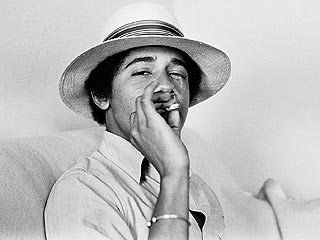 In 1979, I had recently graduated college and landed my first corporate job. This entry position was with a Fortune 500 Company that took me from Connecticut to the West Coast working at their L.A. branch.
I only just recently realized that in the same year a young 18-year-old Hawaiian arrived across town at a small liberal arts college nestled in Northeast Los Angeles. Our paths likely never crossed, but who knows for sure? Perhaps our lives intersected in downtown L.A. or amongst the roller skaters of Venice Beach or in the Santa Monica surf, or at one of the amusement parks or ball parks?
Could I have possibly engaged this person described at the time as a cool, lean, black dude who liked listening to Hendrix, Earth, Wind & Fire and Billie Holiday? He was known in his dorm for his spot-on impression of Mick Jagger – perfecting the walk, the strut, the face. He wore silly hats, cocked to look cool. He was known to mix with the budding intellectuals and aspiring writers, party animals, surfer dudes as well as jocks. He was also known to have had a peculiar smoking style and smoked a cigarette the same way he smoked a joint.
I’m not throwing stones, because who I just described was any one of a number of kids I ran with in College. But, at that time, what if I had crossed paths with this young man? Would I (or any one of his peers) have ever in a million years given a moment’s thought that this person would eventually become the President of the United States? If I had run into young Barry Obama then, I’d think – No way!
All the Perfumes of Arabia
Growing up I was always known as a “good boy”. I had an innate desire to want to please people. Parents, friends, family, priests, nuns, teachers, coaches all liked the affable, friendly, hard-working, aim-to-please image that I carefully fostered. But, growing up I was doing a lot of the same things that other kids were getting in trouble for. Perhaps, I did it in moderation and was more skilled at hiding my darker side.
At some point, though, I had a growing awareness of this dichotomy in my life. Eventually, at the end of my High School career I used a cryptic quote for my Year Book picture. It was taken from Shakespeare’s Lady Macbeth, “All the perfumes of Arabia will not sweeten this little hand.”
When the yearbook was published, I had teachers, guidance counselors and other students asking me what I was admitting to. What dark secret was I hiding? There was really no great secret, just the growing awareness of my own selfish sinfulness.
Later, in my pivotal year of 1979, an evangelist at Calvary Chapel in Costa Mesa challenged me by quoting Roman’s 3:23 “All have sinned and fall short of the glory of God.” That truth was critical to me making the decision to commit my life to following Jesus.
What is the point of these two anecdotes? The point is, that it is hard to really ‘know’ people and certainly harder to ‘know’ who they will become.
The Confusion of Cousin John
The story of John the Baptist really seems to crystallize the confusion people had as to who Jesus was. I had some thoughts over the years of writing a fictional story about the relationship between Jesus and John growing up together. After all, they were cousins. They must have had regular visits, if only once a year in Jerusalem during Passover. I envision them both, even at young ages, being spiritually minded and sharing the growing purpose God was revealing to each of them.
John would finally come to the understanding that his purpose was to fulfill scriptural prophesy as the one who would dedicate himself to a life of solitude, preparing himself as the one to identify and announce the coming of the Messiah. When his cousin Jesus finally arrived in the desert, John would immediately declare him the Messiah and baptize him.
But did John know all along that the Messiah would be his cousin, Jesus? Was John just out in the desert preparing a following while waiting for Jesus to show up? If so, then why did the Baptist repeat twice in John 1:31 and 33 that he did not know Jesus?
How did John not know that his own cousin was the Messiah? I believe a case can be made that even though they were cousins, after John’s elderly parents passed away, he could very likely still have been a young boy living in the desert for the rest of his life.
Luke 1:80 says, “So the child grew and became strong in spirit, and was in the deserts till the day of his manifestation to Israel.” This scripture indicates that even as a boy, John demonstrated an unusual spiritual zeal. After his elderly parents passed away, could this boy—being strong in spirit—have been embraced by a community of rabbis who adopted him to raise him in a religion of self-denial and biblical study?
The Essenes were a group of religious zealots who dwelled in the desert, separating themselves from society, without much contact with the outside world. John, after being tutored by a group like this, could have eventually broken away into the wilderness to begin his prophetic ministry without much direct contact with Jesus over the years.
Yet, still it’s hard to imagine that John wouldn’t have been taught and memorized the story of him leaping in his mother’s womb when greeting Mary, pregnant with Jesus. The biblical record shows that many people were well aware of the story (Luke 1:57, 65-66). It is also hard for me to believe that, being related, the two didn’t have some contact over the years.
Whether John and Jesus had any relationship growing up or not, it is clear to me that John admits he did not really “know” Jesus. The Greek word for “know” is eido. It does mean ‘to know’ but also ‘to see’ or to perceive with the eyes. It is translated more often as “see.” In other words, John declares that even if he had a relationship with Jesus that he did not “see” him as the Messiah. Why, because Jesus was just too human—too normal. Philippians 2:5-7 says, “Christ Jesus . . . made Himself of no reputation (emptied himself of his godliness), and taking the form of a bondservant, and coming in the likeness of men.”
Jesus spoke in a similar way about John in Matthew 17:12: “But I say to you that Elijah has come already, and they did not know (see or understand) him” (emphasis added).
I believe that John suffered from the same misconception that permeated those who were actively hoping and looking for the arrival of the promised Messiah. This Messiah would come in a princely fashion. The literal translation of the Hebrew word mashiach is “anointed,” which refers to a ritual of consecrating someone or something by putting holy oil upon it. This anointing was reserved for kings, Jewish priests, and prophets.[ii] The Hebrew nation expected the Messiah to come as a prince or a king—someone easily identified as one who is above the common man. But Jesus seemed like a common man, who was doing and saying uncommon things.
It was only when the Holy Spirit revealed Jesus as the Messiah to John that he was able to recognize Jesus as “The One.” John 1:33-34 says, “I did not know Him, but He who sent me to baptize with water said to me, ‘Upon whom you see the Spirit descending, and remaining on Him, this is He who baptizes with the Holy Spirit.’ And I have seen and testified that this is the Son of God.”
I like to imagine that on the day Jesus showed up, just as John’s spirit jumped in his mother’s womb some thirty years earlier, John’s spirit unmistakably jumped again in recognition of Jesus’s special anointing. John immediately bore witness to him: “Behold, the Lamb of God, who takes away the sin of the world!” (John 1:29). He baptizes Jesus, followed by the incredible confirmation of the Holy Spirit as a dove landing upon Jesus (verse 33) and the audible voice of God declaring, “This is My beloved Son in whom I am well pleased” (Matthew 3:17). What more would John need?
Yet, shortly thereafter, John was arrested. As John lingered in prison he sent a doubt-filled message to Jesus asking, “Are You the Coming One, or do we look for another?” (Matthew 11:3). He was wondering, This is my entire mission in life. Did I get this wrong? I’m not sure. Really, who is this guy?
But, why? Why was John so unsure? Was it that Jesus was behaving in ways that were unexpected? Not only was Jesus seemingly just a common man, but Scripture indicates that John was likely offended by Jesus’s behavior. Luke 7:33-34 says, “For John the Baptist came neither eating bread nor drinking wine, and you say, ‘He has a demon.’ The Son of Man has come eating and drinking, and you say, ‘Look, a glutton and a winebibber, a friend of tax collectors and sinners!’”
If John believed what people were saying and also believed that the way to spiritual purity was as John practiced—to retreat from society, to fast, and avoid wine—then Jesus’s behavior seemed the polar opposite. Jesus stayed visible and active in society. Jesus performed miracles of every kind while John performed no signs in his earthly ministry. Jesus came as the humble servant and not as the conquering king. Did John still want the Savior to be that powerful figure he and the nation of Israel had always hoped for? And if Jesus was the Messiah, then when was he going to set up his kingdom and get John out of jail?
When John sent his disciples to inquire of Jesus, “Are you the one?” Jesus responded in Matthew 11:4-6, “Go and tell John the things which you hear and see: The blind see and the lame walk; the lepers are cleansed and the deaf hear; the dead are raised up and the poor have the gospel preached to them. And blessed is he who is not offended because of Me.”
The Greek word for offended is skandalizo, which means to see in another what I disapprove of and what hinders me from acknowledging his authority. In His cousin’s mind, Jesus was acting scandelous.
So, who is this guy Jesus? Most Christians believe he is the Son of the living God—equally God with the Father and the Holy Spirit, but the one who lived and walked on this earth so man could see God in the flesh and enter into a relationship with God. Even as John the Baptist wondered about Jesus’s behavior, I wonder if there isn’t a standard we should hold Jesus to as we would (or should) a pastor or a policeman or a public official.
Jesus, himself, declared in Matthew 7:16, “You will know them by their fruits.” If that is the case, then we should be able to measure the character of Christ against Galatians 5:22-23: “But the Fruit of the Spirit is love, joy, peace, longsuffering, kindness, goodness, faithfulness, gentleness, self-control. Against such there is no law.”
For me, discovering the whole, true character of Christ – knowing fully who my Savior, my King, my Prince, my Brother, and my Friend is will require digging deeper into those scriptures that seem to paint an alternative picture of Him.
Join me.
 Tucked In and Lamps Burning
I like the picture of Obama.
LikeLike
I am in fact delighted to glance at this blog posts which includes plenty of
valuable facts, thanks for providing these kinds of statistics. https://cdpsecurecdp.ns1.vcvps1867.vcdns.de/test.php?a%5B%5D=%3Ca+href%3Dhttp%3A%2F%2Fwww.ixawiki.com%2Flink.php%3Furl%3Dhttp%253A%252F%252FWww.Interior.my%3Eshop+design+normal%3C%2Fa%3E
LikeLike