Brett Kavanaugh’s Name is Mud
John 9:25 – He answered and said, “Whether He is a sinner or not I do not know. One thing I know: that though I was blind, now I see.”
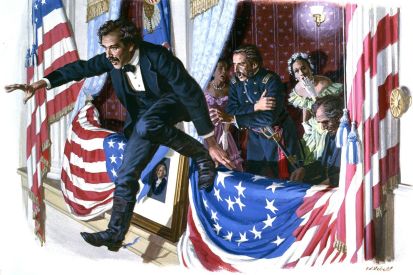 Just over 150 years ago in 1865, President Abraham Lincoln and his wife Mary set out for a night of theater. Part way through the third act John Wilkes Booth entered the presidential box and shot Lincoln. He then jumped to the stage, breaking his leg.
After Booth shot the president at Ford’s Theatre in Washington, he made a run for Northern Virginia. One of his first stops was at the house of a doctor to set his broken leg. The doctor and his wife later told investigators that they didn’t know about the plans to kill the president.
Booth continued on to Virginia, where he was tracked down and killed by federal troops. The Dr. was arrested soon after and charged with being part of the conspiracy to assassinate President Lincoln. He and the other defendants were brought to trial before a military commission less than a month after Lincoln’s death.
With little to no evidence, the Dr. was convicted and sentenced to life in prison. Three years later, he was pardoned as a reward for treating yellow fever patients at the prison. But the taint of the conviction remained. And ever since, he and his descendants have sought to clear the name of Dr. Samuel Mudd.
Samuel Mudd has often been identified as the origin of the phrase “your name is Mud.”
The MUDD family has carried this stigma of having been connected to the assassination of one of our greatest presidents. Whether true or not, the point is that when someone says, “your name is MUD” it is saying that your name carries a stigma to it. Your identity is considered as dirty and foul as the brown sloppy mess that covers our boots during a rainy season. Not many people have a high opinion of mud. It is something all of us avoid if at all possible.
Current Mud – The politics of the Judge Kavanaugh nomination to the US Supreme Court controversy is an example of horrific mud-slinging based on little-to-no knowledge. Other than Kavanaugh and his accuser(s) I’m not sure anyone knows anything of the truth. At the end of all this we may never know and yet, true or not, Brett Cavanaugh will likely spend the rest of his life trying to wipe the mud from his name.
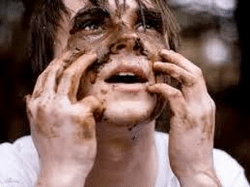
But, on one occasion Jesus used MUD to clear one whose name had become MUD. The account of this miracle caused me to consider the words we use to describe the reality of our spiritual state.
Describing Our Spiritual State
What is it that defines and describes our life in Christ? Nouns such as hope, faith, belief, trust. Most often we refer to our Christianity or our religion as our “FAITH”
There seems to be a Continuum of Words that conveys our spiritual state or reality. I know that it is not really as linear as this but the way I see it, it starts with some DESIRE for God – that desire then springs into HOPE – we are then challenged to step out into FAITH – as we step out, faith grows to BELIEF – from there we extend our TRUST – we then grow in our UNDERSTANDING – maturing into CONFIDENCE – generating into OPTIMISM – blossoming into staunch CONVICTION. Wow, you can’t get to a higher spiritual state than conviction can you?
But there is an even higher state than conviction.
If we are called to testify as a witness to the reality of God and the reality of our relationship with Christ we usually talk in terms of our faith or what we believe, or how we trust in God or of our conviction in the reality of God.
BUT – the highest standard of a witness is testifying to what they KNOW – their KNOWLEDGE of what is true.
 If we are called to testify in a courtroom we are called to speak of that which we KNOW. If we begin to speak of that which we believe or think, we will hear lawyers scream OBJECTION! IRRELEVANT! or HEARSAY!
I confess that I have fallen victim to giving testimony to others about God in my life by relying on expressing it in terms of ‘faith’ or ‘belief’ or ‘trust.’ And I believe that is true of many Christians.
Now, don’t get me wrong, we cannot be in relationship with God without faith, belief and trust. In fact, we are saved by faith and that it is impossible to please God without faith.
Dallas Willard writes, “The difference between belief and knowledge is huge and affects every area of life. Not having knowledge of the central truths of Christianity is certainly one reason for the great disparity between what Christians profess and how they behave.”
Still, I believe the truth is that there is so much more that we KNOW or can KNOW to be true that is so much more powerful when we share or testify or express our faith.
There is a body of knowledge of God and about Jesus that scripture encourages us to grow in:
Bible Knowledge:
- Proverbs 1:7 – The fear of the Lord is the beginning of knowledge, But fools despise wisdom and instruction.
- Proverbs 18:15 – The heart of the prudent acquires knowledge, And the ear of the wise seeks knowledge.
- Hosea 4:6 – My people are destroyed for lack of knowledge.
- 1 Corinthians 1:5 – that you were enriched in everything by Him in all utterance and all knowledge,
- Ephesians 4:13 – till we all come to the unity of the faith and of the knowledge of the Son of God, to a perfect man
- Colossians 1:9 – that you may be filled with the knowledge of His will in all wisdom and spiritual understanding;
Definition of Knowledge – The fact or condition of knowing something with familiarity gained through experience or association
Knowing Jesus Today – Why We Can Trust Spiritual Knowledge by Dallas Willard writes that a core branch of learning for the major institutions included Knowledge of such things as the very existence of God, the presence of God in the world, Moral values – who is a good person and how to become a good person, the reality of Christ in the spiritual life. It was understood that there was and is an indispensable role of knowledge in faith and life – that there is a body of uniquely Christian knowledge, one that is available to all who would appropriately seek it and receive it—whether Christians or not.
The body of knowledge that our earliest Institutions of learning were founded to advance are no longer taught there. Harvard and Yale and many other Universities were established to promulgate what is known of God. If it is taught at all, it is no longer taught as knowledge of God but is relegated to one of many belief systems and philosophy or traditions or legends. According to them, true knowledge is only found in the “concrete” sciences.
Willard says that God’s statement, “The truth shall make you free,” primarily a reference to moral truth, appears on more university walls than any other statement— though most faculty and students today have no idea of what it means, where it came from, or why it is there.
He goes on to detail the core Knowledge that establishes our faith and belief, identifying that even the sciences growingly, reluctantly are more and more coming to grips with the fact that there is a master designer behind all the science from the beginning. Even more powerful is that there is growing evidence that supports the knowledge that this designer continues to make His presence known in our world today.
So the challenge for today is “what do each one of us really know about God? What is it I really know of Jesus?”
In a future post I will look at the episode in John Chapter 9 – The Mud Healing from the standpoint of what is KNOWN or UNKOWN.
 Tucked In and Lamps Burning
Dave, Thanks for another great blog. I really appreciated the historical application to the current muddy mess, and then the way Jesus used mud in a miracle. Keep them coming! Don
Sent from my iPad
>
LikeLike
Thanks for the encouragement Don. Our world is only becoming muddier and messier. Only Jesus can make good out of it. More posts to come.
LikeLike